Smart Components
DI-22
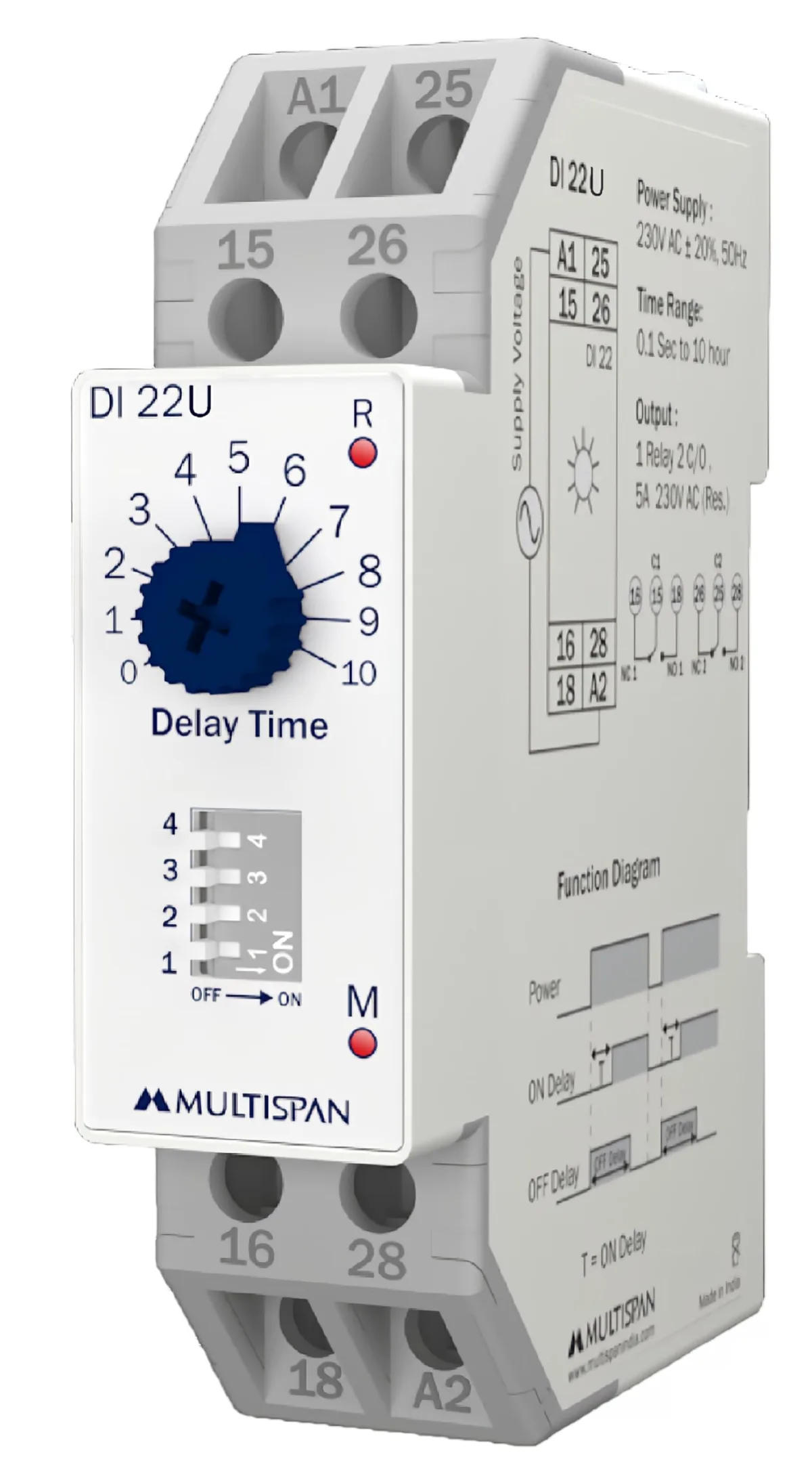
Multispan DI-22 digital display instrument providing accurate measurement and indication of electrical values.
IEC Certified
Nationwide Delivery
Technical Support
Product Description
The DI-22 is a reliable digital input module designed for use in industrial automation, PLC control systems, and electrical monitoring applications. In Kenya, the DI-22 module is widely used in manufacturing plants, automation panels, building management systems, and electrical control cabinets where accurate signal input and reliable communication between field devices and controllers are essential.
As industries continue to adopt automation technologies, modules like the DI-22 play a critical role in collecting signals from sensors, switches, and other input devices. These signals are transmitted to a programmable logic controller (PLC) or control system, allowing automated processes to respond to real-time conditions. By enabling accurate monitoring and control, the DI-22 helps improve operational efficiency and system reliability.
The DI-22 module is built for industrial-grade performance, making it suitable for environments that require durable components, stable operation, and seamless integration with automation systems.
What is DI-22?
The DI-22 is a digital input interface module used to detect and transmit ON/OFF signals from field devices to automation controllers. It acts as a bridge between sensors or switches installed in the field and the PLC that processes the data.
Each input channel on the DI-22 receives signals from connected devices, allowing the automation system to detect events such as machine status, equipment operation, safety triggers, or process changes. Once the signal is received, the PLC processes the data and performs the required action, such as activating motors, controlling valves, or triggering alarms.
This capability makes the DI-22 an important component in modern industrial automation and process control systems.
Key Features of DI-22
Multiple Digital Input Channels – Allows connection of several sensors and switches.
Accurate Signal Detection – Ensures reliable transmission of digital signals to PLC systems.
High Compatibility – Works with a wide range of automation controllers and PLC systems.
Compact Design – Efficient use of space inside electrical panels and control cabinets.
Industrial Durability – Built with robust materials for demanding industrial environments.
Stable Operation – Provides consistent performance in automated control systems.
Benefits of Using DI-22
Efficient Automation Control
The DI-22 allows automation systems to monitor multiple field devices and respond quickly to operational changes.
Improved Equipment Monitoring
Operators can easily track machine status and sensor signals for better system control.
Enhanced System Reliability
Reliable signal input helps prevent automation errors and ensures smooth system operation.
Flexible Integration
The DI-22 module can be integrated into different PLC systems and control panels.
Reduced Maintenance Downtime
Early detection of system changes helps maintenance teams identify potential issues quickly.
Applications of DI-22 in Kenya
The DI-22 digital input module is commonly used in various industrial and commercial sectors, including:
Industrial Manufacturing Plants – Monitoring sensors and equipment in production lines.
PLC Automation Panels – Providing input signals to programmable logic controllers.
Building Automation Systems – Monitoring lighting systems, alarms, and HVAC controls.
Water Treatment Facilities – Collecting signals from pumps, valves, and monitoring equipment.
Energy and Utility Systems – Supporting electrical monitoring and power system automation.
Machine Control Systems – Tracking machine status and operational signals.
Conclusion
The DI-22 digital input module is an essential component in modern industrial automation and electrical control systems. By collecting and transmitting digital signals from field devices, it allows automation systems to operate efficiently and respond to real-time conditions.
For industries and automation installations across Kenya, the DI-22 provides a reliable solution for digital input monitoring, PLC integration, and automated system control, helping businesses improve efficiency, productivity, and operational reliability.
Interested in DI-22?
Get pricing, availability, and technical details from our team.


Frequently Asked Questions about DI-22
The DI-22 is a digital input interface module that detects ON/OFF signals from field devices and transmits them to automation controllers. It acts as a bridge between sensors or switches installed in the field and the PLC that processes the data, letting the system detect events such as machine status, equipment operation, safety triggers or process changes.
Once the signal is received, the PLC processes the data and performs the required action, such as activating motors, controlling valves or triggering alarms. Because the module gives accurate signal detection across several input channels, automation errors are less likely and the system responds quickly to operational changes, which supports smooth and reliable plant operation.
It is used in manufacturing plants monitoring sensors and equipment on production lines, in PLC automation panels supplying input signals to controllers, in building automation systems covering lighting, alarms and HVAC controls, in water treatment facilities collecting signals from pumps and valves, and in energy and utility systems. Its compact design suits tight electrical panels and control cabinets.