APFC 112 Controller in Kenya | Panel Tech Systems
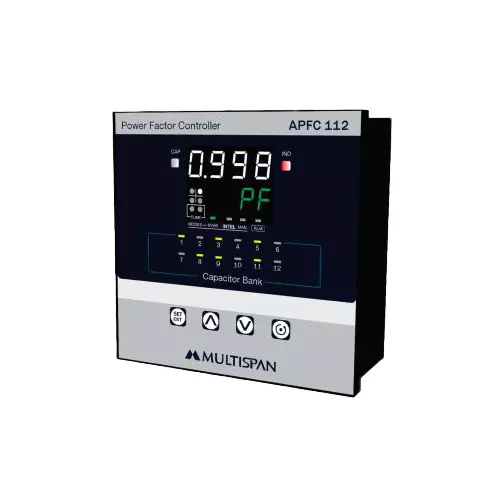
The APFC 112 controller automatically maintains optimal power factor by monitoring voltage and current, switching capacitors in real time as loads change. It reduces energy costs, prevents penalties, and improves efficiency for industries and businesses across Kenya and East Africa.
Across Kenya—whether in manufacturing plants in Nairobi, hotels in Mombasa, or hospitals in Kisumu—energy inefficiency is silently increasing operational costs. Many facilities pay penalties due to poor power factor without even realizing it.
Low power factor leads to:
- Higher electricity bills
- Overloaded transformers
- Reduced system efficiency
This is where the APFC 112 controller becomes essential.
Think of it as the intelligent manager of your electrical system, constantly monitoring your load and making real-time decisions to switch capacitors ON or OFF—ensuring optimal energy usage.
At Panel Tech Systems, a leading provider of electrical panel solutions in Kenya, advanced APFC systems are designed to help businesses reduce costs, improve reliability, and meet strict IEC standards.
What is an APFC 112 Controller?
An APFC 112 controller (Automatic Power Factor Correction controller) is a microprocessor-based device that automatically regulates the power factor of an electrical system.
Simple Explanation
Imagine your electrical system as a delivery truck:
- Real power = goods delivered
- Reactive power = empty space in the truck
The APFC 112 controller ensures your “truck” is always fully utilized—maximizing efficiency.
Learn more about how such systems are integrated into low voltage electrical panels for industrial use.
Why is Power Factor Important in Kenya?
Electrical infrastructure across East Africa faces unique challenges:
- Fluctuating industrial loads
- High cost of electricity
- Expanding urban developments
Facilities in Nairobi, Eldoret, and across East Africa must optimize energy usage to remain competitive.
Key Benefits:
- Lower electricity bills
- Reduced utility penalties
- Improved voltage stability
- Increased equipment lifespan
For deeper insights into power monitoring, explore advanced energy metering and protection solutions.
How Does the APFC 112 Controller Work?
The APFC 112 controller continuously monitors and reacts to system conditions in real time.
Step-by-Step Operation
- Measurement
- Uses CTs to measure current and voltage
- Calculates real-time power factor
- Analysis
- Compares actual PF with target (e.g., 0.99)
- Decision Making
- Determines whether to add or remove capacitors
- Execution
- Sends signals to switching devices
- Continuous Loop
- Repeats every few seconds
This automation is a core feature in modern motor control panel systems for industrial automation.
How the APFC 112 Controller Reacts to Changing Electrical Loads in Real-Time
This is the most important function—and the reason industries rely on it.
Scenario 1: Heavy Load Increase (Factory Startup)
- Motors and machines switch ON
- Power factor drops due to inductive loads
- APFC detects drop instantly
- Capacitor steps are switched ON
- Power factor improves immediately
Scenario 2: Load Reduction (Shutdown or Off-Peak Hours)
- Machines switch OFF
- Reactive demand decreases
- Controller switches OFF capacitors
- Prevents overcorrection
Scenario 3: Rapid Load Fluctuations (Common in Kenya)
Seen in:
- Welding workshops in Nairobi
- Textile industries in Eldoret
- Commercial malls
The APFC 112 controller:
- Responds within seconds
- Maintains stability
- Prevents voltage fluctuations
This level of control is critical when integrating systems like solar AC distribution and combiner panels.
Key Components of an APFC System
The controller works alongside several components:
- APFC 112 Controller – The brain (see product: https://paneltechsystems.co.ke/#apfc-112)
- Capacitor Banks – Provide reactive compensation
- Switching Devices – Contactors or thyristors
- Current Transformers (CTs) – Measurement
- Protection Devices – Safety mechanisms
High-quality components such as Rishabh electrical instruments ensure accurate monitoring and reliability.
Benefits of Using an APFC 112 Controller in Kenya
1. Reduced Energy Costs
Avoid penalties and reduce wasted energy.
2. Improved Efficiency
Maximize usable power without increasing supply.
3. Equipment Protection
Reduce overheating and wear.
4. Voltage Stability
Critical for sensitive systems like hospitals.
5. Scalability
Works well with systems like high-efficiency VFD drive solutions.
Technical Insights & Engineering Best Practices
At Panel Tech Systems engineering experts, APFC systems are designed with precision:
Load Profiling
- Analyze peak and base loads
Step Configuration
- Proper capacitor sizing prevents instability
Harmonic Consideration
- Use detuned reactors if required
Environmental Design
- Dust-proof panels for industrial areas
- Cooling for high temperatures
- Corrosion resistance for coastal regions
Compliance
- IEC 61439
- BS EN standards
Comparison Table: APFC Controller vs Manual Power Factor Correction
| Feature | APFC 112 Controller | Manual System |
|---|---|---|
| Operation | Automatic | Manual |
| Response Time | Real-time | Slow |
| Accuracy | High | Low |
| Efficiency | Optimized | Inconsistent |
| Risk of Overcorrection | Minimal | High |
| Best Use | Industrial & commercial | Small setups |
Step-by-Step Guide: How to Choose the Right APFC System in Kenya
Step 1: Analyze Your Load
Identify inductive loads like motors and transformers.
Step 2: Measure Power Factor
Use power analyzers.
Step 3: Define Target PF
Typically 0.95–0.99.
Step 4: Select Controller
Choose APFC 112 for dynamic environments.
Step 5: Size Capacitor Banks
Based on kvar requirements.
Step 6: Choose Switching Technology
- Contactors (standard)
- Thyristors (fast response)
Step 7: Work with Experts
Consult Panel Tech Systems electrical specialists for proper design and installation.
Common Mistakes in Electrical Installations
- Incorrect CT placement
- Oversized capacitor banks
- Ignoring harmonics
- Poor ventilation
- Lack of maintenance
Stay updated with best practices via the Panel Tech knowledge hub for electrical systems.
Cost Considerations in Kenya
Costs depend on:
- System size
- Number of capacitor steps
- Installation complexity
ROI Insight:
Most systems recover cost within 6–18 months through savings.
Frequently Asked Questions About APFC 112 Controller in Kenya
1. What does an APFC 112 controller do?
It automatically maintains optimal power factor by switching capacitor banks in real time.
2. How fast does it respond?
Within seconds to load changes.
3. Can it reduce electricity bills in Kenya?
Yes, by eliminating penalties and improving efficiency.
4. Is it suitable for commercial buildings?
Yes, especially malls, offices, and hospitals.
5. What happens if power factor is too high?
It can cause instability—APFC prevents this.
6. Does it work with solar systems?
Yes, when properly integrated.
7. Where is it commonly used?
Factories, schools, hospitals, and commercial buildings.
8. Is maintenance required?
Minimal, but periodic checks are recommended.
Conclusion
The APFC 112 controller is a critical component for modern electrical systems in Kenya. By reacting instantly to changing electrical loads, it ensures efficiency, stability, and cost savings.
For businesses across Nairobi and East Africa, investing in APFC technology is not optional—it is essential for sustainable operations.
Explore complete solutions at:
- Panel Tech Systems homepage
- Industrial electrical solutions portfolio
- Specialized infrastructure solutions
Power Your Project with Panel Tech Systems Today!
Whether you need a single distribution board or a full industrial electrical installation, our team of certified engineers is ready to deliver a tailored solution.
✔ IEC-Certified Electrical Panels
✔ End-to-End Engineering Solutions
✔ Trusted Across Kenya & East Africa
Call Us: 0799 531765
Email: [email protected]
Visit Us: Nairobi, Kenya