Central Battery System Kenya: Emergency Lighting Guide
A central battery system Kenya buildings can use to power emergency lighting from a shared battery source. Learn how central battery systems compare with self-contained fittings, including sizing, testing, monitoring and installation considerations.
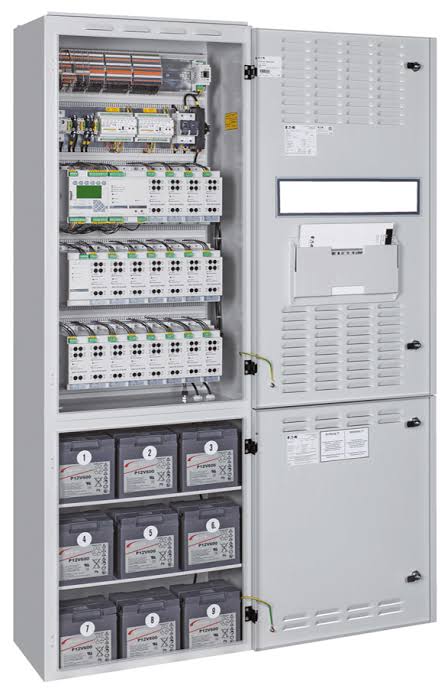
A central battery emergency lighting system supplies multiple emergency luminaires from a shared battery and central control equipment. It can simplify testing and maintenance in larger buildings, while self-contained fittings keep their battery and charging circuit within each individual luminaire.
For Kenyan commercial, residential, industrial and institutional buildings, the choice between a central battery system and self-contained emergency lighting should be based on building size, escape routes, required duration, maintenance strategy, reliability and the applicable fire and electrical requirements.
Related Products

ATS / MTS Kenya
ATS/MTS solutions from Paneltech Systems provide reliable Automatic and Manual Transfer Switches for seamless power transfer in industrial and commercial electrical systems.
View Product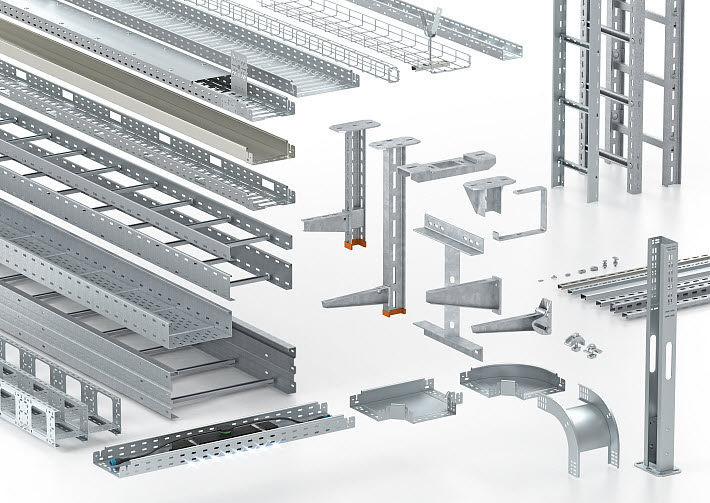
Cable Systems
Paneltech Systems offers comprehensive cable management systems for efficient, secure and organised cable setups across industrial and commercial environments.
View Product
Light Accessories
A comprehensive range of lighting accessories for commercial and industrial electrical installations.
View Product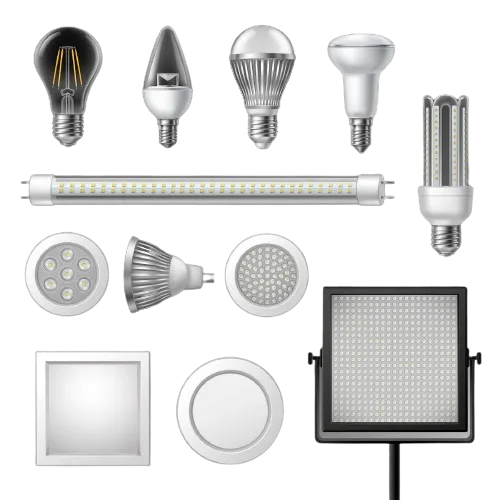
LED Lights
Paneltech Systems offers high-quality LED lighting solutions for indoor and outdoor applications ÔÇö bright, energy-efficient lighting for commercial and industrial spaces.
View ProductWhat Is a Central Battery System?
A central battery system uses one or more batteries in a dedicated central location to supply emergency lighting circuits when the normal electrical supply fails. Emergency luminaires throughout the building are connected back to the central system.
Under normal conditions, the system monitors the incoming supply and maintains the batteries in a charged condition.
When the normal supply fails:
Normal supply fails
↓
Central battery detects failure
↓
Emergency supply activates
↓
Emergency luminaires illuminate
This allows occupants to see escape routes, exits, stairs and other areas that must remain safely accessible during an outage.
Central Battery vs Self-Contained Emergency Lighting
Central battery systems place the energy storage and charging equipment centrally, while self-contained emergency lights have their own batteries. Central systems can offer easier centralised testing and maintenance, whereas self-contained systems can be simpler to install for smaller buildings.
| Feature | Central Battery | Self-Contained |
|---|---|---|
| Battery location | Central | Inside each fitting |
| Maintenance | Centralised | Individual fittings |
| Large installations | Often advantageous | Can require many battery units |
| Wiring | Dedicated emergency circuits | Local emergency connection |
| Battery replacement | Centralised | Many individual batteries |
| Monitoring | Can be centralised | Usually fitting-by-fitting |
| Initial complexity | Higher | Lower |
| Suitable application | Larger/complex buildings | Small to medium installations |
The best option depends on the building rather than simply choosing the cheapest equipment.
Why Emergency Lighting Is Important
Emergency lighting provides illumination when the normal lighting supply fails, helping occupants identify escape routes, stairs, exits and safety equipment. It is particularly important where a power failure could leave occupants in darkness or make evacuation difficult.
Emergency lighting can support:
- Escape routes
- Staircases
- Corridors
- Exit doors
- Fire-fighting equipment
- Changes in floor level
- Large open areas
- Assembly and public areas
The emergency lighting design should be coordinated with the building's fire and life-safety strategy.
Central Battery Emergency Lighting Design
Central battery emergency lighting design begins with identifying the required emergency luminaires, circuit arrangements, operating duration and available battery capacity. The system must then be sized so that the emergency load can be supplied for the required period.
Important design considerations include:
- Number of luminaires
- Luminaire wattage
- Emergency duration
- Battery voltage
- Battery capacity
- Circuit length
- Voltage drop
- Charging requirements
- Monitoring
- Fault indication
- Environmental conditions
The battery should not simply be selected based on the number of light fittings.
The complete emergency load must be calculated.
How a Central Battery System Works During a Power Failure
A central battery system continuously monitors the normal supply and automatically changes to battery operation when the supply fails. The emergency circuits then continue supplying the designated emergency luminaires for the specified duration.
A simplified arrangement is:
Utility Supply
↓
Normal Lighting Distribution
↓
Central Battery System
↓
Emergency Lighting Circuits
↓
Emergency Luminaires
The system can also provide monitoring and fault indications at the central battery unit.
Battery Capacity and Emergency Duration
Battery capacity must be sufficient to supply the connected emergency load for the specified emergency duration while accounting for system losses and battery operating characteristics. The required duration should come from the applicable design requirements rather than an arbitrary assumption.
The designer considers:
- Total emergency load
- Battery voltage
- Required duration
- Battery discharge characteristics
- Temperature
- Ageing allowance
- System efficiency
For example, adding more emergency fittings increases the required battery capacity.
This is why a load schedule is important before selecting the central battery system.
Emergency Lighting Circuit Design
Emergency lighting circuits should be arranged so that a fault or loss of a normal lighting circuit does not unnecessarily eliminate required emergency illumination. Circuit segregation and appropriate protection should be considered during design.
Depending on the system, circuits may be arranged for:
- Escape routes
- Open areas
- Staircases
- Exit signs
- Critical locations
Large buildings may use several emergency circuits rather than one large circuit.
This can improve system resilience and make fault identification easier.
Emergency Exit Signs
Emergency exit signs identify escape routes and exits when normal lighting fails. They should be positioned so that occupants can clearly identify the direction of travel toward a safe exit.
Exit signage may use:
- Internally illuminated signs
- Emergency luminaires
- Directional arrows
- Running-man symbols where specified
The positioning should follow the approved emergency-lighting and fire-safety design.
Central Battery System Monitoring
Central monitoring allows facility teams to identify faults affecting the emergency lighting system from a central location. Depending on the system, monitoring can include battery condition, charging status, circuit faults and luminaire faults.
A monitored system may provide indications for:
- Mains failure
- Battery fault
- Charger fault
- Circuit fault
- Low battery condition
- Luminaire fault
- Insulation fault
- Communication fault
For large buildings, central monitoring can significantly simplify maintenance.
Testing Central Battery Emergency Lighting
Emergency lighting should be tested regularly according to the applicable standards, project requirements and maintenance schedule. Central battery systems can simplify testing because the battery and monitoring equipment are concentrated in one location.
Testing can include:
- Functional testing
- Battery discharge testing
- Charger testing
- Luminaire testing
- Circuit testing
- Emergency changeover testing
- Fault-indication testing
Test results should be documented.
A system that is never tested may not provide the expected emergency illumination when an actual power failure occurs.
Battery Maintenance
Battery maintenance is essential because the battery is the energy source for the emergency system when normal power is unavailable. Battery condition, charging performance, connections and replacement intervals should be monitored.
Depending on the battery technology, maintenance may include:
- Visual inspection
- Terminal inspection
- Voltage checks
- Capacity testing
- Temperature checks
- Charger checks
- Replacement planning
Battery rooms or cabinets should also be suitable for the battery technology being used.
Where Central Battery Systems Work Best
Central battery systems are particularly useful in larger buildings where many emergency luminaires need coordinated monitoring and maintenance. They can reduce the number of individual batteries that maintenance teams need to inspect.
Potential applications include:
- Hospitals
- Hotels
- Shopping centres
- Office buildings
- Universities
- Industrial facilities
- Warehouses
- Transport facilities
- Large residential developments
For smaller buildings, self-contained emergency fittings may provide a simpler solution.
Emergency Lighting in Kenyan Buildings
Emergency lighting in Kenya should be designed with reference to the applicable building, fire-safety and electrical requirements for the project. The design should also account for the building's occupancy, escape routes and electrical infrastructure.
A project may need to consider:
- Building use
- Occupancy
- Escape routes
- Fire strategy
- Normal lighting arrangement
- Generator availability
- Emergency power
- Maintenance access
- Applicable standards
The presence of a generator does not automatically eliminate the need for emergency lighting.
Emergency lighting provides a dedicated life-safety function and should be designed accordingly.
Central Battery and Generator Systems
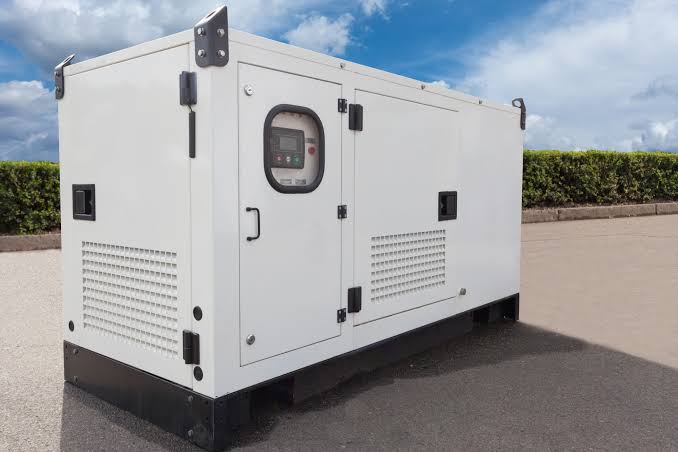
A generator and a central battery emergency lighting system can work together because they serve different functions. The generator can provide longer-duration backup power, while the emergency lighting system provides immediate emergency illumination following a normal supply failure.
A possible arrangement is:
Utility Failure
↓
Emergency Lighting Changes to Battery
↓
Generator Starts
↓
Generator Supply Available
↓
Emergency/Normal Loads Transfer According to Design
The exact changeover arrangement should be engineered around the building's emergency-power strategy.
Central Battery System Components
A central battery system normally includes batteries, a charger, monitoring equipment, changeover equipment and outgoing emergency circuits. Additional controls and communication interfaces can be included for larger installations.
Typical components include:
- Battery bank
- Battery charger
- Control unit
- Changeover device
- Circuit protection
- Emergency distribution circuits
- Monitoring system
- Fault indicators
- Communication interface
The equipment should be selected as a coordinated system.
Choosing the Right Battery Technology
Battery selection should consider capacity, operating environment, expected service life, maintenance requirements and the manufacturer's recommendations. The battery technology should be appropriate for the central emergency-lighting system and its installation environment.
Common technologies may include:
- Lead-acid batteries
- Valve-regulated lead-acid batteries
- Nickel-cadmium batteries
- Lithium-based systems in suitable applications
Each has different characteristics.
The selection should therefore consider the project's operating and maintenance requirements rather than relying only on initial purchase cost.
Central Battery Enclosure and Installation
The central battery equipment should be installed in an appropriate location with adequate ventilation, accessibility and protection. Battery installation requirements vary according to the battery technology used.
Consider:
- Ambient temperature
- Ventilation
- Accessibility
- Fire separation
- Cable routes
- Protection against accidental damage
- Maintenance space
- Battery-room requirements
For larger systems, the battery installation may require a dedicated technical room.
Emergency Lighting Cable Considerations
Emergency lighting cable selection should consider circuit current, voltage drop, installation environment and the applicable fire and emergency-lighting requirements. Where fire-resistant or enhanced-survival cabling is required, the complete cable system should be specified accordingly.
Consider:
- Cable size
- Circuit length
- Voltage drop
- Fire performance
- Mechanical protection
- Cable support
- Segregation
- Terminations
The cable system should be compatible with the emergency lighting design.
Common Emergency Lighting Design Mistakes
Common mistakes include insufficient emergency coverage, poor battery sizing, inadequate testing provisions and treating emergency lighting as ordinary lighting. Life-safety systems require deliberate design, documentation and maintenance.
Mistake 1: Choosing Battery Capacity Too Early
The battery should be sized after calculating the emergency load.
Mistake 2: Ignoring Voltage Drop
Long emergency-lighting circuits can affect luminaire performance.
Mistake 3: No Central Monitoring
Large installations can become difficult to maintain without adequate fault indication.
Mistake 4: Poor Luminaire Placement
Emergency fittings must provide useful illumination along escape routes.
Mistake 5: Failing to Test
A system that has not been tested cannot be assumed to operate correctly.
Central Battery vs Self-Contained: Which Should You Choose?
Choose central battery emergency lighting where centralised monitoring, battery maintenance and large-scale emergency-lighting management justify the additional system complexity. Self-contained emergency fittings may be more practical for smaller or less complex buildings.
A simple decision approach is:
Small building → Self-contained may be practical
Large building → Consider central battery
Complex building → Compare central monitoring and maintenance requirements
Critical facility → Develop a complete emergency-power strategy
The final decision should be made during electrical and life-safety design.
Paneltech Systems Emergency Power Solutions
Paneltech Systems Ltd can support electrical distribution, control and backup-power infrastructure that forms part of wider emergency-power strategies. The central battery system itself should be selected and engineered according to the building's emergency-lighting requirements and applicable standards.
The wider electrical infrastructure may include:
- LV panels
- Distribution boards
- ATS systems
- Motor control
- Protection systems
- Generator interfaces
- Monitoring and control
Explore Paneltech Systems for its electrical engineering and panel solutions.
You can also review the Paneltech Systems Knowledge Site for technical resources.
Final Considerations
A central battery system can provide a robust and maintainable emergency-lighting solution for larger Kenyan buildings, particularly where centralised monitoring and battery maintenance are valuable. The system must be correctly sized, installed, tested and maintained to support the building's life-safety strategy.
Before specifying a central battery system, confirm:
- Emergency-lighting load
- Required duration
- Escape-route coverage
- Exit-sign requirements
- Battery technology
- Battery capacity
- Circuit arrangement
- Voltage drop
- Monitoring requirements
- Cable requirements
- Generator integration
- Installation environment
- Testing procedure
- Applicable standards
The most suitable emergency-lighting system is the one that provides reliable illumination, can be properly maintained and fits the building's overall fire and electrical safety strategy.