Counterfeit Breaker Kenya: How to Spot Low-Grade MCCBs in Tender Submittals
Learn how to identify potentially counterfeit or non-compliant breakers in electrical tender submittals. This guide covers model numbers, ratings, datasheets, certificates, breaking capacity, manufacturer documentation and practical verification steps.
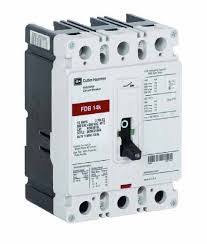
A counterfeit breaker Kenya project teams may encounter can look legitimate while having incorrect ratings, documentation or manufacturer identification. Tender teams should verify the exact MCCB model, electrical ratings, breaking capacity, technical datasheets and traceability before approving a proposed breaker.
Electrical protection devices are not components that should be selected purely on price.
An MCCB protects cables, equipment and people from potentially dangerous electrical faults. If a breaker does not perform according to its declared characteristics, the consequences can extend from nuisance tripping to equipment damage and serious electrical incidents.
Tender submittals therefore need a structured technical review.
A product that appears to meet a specification on paper should still be checked against the manufacturer's technical information.
Paneltech Systems Ltd supports LV panel and switchgear solutions for industrial, commercial and infrastructure applications.
What Is a Counterfeit Breaker?
A counterfeit breaker is an electrical protection device falsely presented as a genuine product or as meeting characteristics it does not actually possess. A non-compliant or low-grade breaker can also be unsuitable even when it is not technically counterfeit, so both authenticity and performance must be checked.
It is important to distinguish several situations.
Counterfeit Product
A product falsely bearing another manufacturer's identity, markings or documentation.
Misrepresented Product
A genuine product that is presented with incorrect specifications or an unsuitable application rating.
Non-Compliant Product
A legitimate product that does not meet the project's specified requirements.
Unapproved Substitution
A different product supplied without the required technical approval.
These categories should not automatically be treated as identical.
The procurement team should establish exactly what has been supplied and whether it satisfies the contract requirements.
Why Tender Submittal Checks Matter
Tender submittal checks prevent unsuitable electrical components from entering procurement and manufacturing before their technical suitability has been established. Early verification is normally easier and less costly than discovering a problem after installation.
A tender submission may contain:
- Product brochures
- Datasheets
- Certificates
- Compliance statements
- Product photographs
- Model numbers
- Technical schedules
- Manufacturer declarations
However, documentation should be assessed as a complete package.
A brochure alone does not prove that the exact breaker proposed has the required rating.
Start With the Exact MCCB Model Number
The exact MCCB model number is one of the most useful starting points when checking a tender submission. The model should correspond consistently across the quotation, datasheet, technical schedule and manufacturer documentation.
For example, a submission may state:
400 A MCCB, 36 kA, 4-pole
That description is incomplete without identifying the actual product.
Request:
- Manufacturer
- Product family
- Exact catalogue/model number
- Frame size
- Pole configuration
- Trip-unit type
- Rated current
- Breaking capacity
- Accessories
Then compare those details with the manufacturer's official technical documentation.
Check the MCCB Rating Carefully
The rated current of an MCCB must match the project's load and protection design, while its voltage and fault-interruption ratings must also be suitable for the installation. An MCCB should never be approved based only on its ampere rating.
Review at least:
| Parameter | What to Check |
|---|---|
| Rated current | Matches approved schedule |
| Rated voltage | Suitable for system |
| Frequency | Suitable for system |
| Poles | Matches design |
| Breaking capacity | Meets calculated fault level |
| Trip type | Matches protection requirements |
| Trip settings | Appropriate for application |
| Accessories | As specified |
A 250 A MCCB is not automatically equivalent to every other 250 A MCCB.
Verify the Breaking Capacity
Breaking capacity is critical because an MCCB must be capable of interrupting the prospective short-circuit current at its installation point. The proposed breaker should therefore be compared with the project's calculated fault level, not simply its current rating.
Consider:
MCCB A
- 250 A
- 25 kA breaking capacity
MCCB B
- 250 A
- 36 kA breaking capacity
Both have the same current rating.
They may not be suitable for the same installation.
The tender reviewer should therefore request the relevant fault-level information and verify that the proposed MCCB can safely interrupt the expected fault current.
Check the Manufacturer's Official Datasheet
The exact model submitted should be traceable to reliable manufacturer documentation. The datasheet should confirm the product's electrical ratings, protection characteristics and applicable standards.
Look for:
- Exact model number
- Product family
- Rated current
- Rated voltage
- Breaking capacity
- Trip characteristics
- Dimensions
- Accessories
- Applicable standards
Do not rely exclusively on:
- Supplier-created tables
- Screenshots
- Marketplace listings
- Unverified PDFs
- Product photographs
Where possible, the procurement team should verify the model against the manufacturer's current documentation.
Compare the Tender Schedule Against the Datasheet
The tender technical schedule and manufacturer's datasheet should agree on the critical characteristics. Differences should be clarified before technical approval.
For example:
| Parameter | Tender Requirement | Submitted Product | Result |
|---|---|---|---|
| Current | 400 A | 400 A | Match |
| Voltage | 415 V | Suitable | Verify |
| Poles | 4P | 4P | Match |
| Breaking capacity | 36 kA | 25 kA | Non-compliant |
| Trip unit | Electronic | Thermal-magnetic | Review |
| Auxiliary contacts | Required | Included | Match |
This type of matrix makes technical evaluation much easier.
Check for Unusual Model Numbers
Unusual, incomplete or inconsistent model numbers should trigger additional verification rather than an immediate conclusion that a product is counterfeit. Model-number differences can arise from regional variants, frame sizes, accessories or product revisions.
Look for:
- Missing characters
- Inconsistent suffixes
- Incorrect frame designations
- Different pole configurations
- Unrecognised product families
- Model numbers that cannot be located in manufacturer documentation
The correct approach is to ask the manufacturer or authorised supply channel to clarify the product identity.
Check the Breaker's Physical Markings
Physical markings should correspond with the submitted technical documentation, including manufacturer identity, model information and electrical ratings. However, markings alone cannot prove authenticity because counterfeit products can reproduce labels.
During inspection, compare:
- Manufacturer name
- Model number
- Rated current
- Voltage
- Pole configuration
- Serial or identification information where applicable
- Certification markings
- Product label
The physical product should match the approved submittal.
If it does not, stop and investigate before installation.
Beware of Photographs as Proof of Compliance
A product photograph is useful for identifying general appearance but is not sufficient evidence of technical compliance or authenticity. Tender reviewers should rely on verifiable technical documentation and product identification.
A photograph may show:
- Brand
- General design
- Label
- Breaker appearance
But it may not establish:
- Actual breaking capacity
- Trip characteristics
- Internal construction
- Exact model
- Factory configuration
A photograph should therefore support, not replace, technical documentation.
Verify the Trip Unit
The trip unit determines important protection characteristics, so the tender reviewer should verify that the submitted trip technology matches the project specification. Thermal-magnetic and electronic trip units should not be treated as interchangeable without technical review.
Possible configurations include:
- Thermal-magnetic
- Electronic
- Adjustable long-time protection
- Adjustable short-time protection
- Instantaneous protection
- Earth-fault protection
For industrial switchboards, the protection study may require particular adjustment capabilities.
Check Accessories Separately
MCCB accessories can significantly affect the product configuration and functionality. A tender submission should therefore identify required accessories individually rather than assuming they are included with the breaker.
Possible accessories include:
- Auxiliary contacts
- Alarm contacts
- Shunt trip
- Undervoltage release
- Motor operator
- Rotary handles
- Door-mounted handles
- Interlocks
- Communication modules
A breaker may technically meet the main rating while still failing the project requirement because an important accessory has been omitted.
Verify Standards and Compliance Claims
A tender submittal should clearly identify the applicable product standards and provide appropriate evidence of compliance. Compliance claims should be checked against the exact product and configuration being proposed.
For LV circuit breakers, the applicable IEC product standard should be identified according to the equipment and project requirements.
A useful tender requirement is:
The bidder shall submit manufacturer documentation identifying the applicable product standard and demonstrating compliance of the exact proposed model.
Avoid accepting vague statements such as:
“IEC compliant.”
Ask:
Which standard?
Which product?
Which configuration?
What evidence?
Do Not Confuse IEC 61439 With MCCB Product Compliance
IEC 61439 primarily addresses low-voltage switchgear and controlgear assemblies, while the circuit breaker itself is covered by its applicable product requirements. Tender reviewers should therefore assess both the breaker and the complete panel assembly appropriately.
This distinction is important.
For example:
MCCB → individual protective device requirements
LV Panel → assembly requirements
A panel can contain a genuine MCCB and still have assembly-level problems if the complete switchboard has not been properly designed and verified.
Check Breaking Capacity at the Correct Voltage
Breaking-capacity figures should always be considered together with the applicable voltage and test conditions. A kA value taken from one operating condition should not automatically be applied to another.
For example, do not simply compare:
“Breaker A = 36 kA”
with
“Breaker B = 36 kA.”
Verify:
- Voltage
- Frequency
- Breaking-capacity designation
- Test conditions
- Product configuration
The manufacturer's datasheet should provide the relevant information.
Check the Tenderer's Compliance Schedule
A compliance schedule should show whether the bidder meets, partially meets or deviates from every important technical requirement. This makes hidden substitutions easier to identify.
A useful structure is:
| Specification Requirement | Bidder's Offer | Compliance | Comments |
|---|---|---|---|
| 400 A MCCB | 400 A | Compliant | — |
| 36 kA | 36 kA | Compliant | Verify model |
| 4P | 4P | Compliant | — |
| Electronic trip | Electronic | Compliant | Datasheet attached |
| Auxiliary contact | Included | Compliant | — |
| Manufacturer | Specified brand | Deviation | Approval required |
Never allow a bidder to hide important deviations inside general wording.
Look for “Equivalent” Substitutions
An alternative MCCB should only be treated as equivalent after its technical characteristics have been compared against the specified product. “Equivalent” is a claim that should be supported by technical evidence.
Compare:
- Current rating
- Voltage
- Breaking capacity
- Protection
- Selectivity
- Dimensions
- Accessories
- Termination
- Standards
- Availability
- Warranty
A lower-cost product is not necessarily technically equivalent.
Check Product Dimensions
MCCB dimensions can affect the panel's internal arrangement, cable termination and maintenance access. A technically compliant replacement may still require a revised panel design if its physical dimensions differ.
Check:
- Width
- Height
- Depth
- Terminal position
- Mounting arrangement
- Handle position
- Accessory location
This is particularly important after a panel GA drawing has already been approved.
Check Cable Termination Compatibility
The proposed MCCB should accommodate the specified cable arrangement without compromising safe termination. Terminal sizes, cable entry and accessory arrangements should be checked before approval.
Review:
- Cable size
- Number of conductors
- Terminal capacity
- Lug requirements
- Cable bending space
- Gland arrangement
- Neutral connection
- Earth connection
A breaker that fits electrically but cannot accommodate the specified cable arrangement is not a practical substitution.
Check the Supply Chain
Reliable procurement channels improve traceability and make it easier to verify the exact product supplied. Tender teams should establish who will supply the equipment and what documentation will accompany it.
Ask suppliers for:
- Manufacturer details
- Product catalogue
- Model number
- Datasheet
- Warranty
- Certificate where applicable
- Delivery documentation
- Serial/traceability information where applicable
For critical equipment, procurement should have a clear chain from manufacturer or authorised channel to project site.
Counterfeit Breaker Kenya: Warning Signs That Require Investigation
No single warning sign proves that an MCCB is counterfeit, but multiple inconsistencies should trigger further verification. The correct response is technical investigation rather than relying on visual assumptions.
Potential warning signs include:
- Unusually low quotation
- Inconsistent model numbers
- Poor-quality labels
- Missing technical documentation
- Ratings that cannot be verified
- Different physical product from approved drawings
- Unexplained substitutions
- Missing warranty information
- Inconsistent packaging
- Supplier unable to explain product origin
Any one of these may have an innocent explanation.
Several together deserve closer investigation.
How to Verify a Suspected Fake MCCB
If an MCCB is suspected to be counterfeit or non-compliant, do not rely on visual inspection alone. Isolate the procurement issue, compare the product against manufacturer documentation and obtain confirmation through an appropriate manufacturer or authorised technical channel.
A practical process is:
Step 1: Stop installation
Do not install questionable protection equipment simply to maintain programme.
Step 2: Record identification
Document:
- Manufacturer
- Model
- Rating
- Serial/identification details where available
- Supplier
- Purchase documentation
Step 3: Compare documentation
Check the product against the manufacturer's technical information.
Step 4: Review the approved submittal
Determine whether the supplied product is the exact approved model.
Step 5: Obtain technical confirmation
Request verification from the manufacturer or appropriate authorised channel.
Step 6: Record the outcome
Maintain a documented record of the investigation.
What to Do When a Tenderer Proposes a Different Breaker
A proposed alternative should be assessed as a technical substitution rather than automatically accepted or rejected. The bidder should provide sufficient evidence to demonstrate that the alternative meets the project's requirements.
Request:
- Exact model
- Datasheet
- Compliance statement
- Breaking capacity
- Trip characteristics
- Dimensions
- Accessories
- Standards
- Warranty
- Availability
Then compare the product against the tender specification.
Tender Evaluation Checklist for MCCBs
A standard MCCB tender checklist helps procurement teams evaluate competing submissions consistently. The checklist should cover technical compliance, documentation, authenticity and lifecycle considerations.
| Check | Status |
|---|---|
| Manufacturer identified | [ ] |
| Exact model identified | [ ] |
| Rated current verified | [ ] |
| Rated voltage verified | [ ] |
| Breaking capacity verified | [ ] |
| Trip unit verified | [ ] |
| Protection settings verified | [ ] |
| Accessories verified | [ ] |
| Datasheet provided | [ ] |
| Applicable standards identified | [ ] |
| Compliance statement provided | [ ] |
| Deviations declared | [ ] |
| Dimensions checked | [ ] |
| Cable termination checked | [ ] |
| Warranty confirmed | [ ] |
| Supply source identified | [ ] |
| Replacement availability checked | [ ] |
| Technical approval obtained | [ ] |
How Paneltech Systems Approaches Component Selection
MCCB selection should form part of the overall LV panel engineering process rather than being treated as an isolated procurement decision. The selected components must work with the panel's busbars, cables, protection strategy, control system and installation requirements.
For a custom panel, the engineering process can include:
- Reviewing the load schedule
- Reviewing the single-line diagram
- Confirming fault-level requirements
- Selecting suitable protection devices
- Coordinating breakers and cables
- Preparing the panel GA
- Reviewing technical documentation
- Manufacturing the panel
- Testing the completed assembly
- Supporting commissioning
See Paneltech Systems' LV panel solutions for information about custom electrical panels and related equipment.
You can also learn more through the Paneltech Systems Knowledge Centre.
Final Verdict: How to Spot Low-Grade Breakers in Tenders
The most reliable way to identify a potentially counterfeit or low-grade breaker is to verify the exact product against its manufacturer's technical documentation and the project's approved specification. Do not approve an MCCB based solely on appearance, brand name, price or a generic compliance statement.
A strong tender review asks:
What exact product is being offered?
Does its rating match the design?
Can its breaking capacity be verified?
Does the trip unit meet the protection requirements?
Are the accessories included?
Does the product documentation match the physical equipment?
Has any substitution been properly declared and approved?
Can the supply chain and product identity be reasonably verified?
These checks help protect the project from unsuitable electrical components while creating a defensible technical procurement process.
Contact Paneltech Systems Ltd
Powering Kenya's Future with Reliable Electrical Solutions
Email: [email protected]
Phone: 0799 531765
Location: Nairobi, Kenya
Website: https://paneltechsystems.co.ke/
Our Specialized Services
- Low Voltage (LV) Panels & APFC Panels
- VFD Drive Solutions & ATS / MTS Systems
- Solar Power & EV Charging Infrastructure
- Electrical Supplies & Engineering Consultations
For MCCB selection, tender technical review, LV panel design or electrical component procurement, contact Paneltech Systems Ltd for engineering support based on your project's load schedules, fault levels, specifications and compliance requirements.