Fire Rated Cable Kenya: 2026 Guide and Specs | Paneltech Systems Kenya
Need fire rated cable Kenya? Learn circuit integrity requirements, FP200 cable applications, fire-resistant supports and life-safety cabling.
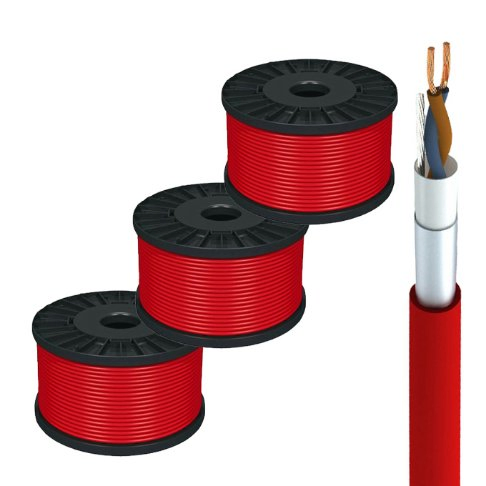
A fire alarm, smoke-control system, emergency lighting circuit or fire pump is only dependable if its electrical supply remains available when a fire occurs. This is why fire rated cable Kenya projects require more than ordinary cable selection: the complete circuit must maintain its required function for the specified period under fire conditions.
Circuit integrity refers to the ability of an electrical circuit to continue performing its required function during exposure to fire. For life-safety systems, that can mean maintaining power to fire pumps, fire alarm equipment, emergency lighting, smoke-control systems, voice evacuation equipment or other critical services long enough for the system to perform its intended function.
Related Products
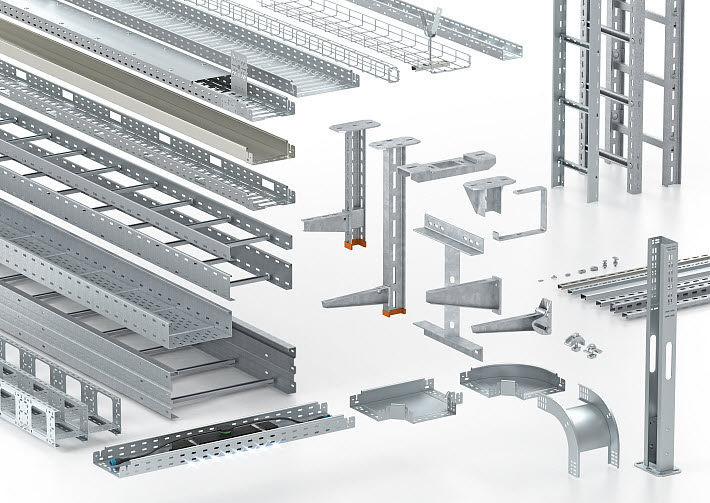
Cable Systems
Paneltech Systems offers comprehensive cable management systems for efficient, secure and organised cable setups across industrial and commercial environments.
View Product
ATS / MTS Kenya
ATS/MTS solutions from Paneltech Systems provide reliable Automatic and Manual Transfer Switches for seamless power transfer in industrial and commercial electrical systems.
View Product
Marine Cables
Heavy-duty marine-grade cables designed for reliable performance in marine and offshore electrical installations.
View Product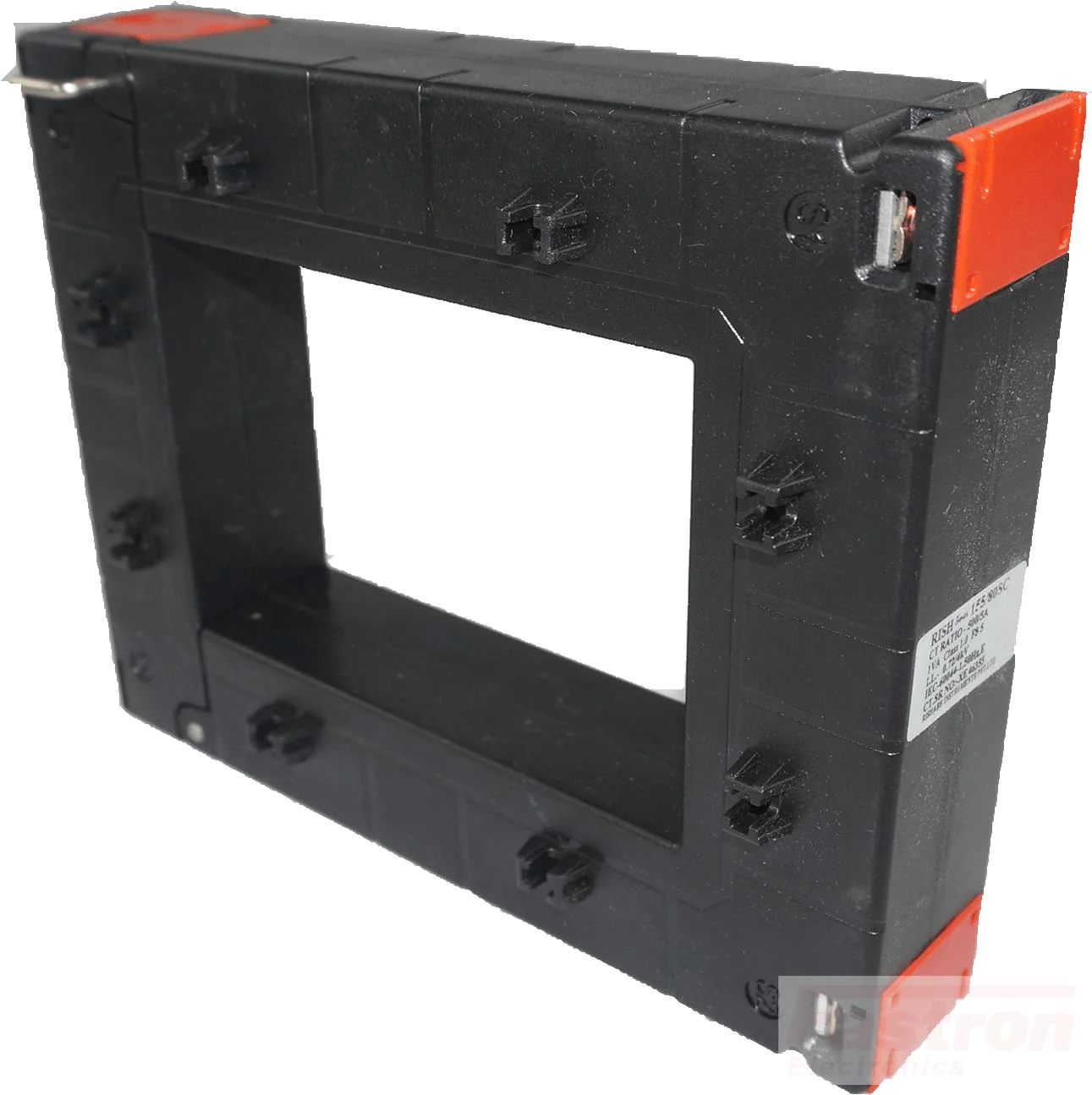
Rishabh Splitcore
Rishabh Split Core CTs from Paneltech Systems offer easy installation and accurate power monitoring without disconnecting cables.
View ProductFire-resistant cable is therefore only one part of the solution. Cable construction, joints, glands, supports, containment, penetrations, routing and termination all influence whether the completed installation actually maintains circuit integrity.
For Kenyan commercial buildings, hospitals, factories, warehouses, apartments and infrastructure projects, the specification should be based on the required fire performance, system function and applicable standards rather than selecting a cable solely because it is marketed as "fire resistant."
What Is Circuit Integrity?
Circuit integrity is the ability of an electrical circuit to maintain continuity and, where required, its ability to continue operating correctly for a defined period during fire exposure. A life-safety circuit can lose its integrity even when the cable itself is fire resistant if its supports, joints, terminations or penetrations fail.
This distinction is important.
Imagine a fire alarm circuit installed using a fire-resistant cable.
The cable may withstand fire for a specified duration, but if it is attached using ordinary plastic clips that melt quickly, the cable can fall from the wall.
The result is a circuit that no longer meets its intended installation requirement.
Similarly, a cable passing through a fire-rated wall may create a weak point if the penetration is not correctly sealed.
Circuit integrity therefore applies to the whole installed circuit, not just the cable.
A complete fire-resistant circuit can involve:
Cable + containment + supports + glands + joints + terminations + fire stopping + equipment connections
All of these elements must be considered.
What Is Fire-Rated Cable?
Fire-rated or fire-resistant cable is designed and tested to maintain specified electrical performance under defined fire conditions. The exact performance depends on the cable construction and the test standard, so "fire rated" should never be treated as a single universal rating.
Different cables can provide different levels of fire performance.
Some are designed primarily to resist flame propagation.
Others are designed to maintain circuit continuity during fire exposure.
These are not necessarily the same thing.
A cable may resist flame spread while still losing electrical continuity relatively quickly when exposed to high temperatures.
For life-safety applications, the engineer should therefore identify the actual required performance.
Important questions include:
- Does the cable need to maintain circuit continuity?
- For how long?
- At what test temperature?
- Is mechanical shock included in the test?
- Is water exposure part of the test?
- What installation method was used during testing?
- What cable support system was tested?
- Are the glands and terminations compatible?
These questions become particularly important when specifying FP200 cable or other fire-resistant cable types.
Fire Rated Cable Kenya: Why It Matters
Fire rated cable Kenya installations are used where electrical systems must continue operating during a fire, including fire alarms, emergency lighting, fire pumps and smoke-control equipment. The cable specification should be matched to the required fire performance and the applicable Kenyan project standards.
In a typical commercial building, life-safety electrical systems may include:
- Fire alarm systems
- Emergency lighting
- Exit signage
- Smoke extraction
- Stairwell pressurization
- Fire pumps
- Fire detection interfaces
- Voice evacuation
- Firefighter communication systems
- Fire shutters
- Certain emergency control systems
If a fire damages the cable feeding one of these systems, the system may stop operating exactly when it is needed.
For this reason, the fire strategy should identify which circuits require fire survival.
The electrical design can then determine the appropriate cable and installation method.
Circuit Integrity vs Flame Retardance
Circuit integrity should not be confused with flame retardance. Flame-retardant cables are primarily designed to limit flame propagation, while fire-resistant cables intended for life-safety applications are designed to maintain specified circuit performance during defined fire conditions.
This distinction is frequently overlooked.
Flame-retardant cable
A flame-retardant cable is designed to reduce the spread of fire along the cable.
Fire-resistant cable
A fire-resistant cable is designed to continue functioning under specified fire-test conditions for a defined duration.
A life-safety circuit may require both properties.
The cable should therefore be specified using the appropriate performance standard and test classification rather than a generic description.
FP200 Cable: Where Is It Used?
FP200 cable is a commonly recognized fire-resistant cable type used in applications such as fire alarm and other critical signalling or power circuits, depending on the specific cable construction and project requirements. Its suitability should always be confirmed against the required fire-performance classification.
FP200 is commonly associated with fire-resistant electrical installations.
Typical applications can include:
- Fire alarm circuits
- Detection circuits
- Emergency systems
- Control circuits
- Signalling circuits
- Other life-safety applications where the specified cable performance is suitable
However, not every life-safety circuit should automatically use the same cable.
A fire pump motor, for example, has very different electrical requirements from a fire alarm detector loop.
The designer must consider:
- Voltage
- Current
- Number of conductors
- Cable size
- Voltage drop
- Starting current
- Circuit type
- Fire-survival duration
- Environmental conditions
- Installation method
Fire Alarm Cable vs Fire Pump Cable
Fire alarm circuits and fire pump circuits can require different cable constructions because their electrical loads and system functions are different. A cable suitable for a low-current fire alarm circuit should not automatically be specified for a high-current fire pump supply.
A fire alarm circuit may carry relatively low current but require continuous signalling during a fire.
A fire pump circuit may supply a large motor and therefore require substantial conductor cross-section, appropriate insulation, fault withstand and fire-survival performance.
The specification should therefore begin with the load.
Fire Alarm
Typical considerations include:
- Low-current signalling
- Detection loops
- Sounder circuits
- Control circuits
- Addressable devices
- Voltage drop
Fire Pump
Typical considerations include:
- Motor full-load current
- Starting current
- Cable size
- Voltage drop
- Short-circuit withstand
- Fire survival
- Mechanical protection
- Termination requirements
The two circuits should not be treated as interchangeable.
How Long Must a Fire-Rated Circuit Survive?
There is no single fire-survival duration that applies to every life-safety circuit. The required duration depends on the building fire strategy, system function, applicable standard and project specification.
Some installations may specify a particular duration such as 30, 60, 90 or 120 minutes.
However, the correct duration must come from the applicable design requirements.
The engineer should establish:
- What system is being supplied?
- What function must continue during the fire?
- How long must that function remain available?
- Which standard defines the required performance?
- What cable test classification is required?
- Does the installation method maintain the same performance?
For example, the requirement for an emergency lighting circuit may differ from the requirement for a fire pump feeder.
The specification should therefore avoid selecting a cable based purely on a time number without understanding the complete system requirement.
Fire-Rated Cable Testing
Fire-resistant cables are assessed using defined fire-test procedures that establish whether they maintain specified performance under particular conditions. The test classification should be checked against the actual life-safety requirement rather than relying on marketing descriptions.
Depending on the applicable standard, testing may evaluate factors such as:
- Flame exposure
- Circuit continuity
- Duration
- Mechanical impact
- Water exposure
- Electrical loading
This matters because a cable that survives a basic flame test may not necessarily maintain circuit integrity under more demanding conditions.
The engineer should therefore review the manufacturer's technical documentation and test certificates.
A procurement specification should identify the required standard and performance class.
Circuit Integrity Is More Than the Cable
The cable alone cannot guarantee circuit integrity. Supports, fixings, containment, joints, glands, terminations and fire-stopping arrangements must all remain functional under the conditions covered by the required installation performance.
Consider a fire alarm cable attached to a wall.
If the cable is fire resistant but held using a support that fails early in a fire, the cable can fall.
This can cause:
- Mechanical damage
- Disconnection
- Short circuits
- Loss of circuit continuity
- Failure of critical equipment
The installation method must therefore be selected alongside the cable.
Key Installation Components
A complete circuit-integrity installation may require:
- Fire-resistant cable
- Metallic cable supports
- Appropriate cleats
- Fire-resistant containment
- Fire-rated glands
- Fire-rated junction boxes
- Suitable terminations
- Tested fire-stopping systems
The compatibility of all components should be verified.
Cable Supports for Life-Safety Circuits
Fire-rated cables should be supported using systems capable of maintaining the required cable position and function during fire exposure. Ordinary plastic cable ties or supports that melt rapidly can undermine an otherwise compliant fire-resistant installation.
This is one of the simplest ways circuit integrity can be compromised.
Ordinary cable ties may be useful for temporary cable management but are not automatically suitable as permanent supports for fire-survival circuits.
The support system should be selected according to:
- Cable weight
- Installation orientation
- Required fire duration
- Environmental conditions
- Applicable testing
- Manufacturer instructions
Where the cable system has been tested with a particular support arrangement, the installed configuration should follow the tested or approved method.
Fire-Rated Cable Glands and Terminations
Cable glands and terminations are critical parts of a fire-rated circuit because a fire-resistant cable can lose its intended performance at the point where it enters equipment. Glands, junction boxes and terminations should therefore be suitable for the cable and the required fire-performance application.
A cable may perform correctly along its length but fail at the termination.
Common issues include:
- Incorrect gland size
- Incorrect termination technique
- Incompatible gland materials
- Poor conductor preparation
- Inadequate sealing
- Incorrect junction boxes
- Unprotected termination points
The cable manufacturer should provide appropriate installation instructions.
The electrical contractor should follow these instructions during installation.
Fire Stopping and Cable Penetrations
Every cable penetration through a fire-rated wall, floor or compartment can create a potential weakness in the building's fire barrier. Penetrations must therefore be sealed using an appropriate tested fire-stopping system compatible with the cable and the required fire rating.
This is particularly important in:
- Hospitals
- High-rise buildings
- Apartment blocks
- Shopping centres
- Hotels
- Factories
- Warehouses
A fire-rated wall may provide the required compartmentation, but an unsealed cable opening can allow smoke and flames to pass between compartments.
The fire-stopping system should therefore be treated as part of the life-safety installation.
It should be properly installed, documented and inspected.
Circuit Integrity for Fire Pump Supplies
Fire pump feeders are among the most important life-safety circuits because loss of power can prevent the pump from delivering water when required. Their cable size, fire performance, supports, routing and terminations should therefore be coordinated with the fire pump controller and applicable fire protection requirements.
A typical arrangement is:
Electrical supply → Fire pump controller → Fire pump motor
The feeder must support both starting and running conditions.
The designer should assess:
- Motor rating
- Full-load current
- Starting current
- Voltage drop
- Cable length
- Installation method
- Fire exposure
- Short-circuit withstand
- Termination requirements
- Controller compatibility
Paneltech Systems' fire pump control and electrical panel solutions can be coordinated with the broader electrical design.
The fire pump cable should never be selected independently of the controller and motor.
Circuit Integrity for Emergency Lighting
Emergency lighting circuits may need to remain operational during a fire or loss of normal power so occupants can evacuate safely. The cable system, emergency power source, luminaires and control equipment must therefore be considered together.
Emergency lighting may be supplied by:
- Central battery systems
- Individual emergency luminaires
- Generator-backed systems
- Other approved emergency-power arrangements
The cable design depends on the system architecture.
Where the cable itself must survive fire exposure, the required fire-performance classification must be established from the applicable building and fire-safety requirements.
The circuit should also be checked for:
- Voltage drop
- Emergency duration
- Cable routing
- Fire compartments
- Circuit separation
- Testing
Circuit Integrity for Fire Alarm Systems
Fire alarm circuits require dependable signalling between detection devices, control equipment and notification devices. Fire-resistant cabling can help maintain system operation when parts of the building are exposed to fire, provided the complete installation meets the required circuit-integrity specification.
Depending on the fire alarm architecture, circuits may connect:
- Smoke detectors
- Heat detectors
- Manual call points
- Sounders
- Visual alarms
- Fire alarm panels
- Input/output modules
- Remote annunciators
- Fire-control interfaces
The cable selection must be compatible with the system manufacturer and fire alarm design.
Addressable and conventional systems can have different cabling requirements.
Circuit Integrity for Smoke-Control Systems
Smoke extraction and stairwell pressurization systems may be required to remain operational during a fire, making their power and control circuits important life-safety pathways. Cable selection should account for motor current, control requirements and the required fire-survival performance.
Smoke-control systems can include:
- Smoke extract fans
- Stairwell pressurization fans
- Car-park smoke extraction
- Smoke dampers
- Control panels
- Firefighter override controls
These systems can involve significant motor loads.
Consequently, their cables require careful engineering for:
- Current capacity
- Voltage drop
- Motor starting
- Fire performance
- Routing
- Supports
- Terminations
Fire-Rated Cable and Kenyan Climate
Kenyan environmental conditions should be considered when specifying fire-resistant cable systems because humidity, heat, dust and corrosive coastal conditions can affect cable supports, glands, enclosures and terminations. Fire performance does not eliminate the need for environmental protection.
A cable installation in Nairobi may face different conditions from one in Mombasa.
Coastal Areas
High humidity and salt-laden air can accelerate corrosion of metallic supports and electrical components.
Dusty Industrial Areas
Dust can accumulate on cable routes, equipment and terminations.
Hot Environments
Higher ambient temperatures can affect cable current-carrying capacity and equipment thermal performance.
The installation specification should therefore address both:
Fire performance + environmental performance
Ignoring either can reduce long-term reliability.
IP Protection and Fire-Rated Cable Installations
IP ratings address protection against solid particles and water ingress, while fire-resistance ratings address performance during fire exposure. An IP65 enclosure, for example, does not automatically mean that the electrical circuit has fire-survival capability.
These are different engineering characteristics.
For example:
- IP54: limited dust ingress and protection against water splashes.
- IP65: dust-tight and protected against water jets.
The appropriate rating depends on the installation environment.
A fire-rated cable installed inside an IP65 enclosure does not automatically become a fire-rated circuit.
Likewise, a fire-resistant cable does not automatically provide protection against water or dust.
Both requirements need to be specified independently.
Standards for Fire-Rated Cabling
The applicable fire-cable standard should be identified from the required circuit-integrity performance and project specification rather than assumed from the cable's commercial name. Kenyan projects should also coordinate international cable standards with applicable building, electrical and fire-safety requirements.
Depending on the application, standards may address:
- Flame propagation
- Circuit integrity
- Fire resistance
- Cable construction
- Low-smoke performance
- Halogen emissions
- Mechanical performance
For cables marketed as FP200 or similar products, engineers should obtain the manufacturer's current technical documentation and relevant test certificates.
The exact standard and classification should be stated in the project specification.
Where standards are referenced, the design team should verify the current applicable edition at the time of procurement.
System Specifications Table
The following table provides a practical specification framework for life-safety cable systems; final cable selection must be based on the approved electrical and fire strategy, applicable standards and manufacturer's tested installation requirements.
| Specification | Typical Design Requirement |
|---|---|
| Application | Life-safety electrical circuits |
| Cable type | Fire-resistant cable appropriate to application |
| Frequency | 50 Hz typical for Kenyan systems |
| Voltage rating | According to circuit |
| Conductor | Copper or specified conductor material |
| Insulation | Fire-resistant insulation system |
| Circuit integrity | As required by project |
| Fire survival | Defined duration/classification |
| Flame performance | Applicable test requirement |
| Smoke performance | As specified for application |
| Cable support | Fire-survival-compatible support system |
| Glands | Compatible with cable and equipment |
| Junction boxes | Suitable for fire-rated circuit |
| Fire stopping | Tested system for each penetration |
| Enclosure | Environment-appropriate IP rating |
| Installation | According to tested/manufacturer arrangement |
| Standards | Applicable IEC/BS EN/fire-performance standards |
Designing Circuit Routes for Life-Safety Systems
Cable routing can significantly influence circuit integrity because life-safety cables should be protected from unnecessary exposure to fire, mechanical damage and interference. Routing should therefore be coordinated with fire compartments, electrical services and emergency-system requirements.
Good routing practice may include:
- Separating life-safety cables from ordinary services
- Avoiding unnecessary exposure to high-risk areas
- Protecting cables from mechanical impact
- Maintaining appropriate support spacing
- Coordinating penetrations
- Documenting fire-stopping points
- Maintaining access for inspection
- Avoiding overloaded containment
The routing should be considered during building-services coordination rather than after all other services have been installed.
Segregation of Life-Safety Circuits
Critical life-safety circuits should be appropriately segregated from ordinary electrical services where required by the fire strategy or applicable standards. Separation reduces the possibility that damage to one system will disable another essential system.
For example, routing fire alarm cables alongside high-power motor circuits without appropriate consideration can create:
- Electromagnetic interference
- Mechanical conflicts
- Maintenance problems
- Increased fire exposure
- Reduced system resilience
The exact segregation requirement depends on the system and applicable standards.
Common Fire-Rated Cable Installation Mistakes
Many circuit-integrity failures occur because installation details are overlooked rather than because the wrong cable was purchased. Poor supports, incorrect joints, unsealed penetrations and unsuitable terminations can undermine a fire-resistant cable installation.
1. Using ordinary cable ties
Temporary cable-management products are not automatically suitable for fire-survival circuits.
2. Selecting cable based only on the words "fire rated"
The required test classification and circuit function must be established.
3. Ignoring cable supports
The support system must maintain the cable during fire exposure.
4. Using ordinary junction boxes
Junction boxes must be appropriate for the required circuit performance.
5. Poor fire stopping
Unsealed penetrations can compromise compartmentation.
6. Incorrect glands
The gland must be compatible with the cable and equipment.
7. Ignoring voltage drop
Fire-resistant cable still has normal electrical design requirements.
8. Mixing incompatible systems
The cable, support, termination and containment should be considered as one installation system.
Fire-Rated Cable Procurement Checklist
Before purchasing fire-resistant cable, the project team should define the circuit function, electrical rating, required fire performance, installation method and supporting components. This reduces the risk of buying a cable that is technically fire resistant but unsuitable for the intended life-safety circuit.
-
Identify the life-safety circuit
-
Define the required circuit function
-
Confirm voltage
-
Confirm design current
-
Calculate voltage drop
-
Define required fire-survival duration
-
Identify applicable cable standard
-
Review manufacturer test certificates
-
Confirm cable construction
-
Confirm gland compatibility
-
Confirm junction-box requirements
-
Specify fire-rated supports
-
Specify containment where required
-
Detail fire-stopping systems
-
Confirm environmental conditions
-
Check IP requirements for equipment
-
Confirm installation method
-
Inspect installation
-
Document testing and commissioning
Conclusion
Fire-rated cabling is a critical part of life-safety electrical infrastructure, but circuit integrity depends on the complete installed system. For Kenyan projects, the cable, supports, containment, terminations, penetrations, fire stopping and electrical characteristics should all be specified to work together for the required fire-performance period.
When specifying fire rated cable Kenya projects, engineers should begin by identifying exactly which circuits must continue operating during a fire.
From there, the design can establish the appropriate cable type, fire-performance classification, conductor size, routing, support system and termination arrangement.
FP200 and other fire-resistant cable types may be appropriate for particular applications, but the correct selection depends on the circuit and required performance rather than the product name alone.
For fire pumps, emergency lighting, smoke-control equipment and fire alarm systems, circuit integrity should be treated as part of the overall life-safety engineering strategy.
Paneltech Systems Ltd supports electrical engineering and panel infrastructure for commercial and industrial projects, including electrical distribution solutions, LV panels and related electrical systems.
Contact Paneltech Systems Ltd
Powering Kenya's Future with Reliable Electrical Solutions
Email: [email protected]
Phone: 0799 531765
Location: Nairobi, Kenya
Website: https://paneltechsystems.co.ke/
Our Specialized Services:
- Low Voltage (LV) Panels & APFC Panels
- VFD Drive Solutions & ATS / MTS Systems
- Solar Power & EV Charging Infrastructure
- Electrical Supplies & Engineering Consultations