Hazardous Area Panel Kenya: Fuel Depot and Petrol Station Guide
A hazardous area panel Kenya fuel depot or petrol station requires careful zoning, Ex-rated equipment, suitable cable glands, earthing and emergency shutdown controls. Learn the key design and compliance considerations for hazardous electrical installations.
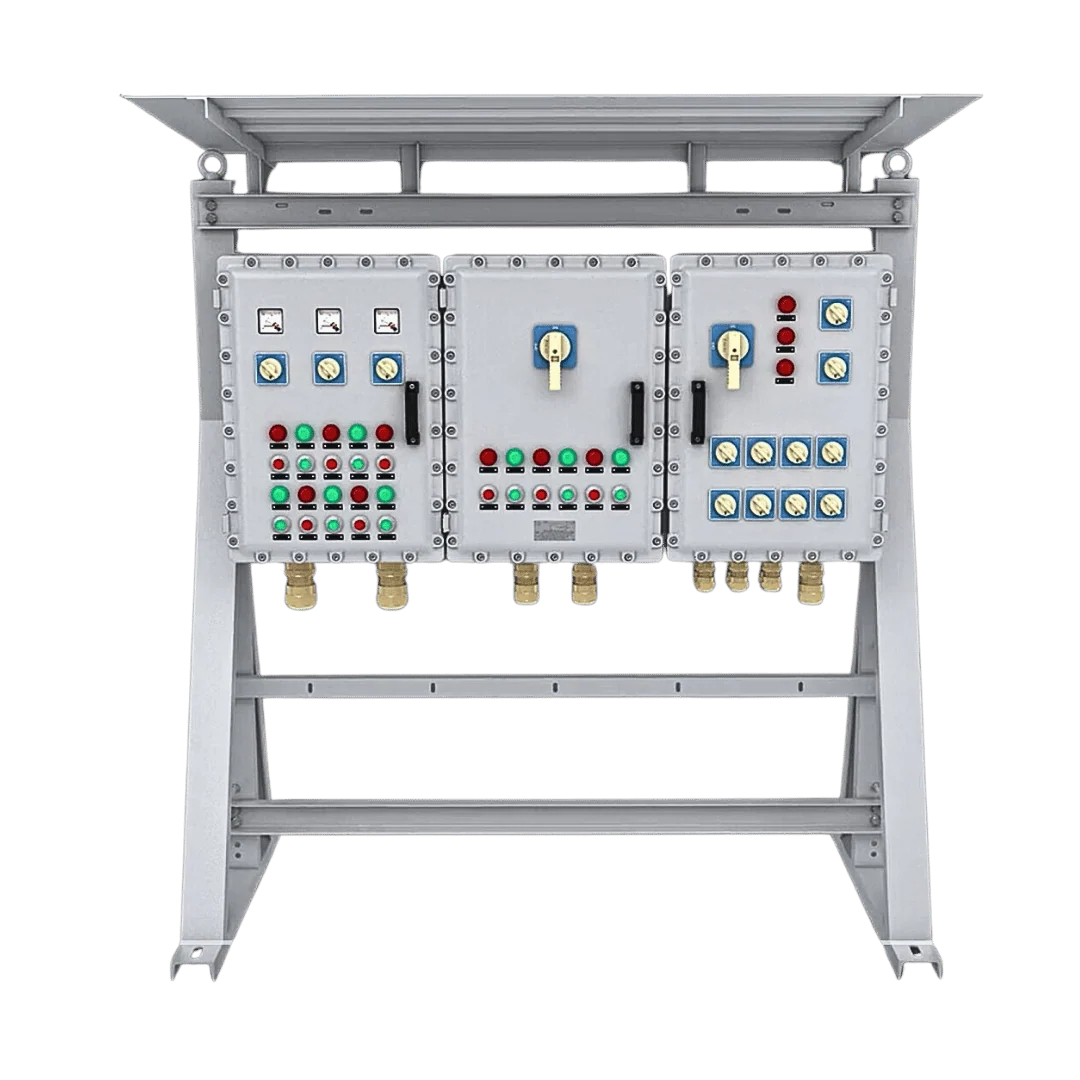
A hazardous area panel Kenya installation must be designed around the classified hazardous zones, the type of flammable atmosphere present and the protection concept used for each electrical component. Fuel depots and petrol stations require careful equipment selection, segregation, earthing, bonding and compliance with applicable Kenyan requirements and recognised IEC hazardous-area standards.
Fuel storage and dispensing facilities present electrical design challenges that differ significantly from ordinary commercial installations. Petrol vapour, diesel vapour and other flammable atmospheres can create areas where an electrical spark, hot surface or unsuitable equipment could become an ignition source.
Related Products

LV Panel
High-quality low voltage panels designed for reliable power distribution and protection in industrial and commercial installations.
View Product
Feeder Pillar Panels
Feeder pillar panels providing reliable power distribution solutions for outdoor and indoor industrial and commercial applications.
View Product
PLC Automation Panels
Advanced PLC automation panels for intelligent control of industrial processes, tailored to your operational requirements.
View Product
Panels For Data Centers
Specialised low voltage panels designed for data centre power distribution, ensuring high reliability and redundancy.
View ProductThe objective is therefore not simply to install a stronger electrical enclosure.
The electrical system must be designed so that equipment installed within or near hazardous zones is appropriately selected for the classification and conditions of the location.
Paneltech Systems Ltd provides electrical engineering and panel solutions for industrial and commercial applications. Explore the company's electrical panel and switchgear solutions when planning a fuel-handling electrical installation.
What Is a Hazardous Area Panel?
A hazardous area panel is an electrical control or distribution panel designed for installation in or associated with an area where flammable gas, vapour or dust may create an ignition hazard. Its design must account for hazardous-area classification, equipment protection, temperature, ingress protection and installation requirements.
Hazardous-area applications can include:
- Petrol stations
- Fuel depots
- Oil terminals
- Fuel storage facilities
- LPG facilities
- Chemical plants
- Solvent storage areas
- Industrial process plants
The panel may control:
- Fuel pumps
- Transfer pumps
- Tank systems
- Valves
- Level monitoring
- Emergency shutdown systems
- Ventilation
- Lighting
- Alarms
- Fire protection interfaces
The equipment configuration depends on the facility's process and hazardous-area classification.
Why Hazardous Area Classification Matters
Hazardous-area classification determines where flammable atmospheres may occur and therefore influences the electrical equipment and protection methods permitted in each location. Equipment should be selected only after the hazardous-area classification has been established by the competent project team.
For gas and vapour hazards, IEC hazardous-area practice commonly uses zones such as:
| Zone | General Meaning |
|---|---|
| Zone 0 | Explosive gas atmosphere present continuously, for long periods or frequently |
| Zone 1 | Explosive gas atmosphere likely to occur during normal operation |
| Zone 2 | Explosive gas atmosphere not likely during normal operation, but possible for a short period if it occurs |
These definitions are simplified.
The actual hazardous-area classification should come from the project's formal hazardous-area classification documentation.
Hazardous Area Panel Kenya: Petrol Station Zones
Petrol stations may contain different hazardous zones around fuel dispensers, vents, tanks and other fuel-handling equipment. The precise zone boundaries must be established from the site's hazardous-area classification and applicable standards rather than assumed from a generic drawing.
Potential sources of vapour include:
- Fuel dispensers
- Tank filling points
- Tank vents
- Fuel transfer points
- Pump equipment
- Drainage or containment areas
The location of the main electrical panel is therefore important.
Where practical, ordinary electrical panels should be located outside classified hazardous areas.
This can reduce the need for expensive hazardous-area protection methods on large assemblies.
Should the Main Panel Be Inside a Hazardous Zone?
Where the layout permits, the main LV panel should generally be located outside the classified hazardous area. Keeping conventional electrical equipment outside hazardous zones can simplify design, maintenance and equipment selection.
A typical arrangement might be:
Incoming Supply
↓
Main LV Panel
↓
Protected Distribution
↓
Hazardous-Area Equipment
This approach can allow standard LV switchgear to remain in a suitable non-hazardous electrical room while appropriately certified equipment is used within classified areas.
However, the final arrangement must follow the project's hazardous-area classification and engineering design.
ATEX Enclosures and Hazardous-Area Equipment
ATEX is a European regulatory framework for equipment and protective systems intended for potentially explosive atmospheres, while IECEx provides an international conformity-certification system. A project should specify the certification system and equipment requirements applicable to its jurisdiction and design basis.
The phrase “ATEX enclosure” is often used broadly in procurement.
However, simply purchasing an enclosure labelled ATEX does not automatically make an entire electrical panel suitable for a hazardous location.
The complete assembly must be considered.
This includes:
- Enclosure
- Switchgear
- Cable glands
- Terminals
- Internal components
- Temperature class
- Gas group
- Protection concept
- Installation method
Ex Protection Concepts
Ex protection concepts are engineering methods used to prevent electrical equipment from becoming an ignition source in hazardous locations. The appropriate method depends on the equipment, zone, gas group, temperature classification and project requirements.
Common protection concepts include:
- Ex d — flameproof enclosure
- Ex e — increased safety
- Ex i — intrinsic safety
- Ex p — pressurisation
- Ex n — protection concepts associated with Zone 2 applications
The exact marking must be evaluated as a complete certification designation.
For example, an Ex marking may contain information concerning:
- Equipment protection
- Gas group
- Temperature class
- Equipment protection level
- Zone suitability
What Does Ex d Mean?
Ex d refers to flameproof protection, where an enclosure is designed to contain an internal explosion and prevent flame transmission to the surrounding atmosphere. Ex d equipment requires correctly certified construction and installation practices.
Flameproof enclosures are engineered products.
Their effectiveness can depend on:
- Enclosure construction
- Flame paths
- Covers
- Fasteners
- Cable entries
- Glands
- Joints
- Maintenance condition
This means that drilling an additional hole into an Ex d enclosure or replacing a certified component with an unsuitable alternative can compromise the protection concept.
What Does Ex e Mean?
Ex e, or increased-safety protection, uses construction and installation measures to reduce the possibility of arcs, sparks and excessive temperatures under specified operating conditions. The equipment must meet the requirements of its certification.
Increased-safety equipment can be used for suitable applications where the certification permits it.
It is not simply a matter of making a conventional enclosure more robust.
The internal components and construction must satisfy the applicable requirements.
Cable Glands for Hazardous Areas
Cable glands are part of the hazardous-area protection system and must be compatible with the cable, enclosure, protection concept and certification requirements. An unsuitable gland can compromise an otherwise compliant installation.
Depending on the application, cable entries may need to provide:
- Sealing
- Mechanical retention
- Environmental protection
- Flameproof integrity
- Appropriate certification
The gland selection should therefore be made together with the cable and enclosure specification.
Do not substitute ordinary cable glands for certified hazardous-area glands without technical approval.
Hazardous Area Panel Enclosure Selection
Enclosure selection should consider hazardous-area certification as well as environmental exposure, mechanical protection, corrosion, temperature and ingress protection. A high IP rating alone does not make an enclosure explosion protected.
This distinction is essential.
For example:
IP65 ≠ Ex certification
An IP65 enclosure provides defined protection against dust and water ingress.
An Ex-certified enclosure addresses a different safety requirement.
A fuel facility may need both environmental protection and hazardous-area certification, depending on location.
IP65 vs IP54 in Fuel Facilities
IP54 and IP65 describe ingress protection rather than hazardous-area certification. IP65 generally offers greater dust and water protection, but the required rating should be selected according to the installation environment and equipment certification.
| Rating | Dust Protection | Water Protection |
|---|---|---|
| IP54 | Limited dust protection | Water splashing |
| IP65 | Dust-tight | Water jets |
A petrol station exposed to rain, dust and cleaning activities may require a different environmental protection level from an indoor electrical room.
However, the IP rating should never be used as a substitute for Ex certification.
Fuel Depot Panel Design
Fuel depot panel design should separate ordinary electrical distribution from hazardous-area equipment wherever practical and provide appropriate control, protection, emergency shutdown and monitoring. The design should be based on the site's process equipment and hazardous-area documentation.
A fuel depot may contain:
- Storage tanks
- Transfer pumps
- Loading systems
- Unloading systems
- Fuel meters
- Valves
- Tank gauges
- Emergency shutdown systems
- Fire detection
- Lighting
- Communications
The panel architecture should accommodate these systems without creating unnecessary electrical equipment inside classified areas.
Emergency Shutdown Systems
Emergency shutdown systems provide a means of rapidly stopping relevant fuel-handling equipment during an emergency. The emergency-stop strategy should be developed around the site's process, fire-safety arrangements and hazardous-area design.
An emergency shutdown may affect:
- Fuel pumps
- Transfer pumps
- Valves
- Loading equipment
- Electrical supplies
The system may incorporate:
- Emergency-stop push buttons
- Safety relays
- Contactors
- PLC logic
- Remote shutdown signals
- Fire alarm interfaces
The shutdown sequence should be documented and tested during commissioning.
Petrol Station Electrical Panels
Petrol station electrical systems should separate ordinary electrical services from equipment associated with fuel dispensing and classified areas. The design should address power distribution, pump controls, emergency shutdown, lighting, earthing and surge protection as applicable.
A petrol station may require electrical supplies for:
- Fuel dispensers
- Canopy lighting
- Forecourt lighting
- Shop equipment
- Refrigeration
- POS systems
- Air compressors
- Security systems
- CCTV
- Signage
Not every load belongs in a hazardous area.
Correct zoning allows engineers to determine which equipment requires special protection.
Earthing and Bonding at Fuel Facilities
Earthing and bonding are important parts of fuel-facility electrical safety because they can help control fault currents and reduce dangerous potential differences. Fuel-handling equipment and conductive systems should be bonded according to the applicable design and standards.
Potential considerations include:
- Main earthing system
- Equipment bonding
- Tank bonding
- Pipework bonding
- Pump bonding
- Lightning protection
- Static electricity control
- Surge protection
The earthing design should be coordinated with the complete electrical installation.
Lightning and Surge Protection
Fuel facilities can require coordinated lightning and surge protection because outdoor tanks, structures and electrical equipment may be exposed to transient overvoltages. The protection design should be coordinated with the earthing system and hazardous-area requirements.
Potential protection measures include:
- Lightning protection system
- Surge protective devices
- Bonding
- Appropriate earthing
- Shielding
- Cable routing
Paneltech Systems can also support electrical protection and LV panel solutions for projects requiring coordinated protection architecture.
Hazardous Area Panel Control Architecture
A hazardous-area control system should keep ordinary control hardware outside classified zones where practical while using appropriately certified field equipment within hazardous areas. Intrinsically safe circuits can be used for suitable instrumentation applications.
A simplified architecture may look like:
PLC / Control Panel
↓
Barrier / Interface
↓
Certified Field Instrument
For example:
Tank Level Sensor → Intrinsically Safe Interface → PLC
The exact architecture depends on the instrument and certification requirements.
PLCs in Fuel Depot Applications
PLCs can coordinate pumps, valves, alarms and monitoring functions in fuel facilities, but the PLC itself should normally be installed in an appropriately classified or non-hazardous location according to the design. Certified field interfaces may be required for devices located in hazardous zones.
A PLC can monitor:
- Tank levels
- Pump status
- Valve position
- Emergency stops
- Alarms
- Flow information
- Pressure
- Equipment faults
It can also control sequences such as:
Start permissive → Pump start → Flow confirmation → Monitoring → Shutdown
Interlocks should be defined by the process and safety design.
Hazardous Area Panel Kenya: Environmental Conditions
Kenyan installations must also consider environmental exposure, including coastal humidity and salt air around Mombasa and dustier conditions in parts of the Rift Valley. Enclosure material, ingress protection, ventilation and corrosion resistance should therefore be selected according to the actual site environment.
For coastal facilities, consider:
- Salt-air corrosion
- Humidity
- Condensation
- Stainless-steel requirements
- Protective coatings
For dusty environments, consider:
- Dust ingress
- Filter maintenance
- Enclosure sealing
- Equipment cooling
The hazardous-area certification and environmental protection requirements must work together.
System Specifications Table
A hazardous-area panel specification should identify the hazardous zone, gas group, temperature classification, protection concept, electrical ratings and environmental requirements before equipment is selected. These parameters provide the technical basis for procurement and panel engineering.
| Parameter | Project Requirement |
|---|---|
| Application | Fuel depot / petrol station |
| System voltage | Project specific |
| Frequency | 50 Hz |
| Hazardous zone | Zone 0 / 1 / 2 as classified |
| Gas/vapour group | Project specific |
| Temperature class | Project specific |
| Protection concept | Ex d / Ex e / Ex i / other as applicable |
| Main protection | MCCB / project specific |
| Control | Relay / PLC |
| Emergency shutdown | Required where specified |
| Communication | Modbus / Ethernet / other |
| Enclosure | Certified according to application |
| IP rating | Environment dependent |
| Cable glands | Certified where required |
| Earthing | Project-specific design |
| Surge protection | Where required |
| Standards | Applicable IEC/BS EN/Ex requirements |
| Installation environment | Indoor / outdoor / coastal / dusty |
| Testing | Inspection, functional and commissioning tests |
Standards for Hazardous Area Electrical Installations
Hazardous-area installations should be designed against the standards and regulatory requirements applicable to the project, with IEC 60079 series standards being particularly important for explosive atmospheres. Kenyan electrical and energy-sector requirements should also be considered where applicable.
Relevant standards may include parts of the:
- IEC 60079 series
- IEC 60079-10-1 for classification of areas with explosive gas atmospheres
- IEC 60079-14 for electrical installations in explosive atmospheres
- IEC 60079-17 for inspection and maintenance
- IEC 61439 for applicable LV switchgear assemblies
- Other relevant IEC/BS EN standards
The exact standards applicable depend on the project scope and equipment.
For Kenyan projects, the design team should also confirm applicable requirements from relevant Kenyan authorities and project specifications.
Hazardous Area Inspection and Maintenance
Hazardous-area equipment requires appropriate inspection and maintenance because damage, incorrect replacement components or unauthorised modifications can compromise its certified protection. Inspection should follow the applicable hazardous-area maintenance requirements.
Maintenance teams should check:
- Enclosure condition
- Cable glands
- Covers
- Fasteners
- Labels
- Earthing connections
- Corrosion
- Cable entries
- Unauthorised modifications
- Equipment certification
An Ex enclosure should never be drilled or modified casually.
Common Hazardous Area Panel Mistakes
Common mistakes include confusing IP ratings with Ex certification, installing ordinary equipment in classified areas, using incorrect cable glands and failing to verify the hazardous-area classification before selecting equipment. These errors can undermine the safety of the installation.
Mistake 1: Assuming IP65 Means Explosion Proof
It does not.
Mistake 2: Installing Standard Panels in Classified Areas
Ordinary switchgear may not be suitable.
Mistake 3: Choosing Equipment Before Zone Classification
The classification should inform equipment selection.
Mistake 4: Using Ordinary Cable Glands
Cable-entry requirements must match the protection concept.
Mistake 5: Modifying Certified Enclosures
Unauthorised drilling or modification can compromise certification.
Mistake 6: Ignoring Temperature Class
Maximum surface temperature matters for ignition prevention.
How to Specify a Hazardous Area Panel
A good tender specification should identify the hazardous-area classification and require complete technical documentation for the proposed equipment. This allows suppliers and consultants to compare products on equivalent technical criteria.
A specification can request:
- Hazardous-zone classification
- Gas group
- Temperature class
- Equipment protection level
- Protection concept
- IP rating
- Electrical ratings
- Applicable standards
- Certification documentation
- Cable-entry requirements
- Ambient temperature
- Corrosion requirements
- Emergency-shutdown requirements
- Inspection and testing requirements
This is more effective than simply writing:
“Provide explosion-proof panel.”
Hazardous Area Panel Design by Paneltech Systems
Paneltech Systems Ltd can support electrical engineering and panel requirements for industrial applications where protection, control and monitoring must be coordinated. Hazardous-area projects should be developed from the approved zone classification, equipment schedule and applicable certification requirements.
The engineering process can include:
- Load assessment
- Electrical protection
- Panel architecture
- Motor control
- Control systems
- Metering
- ATS integration
- VFD applications
- Documentation
- Testing and commissioning support
Explore the Paneltech Systems main website for information about its electrical engineering capabilities.
You can also review the Paneltech Systems Knowledge Site for technical resources.
Final Considerations for Fuel Depots and Petrol Stations
Hazardous area panel Kenya projects require more than robust enclosures; they require correct hazardous-zone classification, certified equipment, suitable protection concepts, appropriate cable entries, earthing, emergency shutdown and environmental protection. The safest approach is to keep conventional electrical equipment outside classified zones wherever practical and use certified equipment where hazardous-area installation is unavoidable.
Before approving a hazardous-area electrical panel, verify:
- Hazardous-area classification
- Zone boundaries
- Gas/vapour group
- Temperature class
- Equipment protection level
- Ex protection concept
- Certification
- Enclosure/IP requirements
- Cable glands
- Earthing and bonding
- Emergency shutdown
- Surge protection
- Environmental conditions
- Applicable standards
- Inspection requirements
A technically strong design begins with the hazardous-area classification and ends with verified installation and commissioning.
Contact Paneltech Systems Ltd
Powering Kenya's Future with Reliable Electrical Solutions
Email: [email protected]
Phone: 0799 531765
Location: Nairobi, Kenya
Website: https://paneltechsystems.co.ke/
Our Specialized Services
- Low Voltage (LV) Panels & APFC Panels
- VFD Drive Solutions & ATS / MTS Systems
- Solar Power & EV Charging Infrastructure
- Electrical Supplies & Engineering Consultations
For hazardous area panel Kenya projects, petrol station electrical panels, fuel depot control systems or industrial switchgear, contact Paneltech Systems Ltd with your hazardous-area classification, single-line diagram and equipment schedule for an appropriate engineering solution.