How Motor Starter Panels Work: Contactors & Relays in Industrial Control Systems | Paneltech Systems Kenya
How do motor starter panels work? Learn how pushbuttons, magnetic contactors, and thermal overload relays operate together to safely control industrial motors in Kenya’s electrical systems.
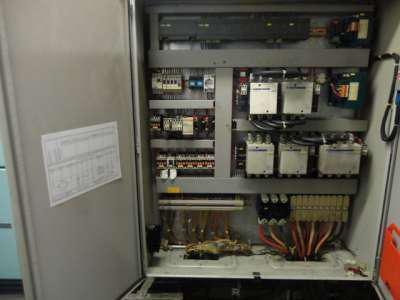
Motor starter panels control the safe starting and stopping of electric motors using a combination of pushbuttons, contactors, and protective relays. They ensure motors operate under controlled electrical conditions and prevent damage from overload or faults.
In industrial applications across Kenya, these panels are essential for pumps, conveyors, compressors, and HVAC systems where reliable motor operation is critical.
What Is Inside a Motor Starter Panel?
A motor starter panel is a compact electrical control system that houses switching, protection, and control devices for a single motor or small group of motors.
Its primary role is to safely connect and disconnect power while protecting the motor from electrical and mechanical failures.
Related Products

Starter Panels
Motor starter panels for safe starting and stopping of industrial motors with overload and short circuit protection.
View Product
Motor Control
Reliable motor control panels for industrial and commercial use, providing customised solutions for safe and efficient motor operation.
View Product
Cable Systems
Paneltech Systems offers comprehensive cable management systems for efficient, secure and organised cable setups across industrial and commercial environments.
View Product
Commander C
Commander C VFD Drives from Paneltech Systems provide advanced motor control for industrial and commercial applications. Enhance efficiency and reliability.
View ProductTypical components include:
- Start and stop pushbuttons
- Magnetic contactor
- Thermal overload relay
- Circuit breaker or fuse protection
- Control wiring and auxiliary contacts
- Indicator lamps (Run/Trip/Power)
How a Motor Starter Panel Works (Step-by-Step)
A motor starter panel works by using a low-power control circuit to switch a high-power motor circuit through an electromagnetic contactor.
When the start button is pressed, the contactor energizes and connects the motor to the power supply until the stop button or a fault interrupts the circuit.
Step 1: Start Command
- The operator presses the START pushbutton
- A small control current flows through the control circuit
Step 2: Contactor Activation
- The magnetic contactor coil energizes
- Main contacts close, allowing power to flow to the motor
Step 3: Motor Runs
- The motor receives full supply voltage (or controlled voltage if VFD is used)
- Auxiliary contacts maintain the circuit after the start button is released (self-holding circuit)
Step 4: Stop or Fault Condition
- Pressing the STOP button breaks the control circuit
- Overload relay trips if excessive current is detected
- Power to the motor is disconnected immediately
Role of the Magnetic Contactor
A magnetic contactor is an electrically controlled switch used to handle high current loads in motor starter panels. It isolates the control circuit from the power circuit for safety and efficiency.
In Kenya’s industrial systems, contactors are widely used due to their reliability in handling fluctuating grid conditions from KPLC.
How it works:
- Coil receives low-voltage control signal
- Electromagnetic force pulls contacts closed
- Main power circuit is completed
- Motor receives full electrical supply
When de-energized:
- Spring mechanism opens contacts
- Motor is safely disconnected
Thermal Overload Relay Function
A thermal overload relay protects electric motors from overheating caused by excessive current, mechanical blockage, or phase imbalance.
It works by monitoring current flow and tripping the control circuit when unsafe operating conditions persist.
Key features:
- Bimetallic strip heats up under excessive current
- Gradual bending triggers a trip mechanism
- Breaks control circuit to stop the motor
- Prevents winding damage and insulation failure
Why it matters in Kenya:
- Protects motors from unstable supply conditions
- Reduces downtime in industrial plants
- Extends motor lifespan in harsh operating environments
Pushbuttons and Control Circuit Logic
Pushbuttons provide manual control input to start and stop motor operation through a low-voltage control circuit.
They are connected in a logic circuit that ensures safe and intentional motor operation.
- Start button (NO contact): Initiates motor operation
- Stop button (NC contact): Interrupts control circuit
- Emergency stop (E-Stop): Immediate shutdown of entire system
This simple logic ensures:
- Operator safety
- Controlled motor activation
- Easy troubleshooting
Industrial Motor Starter Panel Wiring Concept
Motor starter panels use a control circuit (low voltage) and a power circuit (high voltage) working together through electromagnetic switching.
This separation ensures operator safety while handling high-power industrial loads.
- Control circuit: 24V–230V AC/DC
- Power circuit: 415V three-phase supply (typical Kenya industrial standard)
Flow:
- Control signal energizes contactor coil
- Contactor closes main power contacts
- Motor receives three-phase supply
Types of Motor Starter Panels
Motor starter panels are categorized based on starting method and load requirements.
The selection depends on motor size, application type, and energy efficiency needs.
Direct-On-Line (DOL) Starter Panel
- Simplest design
- Full voltage applied instantly
- Suitable for small motors
Star-Delta Starter Panel
- Reduces starting current
- Used for medium-sized motors
- Common in pumps and compressors
Soft Starter Panel
- Gradual voltage increase
- Reduces mechanical stress
- Improves motor lifespan
VFD-Based Starter Panel
- Controls motor speed and torque
- Highest energy efficiency
- Ideal for modern industrial automation systems
Kenya Industrial Power Considerations
Motor starter panels in Kenya must be designed to handle voltage fluctuations, phase imbalance, and occasional power interruptions from the national grid.
Proper protection devices ensure motors are not damaged during unstable electrical conditions.
Key considerations:
- KPLC voltage fluctuations
- Phase loss protection
- Surge protection integration
- Proper earthing and grounding systems
Environmental Factors in Panel Design
Industrial starter panels must be built to withstand environmental conditions such as dust, heat, and humidity depending on the installation location in Kenya.
Enclosure protection ratings (IP standards) ensure long-term reliability and safety.
- Nairobi industrial zones: moderate dust, indoor-rated IP54 panels
- Mombasa coastal areas: high humidity → IP65 corrosion-resistant enclosures
- Arid regions (Rift Valley): dust protection and sealed ventilation systems
System Specifications Table
| Parameter | Specification |
|---|---|
| Rated Voltage | 415V AC, 3-phase |
| Control Voltage | 24V / 230V AC/DC |
| Frequency | 50Hz |
| Protection Device | Thermal overload relay |
| Switching Device | Magnetic contactor |
| Enclosure Material | Powder-coated steel / stainless steel |
| IP Rating | IP54–IP65 |
| Standards Compliance | IEC 60947, IEC 61439, BS EN |
Benefits of Motor Starter Panels
Motor starter panels improve safety, efficiency, and reliability in industrial motor control systems.
They are a fundamental component in Kenya’s manufacturing, water pumping, and HVAC infrastructure.
Key benefits include:
- Safe motor starting and stopping
- Protection against overload and faults
- Reduced electrical stress on motors
- Easy maintenance and troubleshooting
- Cost-effective industrial control solution
Why Choose Paneltech Systems for Motor Starter Panels
Paneltech Systems designs and manufactures reliable motor starter panels tailored for Kenya’s industrial and commercial applications.
Our systems are built for durability, compliance, and performance under local grid conditions.
low-voltage-panels
vfd-drives
contact
We specialize in:
- Custom motor control panels
- Industrial automation integration
- Energy-efficient VFD systems
- APFC and LV distribution panels
Contact Paneltech Systems Ltd
Powering Kenya's Future with Reliable Electrical Solutions
Email: [email protected]
Phone: 0799 531765
Location: Nairobi, Kenya
Website: https://paneltechsystems.co.ke/
Our Specialized Services:
- Low Voltage (LV) Panels & APFC Panels
- VFD Drive Solutions & ATS / MTS Systems
- Solar Power & EV Charging Infrastructure
- Electrical Supplies & Engineering Consultations