Rishabh vs Elmeasure: Energy Meter Comparison Kenya
Rishabh vs Elmeasure compared for accuracy, communication protocols, energy monitoring, power-quality measurement and technical support. Learn how to select the right metering range for Kenyan electrical panels.
Rishabh vs Elmeasure is not simply a choice between two brands; the right metering range depends on the required accuracy, measured parameters, communication protocol, data logging, power-quality requirements and integration with the wider electrical system. For Kenyan industrial and commercial projects, the exact meter model should be selected against the panel and monitoring specification.
Modern electrical panels increasingly require more than a simple voltage or current indication. Engineers may need energy measurement, power factor, demand monitoring, harmonics, data logging and communication with a building management system or energy-management platform.
Both Rishabh and Elmeasure have product ranges covering basic meters through to multifunction and advanced monitoring equipment. Rishabh's current portfolio includes multifunction meters with options such as Modbus, Ethernet and BACnet, while Elmeasure offers energy and power monitors, power-quality analysers, IoT meters and industrial communication solutions.
Rishabh vs Elmeasure: What Should Engineers Compare?
When comparing Rishabh vs Elmeasure, start with the technical requirement rather than brand preference. Accuracy class, electrical inputs, measured parameters, communication, data logging, display, installation method and support should all be considered before selecting a model.
A useful comparison begins with the project requirement.
Ask:
- What needs to be measured?
- What accuracy is required?
- Is the meter for indication or energy accounting?
- Is remote monitoring required?
- Is Modbus required?
- Is Ethernet required?
- Is power-quality analysis required?
- Is data logging required?
- What CT ratio will be used?
- What panel mounting arrangement is required?
- What environment will the meter operate in?
The answers can quickly narrow the appropriate product range.
Rishabh Metering Range
Rishabh offers metering products ranging from conventional electrical measurement equipment to advanced multifunction energy meters. Its current portfolio includes meters capable of measuring energy and power-quality parameters with communication options for integration into energy-management systems.
Rishabh's portfolio includes:
- Digital panel meters
- Multifunction meters
- Energy meters
- Power-quality instruments
- Transducers
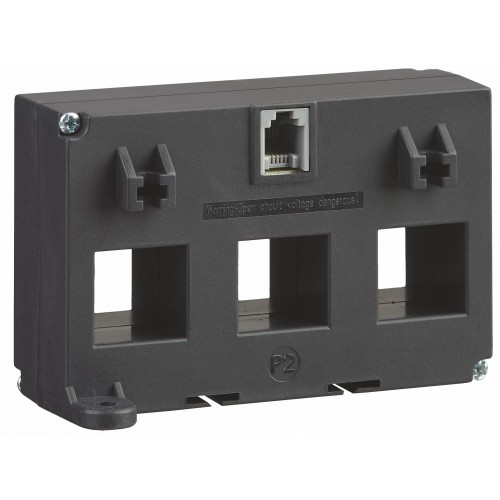
- Current transformers
- Power-factor controllers
- Testing and measuring instruments
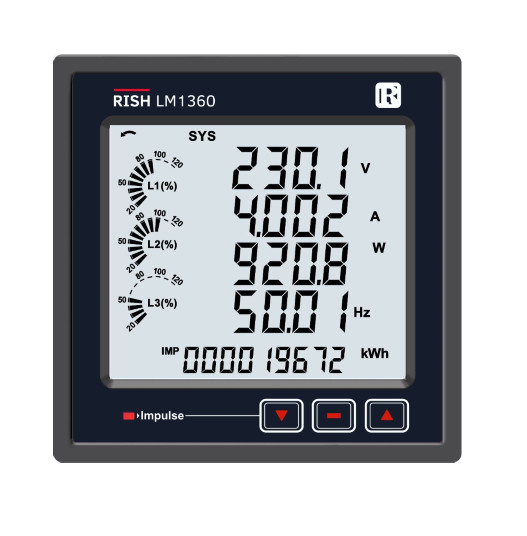
Its RISH LM1360+ multifunction meter, for example, is specified for industrial and commercial power monitoring and includes energy measurement, power-quality and harmonic monitoring, data logging and optional Modbus, Ethernet and BACnet communication. The manufacturer lists an accuracy class of 0.2S for this model.
Rishabh also provides documentation through its online download centre, including manuals, product guides and software resources.
Elmeasure Metering Range
Elmeasure offers a broad range of energy and power monitoring products, from basic meters to multifunction meters, power-quality analysers, branch-circuit monitors and IoT energy meters. Its ecosystem also includes industrial communication and energy-management solutions.
Elmeasure's product categories include:
- Basic meters
- Multifunction energy meters
- Power-quality monitors
- Power-quality analysers
- DC energy meters
- Branch-circuit monitors
- IoT energy meters
- Utility revenue meters
- Industrial communication equipment
The company also maintains a technical knowledge base covering meter configuration, communications, data logging and troubleshooting.
This can be useful when a project requires more than a standalone panel meter.
Meter Accuracy Class: Rishabh vs Elmeasure
Accuracy class should be selected according to the purpose of the measurement, and engineers should compare the exact meter models rather than assigning an accuracy level to an entire brand. Rishabh and Elmeasure both offer meters across different accuracy levels and applications.
For example, Rishabh's RISH LM1360+ is specified at Class 0.2S, while its RISH ED43XX direct-connected energy meter is specified as Class B under EN 50470-3 and Class 1 under IEC 62053-21.
Elmeasure documentation states that certain meter ranges are available at Class 1 accuracy, with Class 0.5 available as an option for the referenced range.
Therefore, the correct procurement question is not:
“Which brand is more accurate?”
It is:
“Which exact model provides the accuracy class required by this application?”
Basic Panel Meter vs Multifunction Meter
A basic meter is appropriate when the project only requires straightforward local indication, while a multifunction meter is more suitable when engineers need several electrical parameters from one instrument. Choosing the simplest meter that satisfies the specification can reduce unnecessary cost and complexity.
A basic installation might require:
- Voltage
- Current
- Frequency
A more advanced application may require:
- Voltage
- Current
- kW
- kVA
- kVAr
- Power factor
- kWh
- Demand
- Frequency
- Harmonics
- Energy logging
The second application may justify a multifunction meter.
Communication: Modbus, Ethernet and BACnet
Communication capability becomes important when meters must send information to a BMS, SCADA, energy-management system or other monitoring platform. Rishabh and Elmeasure both provide metering and communication options, but the exact protocol support depends on the selected model.
Rishabh's LM1360+ is offered with optional Modbus, Ethernet and BACnet communication.
Elmeasure documentation also describes standard Modbus RTU communication on selected meters, while its wider industrial communication platform supports networking and integration between systems.
For a tender, specify the requirement clearly:
Meter shall provide RS485 communication using Modbus RTU.
If Ethernet is required, specify that separately.
Do not assume that every multifunction meter automatically includes every communication interface.
Data Logging and Historical Energy Information
Data logging allows engineers to analyse electrical consumption over time rather than relying only on instantaneous readings. This can be valuable for energy management, load profiling, troubleshooting and identifying abnormal consumption.
Rishabh's LM1360+ includes built-in data logging.
Elmeasure also provides meters and software-supported logging capabilities; its technical documentation describes configurable data-log intervals on applicable series.
For a factory, historical information can help answer questions such as:
- When does the highest demand occur?
- Which production period consumes the most energy?
- Has the load increased?
- Is power factor deteriorating?
- Is a particular feeder consuming unexpectedly high energy?
Power Quality Monitoring
Power-quality monitoring should be specified separately from ordinary energy measurement when the project needs harmonic analysis or detailed disturbance information. A basic multifunction energy meter should not automatically be treated as a full power-quality analyser.
Power-quality applications may require monitoring of:
- Voltage distortion
- Current distortion
- Harmonics
- Voltage variation
- Frequency
- Unbalance
- Interruptions
- Other disturbances
Elmeasure offers dedicated power-quality monitors and analysers, including products designed around IEC 61000-4-30 measurement requirements.
Rishabh also maintains a dedicated power-quality product category within its instrumentation portfolio.
CT Compatibility and Meter Selection
The meter must be compatible with the project's current-transformer arrangement and configured for the correct CT ratio. Incorrect CT configuration can produce inaccurate readings even when the meter itself is technically accurate.
Before ordering, confirm:
- CT primary rating
- CT secondary rating
- Number of CTs
- CT class
- Meter input range
- Wiring configuration
- Phase arrangement
- CT polarity
For example, a meter configured for a particular CT secondary should not simply be connected to a different CT arrangement without checking the manufacturer's requirements.
Rishabh vs Elmeasure: Communication Comparison
Both manufacturers offer products capable of remote communication, but the available interfaces vary by model. Engineers should specify the required protocol and physical interface rather than selecting a meter based only on the manufacturer's name.
| Requirement | Rishabh | Elmeasure |
|---|---|---|
| Local display | Model dependent | Model dependent |
| RS485 | Selected models | Selected models |
| Modbus RTU | Available on selected models | Available on selected models |
| Ethernet | Selected models | Selected solutions/models |
| BACnet | Selected models | System/model dependent |
| Data logging | Selected models | Selected models |
| Power-quality monitoring | Available | Available |
| IoT integration | Selected models | Strong IoT offering |
| Software integration | Available | Available |
Always confirm the exact model's datasheet before final specification.
System Specifications Table
A metering specification should define the electrical inputs, accuracy, measured parameters, communications and mounting requirements before procurement. This prevents a technically unsuitable meter from being selected simply because its catalogue description appears similar.
| Specification | Typical Requirement |
|---|---|
| System | 1-phase / 3-phase |
| Voltage input | Project specific |
| Current input | Direct / CT |
| CT ratio | Project specific |
| Frequency | 50 Hz |
| Accuracy | Project specific |
| Parameters | V, A, kW, kVA, kVAr, PF, kWh |
| Harmonics | If required |
| Data logging | If required |
| Communication | RS485 Modbus RTU / Ethernet / BACnet |
| Display | Digital LCD |
| Mounting | Panel / DIN rail |
| Auxiliary supply | Project specific |
| Enclosure/front protection | Project specific |
| Standards | Applicable product standards |
| Application | Distribution / energy monitoring / power quality |
Which Range Is Better for Industrial Panels?
Neither Rishabh nor Elmeasure should be considered universally better for every industrial panel. The preferred range is the one that satisfies the project's measurement accuracy, communication, monitoring and integration requirements with appropriate technical support.
For a simple distribution panel, a basic multifunction meter may be sufficient.
For an industrial facility with energy-management requirements, consider:
- Multifunction measurement
- Remote communication
- Data logging
- Demand monitoring
- Power factor
- Harmonic measurement
- Integration with SCADA or BMS
The meter should be specified as part of the complete panel architecture.
Which Meter Is Better for Energy Management?
For energy-management projects, prioritise meters that provide the required measurement parameters, historical data, communication and integration capabilities. Elmeasure has a particularly broad energy-management ecosystem, while selected Rishabh multifunction meters also provide advanced monitoring and communication capabilities.
The final choice should consider the complete system.
For example:
Meter → RS485/Ethernet → Gateway → Software → Dashboard
If the project requires this architecture, choosing the meter only by display size or purchase price is inadequate.
Rishabh vs Elmeasure: Support and Documentation
Documentation and technical support are important because metering systems often require configuration, communication setup and troubleshooting after installation. Both manufacturers provide technical resources, but project teams should confirm the support arrangements available for their specific Kenyan installation.
Rishabh provides a download centre containing manuals, product guides and software resources.
Elmeasure provides an extensive online knowledge base covering product configuration, communications and troubleshooting, alongside its wider energy-management support offering.
For a Kenyan project, also consider:
- Local supplier support
- Availability of replacement units
- Configuration assistance
- Warranty arrangements
- Lead times
- Spare parts
- Commissioning support
How to Choose the Right Instrument Range
Choose the instrument range by starting with the measurement objective and then working through accuracy, electrical inputs, parameters, communications and integration. Brand selection should come after these technical requirements are defined.
Use this sequence:
1. Define the measurement objective
Is it:
- Local indication?
- Energy monitoring?
- Sub-metering?
- Tenant billing?
- Power-quality analysis?
- Industrial energy management?
2. Define accuracy
Determine the required accuracy class.
3. Define electrical inputs
Specify:
- Voltage
- Current
- CT arrangement
- Frequency
- System configuration
4. Define communication
Specify:
- No communication
- RS485 Modbus
- Ethernet
- BACnet
- Other required protocol
5. Define data requirements
Determine whether you need:
- Real-time values
- Historical data
- Demand
- Alarms
- Event logging
- Harmonic data
6. Select the exact model
Only after the above requirements are established should the Rishabh and Elmeasure product ranges be compared.
Rishabh vs Elmeasure: Practical Procurement Comparison
The best procurement decision comes from comparing equivalent models rather than comparing entire brands. A technical comparison should include accuracy, parameters, communication, installation, documentation, availability and lifecycle support.
| Factor | Rishabh | Elmeasure |
|---|---|---|
| Basic metering | Available | Available |
| Multifunction metering | Available | Available |
| Energy monitoring | Available | Strong product range |
| Power-quality products | Available | Available |
| Modbus | Selected models | Selected models |
| Ethernet | Selected models | Selected models |
| BACnet | Selected models | Model/system dependent |
| Data logging | Selected models | Selected models |
| IoT/energy management | Selected products | Strong ecosystem |
| Documentation | Manufacturer resources | Extensive knowledge base |
| Local Kenyan support | Verify for project | Verify for project |
| Best choice | Requirement dependent | Requirement dependent |
Common Metering Selection Mistakes
Common metering mistakes include choosing a meter by brand or price, ignoring CT compatibility, overlooking communication requirements and specifying a multifunction meter when a power-quality analyser is actually required.
Avoid:
Choosing by Price Alone
The cheapest meter may lack required communication or monitoring functions.
Ignoring CT Configuration
Incorrect CT ratios can compromise readings.
Assuming All Modbus Meters Are Identical
Register maps and supported parameters can differ.
Ignoring Accuracy
Accuracy requirements should be established before procurement.
Selecting the Wrong Monitoring Level
An energy meter and a dedicated power-quality analyser serve different purposes.
Forgetting Future Integration
If the facility may later introduce energy-management software, communication capability can become important.
Paneltech Systems and Meter Integration
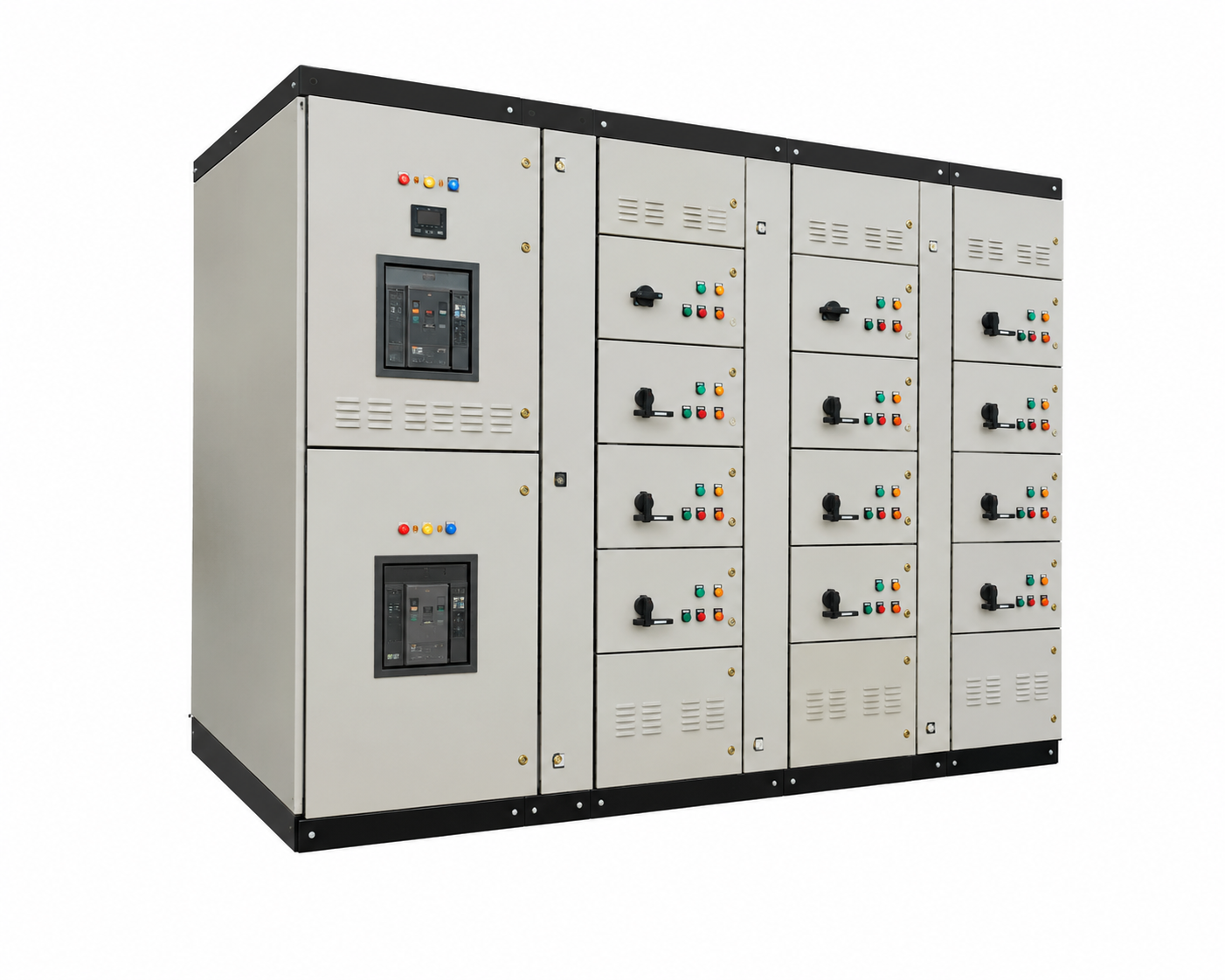
Meter selection should form part of the complete electrical panel design so that the instrument, CTs, communication wiring and monitoring architecture work together. Paneltech Systems can integrate metering equipment into LV panel solutions according to project requirements.
A properly engineered panel can account for:
- Meter mounting
- CT installation
- Control wiring
- RS485 communication
- Ethernet where required
- Auxiliary power
- Protection
- Labelling
- Panel layout
- Testing and commissioning
Explore Paneltech Systems' product range for LV panels and electrical equipment.
You can also review the Paneltech Systems Knowledge Site for additional technical information.
Final Verdict: Rishabh vs Elmeasure
Rishabh and Elmeasure both provide metering solutions suitable for different electrical applications, so the better choice depends on the exact project specification. Compare the specific models on accuracy, parameters, CT compatibility, communications, data logging, power-quality capability, documentation and support before approval.
For a basic panel, you may only need:
Voltage + Current + Frequency
For an industrial energy-management system, you may require:
V + A + kW + kVA + kVAr + PF + kWh + Demand + Harmonics + Data Logging + Communication
That difference is more important than the brand name on the front of the meter.
For Kenyan projects, the final selection should therefore consider both technical compliance and practical support, including availability, replacement requirements and integration with the project's electrical monitoring system.
Contact Paneltech Systems Ltd
Powering Kenya's Future with Reliable Electrical Solutions
Email: [email protected]
Phone: 0799 531765
Location: Nairobi, Kenya
Website: https://paneltechsystems.co.ke/
Our Specialized Services
- Low Voltage (LV) Panels & APFC Panels
- VFD Drive Solutions & ATS / MTS Systems
- Solar Power & EV Charging Infrastructure
- Electrical Supplies & Engineering Consultations
For Rishabh vs Elmeasure metering selection, LV panel design, energy monitoring or custom metering integration, contact Paneltech Systems Ltd with your panel schedule, CT ratios, communication requirements and monitoring objectives