Schneider vs ABB vs Siemens vs Chint MCCBs: An Honest Comparison for Kenya
A practical comparison of Schneider, ABB, Siemens and Chint MCCBs for Kenyan electrical projects. Compare breaking capacity, protection features, availability, compatibility
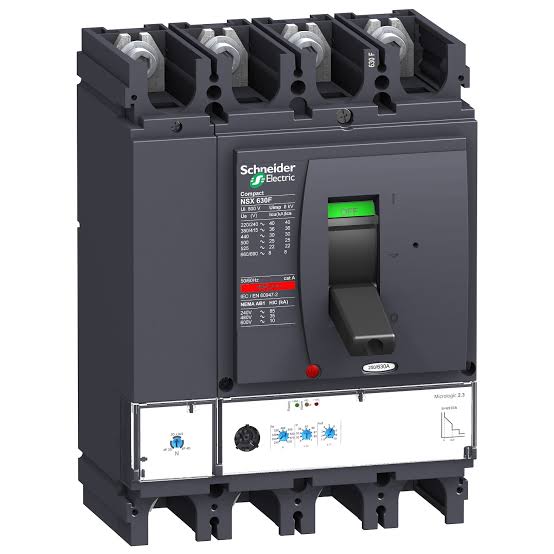
Schneider, ABB, Siemens and Chint all offer MCCBs suitable for different electrical applications, but the best choice depends on fault level, protection requirements, coordination, availability and lifecycle cost rather than brand name alone. For Kenyan projects, local technical support, genuine product availability and replacement access can be just as important as the initial purchase price.
An MCCB is one of the most important protection devices in a low-voltage distribution system.
Choosing one purely because it is the cheapest option can create problems later when replacement parts, accessories, trip units or technical support are needed.
On the other hand, choosing the most expensive brand does not automatically produce the best installation.
This comparison looks at four widely recognised manufacturers:
- Schneider Electric
- ABB
- Siemens
- CHINT
The objective is not to declare one universal winner.
Instead, the objective is to help electrical engineers, contractors, consultants and procurement teams understand where each brand can make sense.
Schneider vs ABB MCCB: What Should You Compare?
When comparing Schneider vs ABB MCCB options, focus on technical performance, breaking capacity, trip-unit functions, accessories, coordination and lifecycle support rather than catalogue price alone. The correct MCCB must satisfy the electrical design regardless of the brand selected.
Before comparing manufacturers, establish the project requirements.
At minimum, determine:
- System voltage
- Frequency
- Load current
- Prospective short-circuit current
- Cable rating
- Required breaking capacity
- Protection requirements
- Ambient conditions
- Installation environment
- Required accessories
- Communication requirements
For example, a 250 A MCCB for a small commercial distribution board may have very different requirements from a 250 A MCCB installed on an industrial process line.
The current rating may be identical, but the required fault performance and protection functions can differ considerably.
Schneider MCCBs: Where They Fit
Schneider Electric MCCBs are widely used in commercial and industrial LV distribution and are particularly attractive where integrated protection, coordination and digital monitoring are important. The suitability of a particular Schneider MCCB still depends on its exact series, rating and configuration.
Schneider has a broad LV protection portfolio.
Depending on the application, engineers may require:
- Fixed MCCBs
- Adjustable MCCBs
- Electronic trip units
- Thermal-magnetic protection
- Auxiliary contacts
- Shunt trips
- Undervoltage releases
- Motor operators
- Communication modules
One advantage of using a broad product ecosystem is the ability to coordinate protection equipment across different sections of an LV installation.
Typical applications
Schneider MCCBs may be considered for:
- Main distribution boards
- Industrial switchboards
- Motor control systems
- Generator distribution
- Commercial buildings
- Manufacturing facilities
- Data and critical-power applications
Paneltech Systems can integrate LV panels and MCCB protection equipment into custom electrical assemblies according to project requirements.
ABB MCCBs: Where They Fit
ABB MCCBs are suitable for a wide range of commercial and industrial distribution applications, particularly where advanced protection, selectivity and accessory options are required. As with other manufacturers, engineers should select the specific ABB series based on the project's electrical requirements.
ABB's low-voltage protection portfolio includes MCCBs designed for different current and application ranges.
Depending on the selected product, engineers can consider:
- Thermal-magnetic protection
- Electronic trip units
- Adjustable protection
- Auxiliary contacts
- Shunt trips
- Undervoltage releases
- Motorised operation
- Communication functionality
ABB can therefore be a strong option for projects where protection coordination and system monitoring are important.
Typical applications include:
- Industrial distribution
- Commercial buildings
- Manufacturing plants
- Infrastructure
- Energy systems
- Generator installations
Siemens MCCBs: Where They Fit
Siemens MCCBs can be considered where the project requires robust LV circuit protection and integration with a broader Siemens electrical system. The correct product should be selected based on rated current, voltage, fault capacity, protection functions and accessories.
Siemens has extensive experience in industrial electrical equipment and automation.
This can be particularly relevant where the MCCB forms part of a wider electrical system involving:
- Switchboards
- Motor control
- Automation
- Industrial controls
- Energy monitoring
- Building systems
For industrial projects, compatibility between protection, automation and monitoring equipment can simplify engineering and maintenance.
However, compatibility should be confirmed for the specific products rather than assumed simply because they carry the same brand.
Chint MCCBs: Where They Fit
CHINT MCCBs can provide a cost-conscious option for suitable LV distribution applications while still requiring careful verification of the specific model's ratings and certification. The decision should be based on technical compliance and project requirements rather than price alone.
CHINT has a broad portfolio of electrical protection equipment.
Its MCCBs may be considered for:
- Commercial buildings
- Distribution boards
- Industrial applications
- General LV protection
- Contractor-led projects
- Cost-sensitive installations
The important question is not simply:
“Is CHINT cheaper?”
The more useful question is:
“Does this particular CHINT MCCB meet the project's electrical, protection and compliance requirements?”
That same question should be asked of Schneider, ABB and Siemens.
MCCB Breaking Capacity: The Most Important Comparison
Breaking capacity is one of the most important MCCB selection criteria because the breaker must be capable of interrupting the prospective fault current at its installation point. A higher current rating does not automatically mean a higher fault-interruption capability.
Consider two MCCBs:
MCCB A
- Rated current: 250 A
- Breaking capacity: 25 kA
MCCB B
- Rated current: 250 A
- Breaking capacity: 36 kA
Both are rated at 250 A.
They are not necessarily interchangeable.
If the calculated prospective short-circuit current requires the higher rating, MCCB A may be unsuitable.
This is why procurement should begin with the electrical design rather than a brand shortlist.
Schneider vs ABB MCCB Breaking Capacity
Both Schneider and ABB offer MCCB families with different breaking capacities, so brand-level comparisons are not sufficient. The engineer should compare the exact model, frame size, voltage and configuration against the project's calculated fault level.
When comparing products, create a technical schedule containing:
| Parameter | Schneider | ABB |
|---|---|---|
| Rated current | Project requirement | Project requirement |
| Rated voltage | Check model | Check model |
| Breaking capacity | Check model | Check model |
| Trip technology | Check model | Check model |
| Adjustable protection | Check model | Check model |
| Accessories | Check model | Check model |
| Communication | If required | If required |
| Standards | Verify | Verify |
| Availability | Verify locally | Verify locally |
This prevents procurement teams from comparing products using brand reputation alone.
Siemens vs Chint MCCB: What Matters?
Siemens and CHINT MCCBs should be compared using the same technical criteria: fault rating, protection characteristics, accessories, compliance, availability and lifecycle support. A lower purchase price should not be treated as proof of lower quality or higher quality.
A procurement comparison should examine:
- Technical compliance
- Breaking capacity
- Protection adjustment
- Product documentation
- Accessories
- Warranty
- Replacement availability
- Installation support
- Maintenance requirements
- Total cost
This provides a more objective comparison.
MCCB Protection Functions
Protection functionality varies between MCCB families and trip-unit configurations. For industrial applications, adjustable protection can provide better coordination than a basic fixed thermal-magnetic device where the system design requires it.
Possible functions include:
- Long-time overload protection
- Short-time protection
- Instantaneous protection
- Earth-fault protection
- Adjustable pickup
- Adjustable delay
- Thermal protection
The project protection study should determine which functions are required.
Thermal-Magnetic vs Electronic Trip MCCBs
Thermal-magnetic MCCBs are often suitable for straightforward LV distribution, while electronic trip MCCBs can provide more sophisticated adjustment and monitoring capabilities. The right choice depends on system criticality and protection coordination requirements.
Thermal-Magnetic MCCB
Advantages may include:
- Simpler design
- Straightforward operation
- Lower complexity
- Suitable for many general applications
Electronic Trip MCCB
Potential advantages include:
- Adjustable settings
- More precise protection
- Additional protection functions
- Communication options on selected products
- Better coordination possibilities
For a complex industrial installation, electronic protection may justify the additional cost.
MCCB Selectivity and Coordination
MCCB selection should consider coordination with upstream and downstream protection devices so that a fault can be isolated as close as practical to its source. Poor coordination can result in unnecessary shutdowns of larger sections of a facility.
For example:
A fault on one outgoing feeder should ideally trip that feeder's protective device rather than unnecessarily disconnecting the entire main distribution board.
The engineer may therefore review:
- Time-current curves
- Protection settings
- Breaker characteristics
- Cable ratings
- Short-circuit levels
- Selectivity
- Cascading requirements
The exact coordination approach should follow the project's protection study.
MCCB Availability in Kenya
For Kenyan projects, product availability is an important procurement consideration because the cost of an MCCB includes more than the initial purchase. Lead time, local stock, accessories and replacement availability can affect the project's total cost.
Before selecting a brand, ask:
- Is the exact model available?
- Is the required frame size stocked?
- Are trip units available?
- Are auxiliary accessories available?
- Can replacement units be sourced?
- Is technical support accessible?
- Is documentation available?
- What is the expected lead time?
A commonly available MCCB can sometimes be more practical than an otherwise suitable product with a long import lead time.
Genuine Products and Supply Chain Risk
Electrical protection equipment should be sourced through reliable channels with traceable product information. Procurement teams should verify model numbers, ratings, documentation and authenticity before installation.
Be cautious when a quotation contains:
- Unclear model numbers
- Missing datasheets
- Unusually low prices
- Incomplete ratings
- No warranty information
- No manufacturer documentation
- Substitutions without technical approval
The lowest quotation is not automatically the lowest lifecycle cost.
Chint Breaker Quality: What Should Buyers Ask?
Chint breaker quality should be evaluated against the specific product's technical documentation, ratings, standards, test evidence and intended application. The same evaluation criteria should be applied to every MCCB manufacturer.
Instead of asking:
“Is Chint good?”
ask:
- What is the exact model?
- What is its rated current?
- What is its breaking capacity?
- What protection functions are included?
- What accessories are available?
- What standards apply?
- Is the product suitable for the project's fault level?
- Can replacements be obtained?
- What documentation accompanies the product?
This creates a technical procurement decision rather than a reputation-based decision.
MCCB Lifecycle Cost vs Purchase Price
The cheapest MCCB is not necessarily the lowest-cost option over the life of an installation. Lifecycle cost can include procurement, installation, maintenance, downtime, replacement, accessories and future expansion.
Consider this simplified example:
| Cost Factor | Low Initial Cost | Premium Initial Cost |
|---|---|---|
| Purchase | Lower | Higher |
| Installation | Varies | Varies |
| Accessories | Varies | Varies |
| Maintenance | Application dependent | Application dependent |
| Replacement | Availability dependent | Availability dependent |
| Downtime Risk | Project dependent | Project dependent |
| Monitoring | Model dependent | Model dependent |
| Expansion | Model dependent | Model dependent |
The correct procurement decision depends on the application.
For a non-critical distribution board, a cost-effective compliant MCCB may make sense.
For a critical industrial process, additional protection, monitoring and coordination capabilities may justify a higher initial investment.
Which MCCB Brand Is Best for Kenya?
There is no single MCCB brand that is automatically best for every Kenyan project. Schneider, ABB, Siemens and CHINT can all be considered when the specific product meets the project's electrical, protection, compliance and procurement requirements.
A practical selection approach is:
Choose based on technical requirements first
Start with:
Load → Cable → Fault Level → Protection → Coordination → Accessories
Then compare brands.
Consider local support second
Review:
- Availability
- Lead time
- Technical support
- Replacement parts
- Warranty
- Documentation
Consider price third
Price matters, but it should be evaluated alongside the complete project requirement.
MCCB Comparison Table for Procurement
A side-by-side procurement matrix makes brand comparison more objective. The exact values should be completed using current manufacturer datasheets for the specific MCCB models being considered.
| Selection Factor | Schneider | ABB | Siemens | CHINT |
|---|---|---|---|---|
| Product range | Broad | Broad | Broad | Broad |
| Industrial applications | Yes | Yes | Yes | Yes |
| Commercial applications | Yes | Yes | Yes | Yes |
| Electronic trip options | Model dependent | Model dependent | Model dependent | Model dependent |
| Adjustable protection | Model dependent | Model dependent | Model dependent | Model dependent |
| Communication | Selected models | Selected models | Selected models | Selected models |
| Accessories | Model dependent | Model dependent | Model dependent | Model dependent |
| Breaking capacity | Model dependent | Model dependent | Model dependent | Model dependent |
| Local availability | Verify | Verify | Verify | Verify |
| Replacement availability | Verify | Verify | Verify | Verify |
| Lifecycle cost | Application dependent | Application dependent | Application dependent | Application dependent |
Important: This table compares product families at a high level, not individual MCCB models. Always verify the current manufacturer's datasheet before specifying or purchasing a breaker.
System Specification Checklist for MCCBs
Before ordering an MCCB, the engineer should record the electrical and mechanical requirements in a technical schedule. This ensures the selected model is suitable for the actual installation rather than only matching the required ampere rating.
| Parameter | Requirement |
|---|---|
| Application | LV distribution / motor / other |
| Rated voltage | [V] |
| Rated current | [A] |
| Frequency | [Hz] |
| Poles | [2P/3P/4P] |
| Breaking capacity | [kA] |
| Trip type | Thermal-magnetic / Electronic |
| Long-time protection | [Required setting] |
| Short-time protection | [Required setting] |
| Instantaneous protection | [Required setting] |
| Earth-fault protection | [If required] |
| Auxiliary contacts | [Yes/No] |
| Shunt trip | [Yes/No] |
| Undervoltage release | [Yes/No] |
| Motor operator | [Yes/No] |
| Communication | [If required] |
| Enclosure | Panel-specific |
| Standards | Project applicable standards |
Common MCCB Procurement Mistakes
Most MCCB procurement problems arise when buyers focus on amperage and price while overlooking fault level, protection characteristics, accessories and coordination. A complete technical schedule should be approved before procurement.
Avoid these mistakes:
Buying by Ampere Rating Alone
A 400 A MCCB is not defined only by being 400 A.
Ignoring Fault Level
The breaker must be suitable for the prospective short-circuit current.
Ignoring Cable Protection
The breaker and cable must be appropriately coordinated.
Selecting Accessories Later
Shunt trips, auxiliary contacts and motor operators may affect the exact product configuration.
Substituting Without Approval
Changing manufacturer or model after approval should be technically reviewed.
Buying Unverified Products
Product authenticity and documentation matter for safety-critical equipment.
How Paneltech Systems Can Help With MCCB Selection
MCCB selection should be integrated into the complete LV panel design rather than treated as an isolated component purchase. Paneltech Systems can support projects requiring LV panel engineering, protection equipment and electrical system integration.
The engineering process can include:
- Review of the electrical schedule
- Review of load requirements
- Fault-level consideration
- Protection-device selection
- Panel arrangement
- Component coordination
- Technical documentation
- Manufacturing
- Testing
- Commissioning
View the Paneltech Systems products or learn more about the company through the Paneltech Systems About page.
For project-specific requirements, use the Paneltech Systems contact page.
Final Verdict: Schneider vs ABB vs Siemens vs Chint
Schneider, ABB, Siemens and CHINT can each be appropriate for different MCCB applications. The strongest choice is the product that meets the project's fault level, protection, coordination, installation, documentation and lifecycle requirements while remaining supportable in the Kenyan market.
There is no responsible engineering basis for saying:
“Brand X is always the best.”
Instead, compare the exact products against the project requirements.
For a Kenyan industrial project, the decision should consider:
- Electrical performance
- Breaking capacity
- Protection functions
- Selectivity
- Accessories
- Panel compatibility
- Availability
- Technical support
- Replacement availability
- Documentation
- Lifecycle cost
That approach produces a much more defensible procurement decision than choosing an MCCB based solely on brand recognition or initial price.
Contact Paneltech Systems Ltd
Powering Kenya's Future with Reliable Electrical Solutions
Email: [email protected]
Phone: 0799 531765
Location: Nairobi, Kenya
Website: https://paneltechsystems.co.ke/
Our Specialized Services
- Low Voltage (LV) Panels & APFC Panels
- VFD Drive Solutions & ATS / MTS Systems
- Solar Power & EV Charging Infrastructure
- Electrical Supplies & Engineering Consultations
For MCCB selection, custom LV panel design or a project-specific quotation, contact Paneltech Systems Ltd with your load schedule, fault level, panel schedule and protection requirements so the appropriate MCCB configuration can be evaluated.