Choosing Between Siemens S7-1200, Schneider M221, and Allen-Bradley Micro 800
Small-PLC comparison covering I/O capacity, programming environment, network protocols, ecosystem, and cost. Decision matrix for OEM machine builds and small-process applications.
For small to mid-sized PLC applications — up to about 256 I/O — Siemens S7-1200, Schneider M221, and Allen-Bradley Micro 800 are the three platforms most widely available in Kenya. All three are capable; the right choice depends less on absolute performance and more on the existing plant standard, the programming environment your team prefers, and the availability of local support. This guide compares them across the criteria that actually drive selection.
Side-by-side at-a-glance
| Aspect | Siemens S7-1200 | Schneider M221 | Allen-Bradley Micro 800 |
|---|---|---|---|
| CPU options | 1211C through 1217C | 16/24/40 I/O variants | Micro 810/820/830/850/870 |
| Max digital I/O (with expansion) | up to 284 | up to 152 | up to 132 (850), 304 (870) |
| Max analog I/O | up to 51 | up to 36 | up to 24 (850) |
| Programming software | TIA Portal Step 7 Basic V17+ | EcoStruxure Machine Expert Basic | Connected Components Workbench (CCW) |
| IEC 61131-3 languages | LD, FBD, SCL (limited ST) | LD, IL, FBD, ST | LD, FBD, ST |
| Built-in Ethernet | Yes (PROFINET) | Yes (Modbus TCP) | Yes (Ethernet/IP) on 820+ |
| HMI integration | Siemens KTP, WinCC Basic | Magelis, Harmony | PanelView 800 |
| Approximate CPU cost (Kenya) | KSh 35,000 – 85,000 | KSh 25,000 – 60,000 | KSh 30,000 – 90,000 |
| Typical lead time | 6–10 weeks | 4–8 weeks | 8–12 weeks |
Siemens S7-1200
The S7-1200 is the most-used small PLC in Kenya by some margin. Strengths:
Related Products

PLC Automation Panels
Advanced PLC automation panels for intelligent control of industrial processes, tailored to your operational requirements.
View Product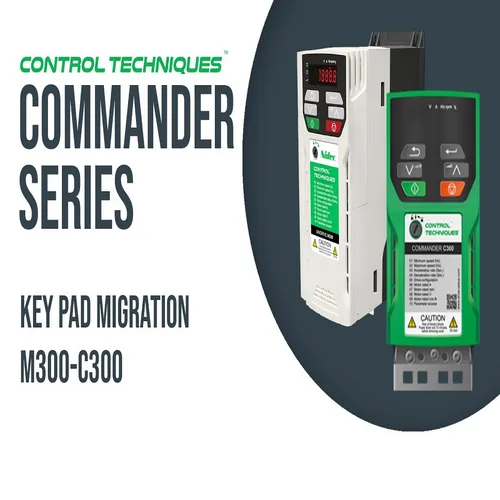
Commander C
Commander C VFD Drives from Paneltech Systems provide advanced motor control for industrial and commercial applications. Enhance efficiency and reliability.
View Product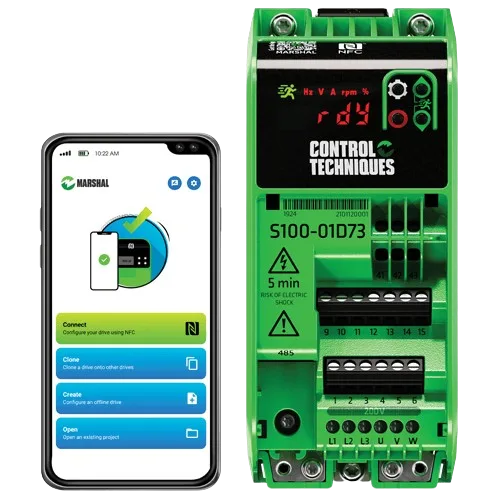
Commander S
Commander S VFD Drives offer energy-efficient motor control for industrial applications. Improve performance and optimise energy usage with reliable Commander S drives.
View Product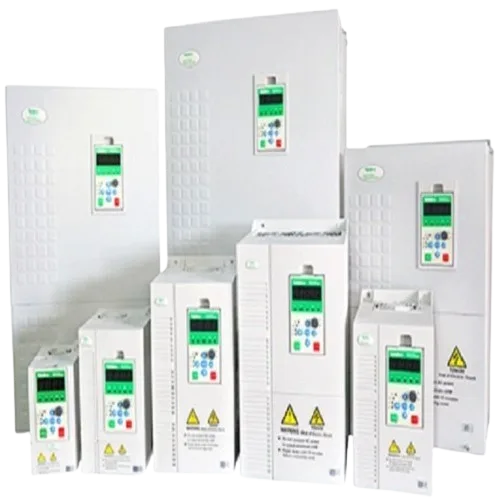
NE-200 Drives
NE-200 Drives offer reliable and efficient performance for industrial applications. Optimise motor speed and energy efficiency with the NE-200 series.
View Product- PROFINET ecosystem: Native PROFINET support makes interoperability with Siemens VFDs (G120, V20), HMIs, and remote I/O straightforward and well-documented
- TIA Portal: The Step 7 Basic environment within TIA Portal is mature and well-supported; structured project organisation, version control via TIA Project Server
- Diagnostic features: Built-in diagnostic buffer, web-server based remote access (Step 7 V17+), trace functionality for transient signals
- Spare and support: Largest Siemens spare-part inventory in Kenya among the three brands; multiple distributors
Weaknesses:
- Software cost: TIA Portal Step 7 Basic costs ~$1,000/seat; full Step 7 Professional is more expensive
- Steep learning curve: TIA Portal has many features and many places for those features to live; new engineers need 2–3 months to be productive
- SCL (Structured Text) is not free: Need the Pro or above license tier; M221 and Micro 800 include ST for free
Schneider M221
The M221 is Schneider's small-PLC offering, paired with the EcoStruxure Machine Expert Basic environment.
- Free programming software: EcoStruxure Machine Expert Basic is free, with no license restrictions for the M221 platform
- Modbus-TCP native: Best integration with Modbus-TCP devices (other PLCs, energy meters, etc.); also supports Modbus serial
- Lowest hardware cost: Generally the cheapest of the three for equivalent I/O
- Simple structure: The programming environment is straightforward, faster to learn than TIA Portal
Weaknesses:
- Smaller ecosystem in Kenya: Fewer local engineering houses with deep M221 experience; spare-parts inventory thinner than Siemens
- Lower I/O ceiling: If you grow past ~150 I/O the M221 needs to be replaced with the M241 / M340 — not a drop-in upgrade
- Limited motion functionality: Lacks integrated motion control found on the higher tiers; OK for basic applications
Allen-Bradley Micro 800
The Micro 800 family targets OEM machine builders. Strengths:
- Free CCW software: Connected Components Workbench is free; project files are portable across the Micro 800 family
- Ethernet/IP ecosystem: Strong if the plant standardises on Rockwell — integrates with Allen-Bradley VFDs (PowerFlex), HMIs, and SCADA (FactoryTalk)
- Compact form factor: Micro 810 is genuinely small, fits in tight OEM machine controls
- Library of plug-in modules: Plug-in motion, communication, and I/O modules give flexibility without expansion-rack costs
Weaknesses:
- Smaller Kenya presence: Limited Rockwell distributor footprint compared to Siemens and Schneider; longer lead times typical
- Software ecosystem gap: CCW is functional but lacks the polish of TIA Portal or EcoStruxure; debugging and trace functions feel less mature
- Higher cost per equivalent I/O: Typically the most expensive of the three for like-for-like hardware
Decision matrix
- Does the plant already have a PLC standard? → Match it. Mixing brands across a plant complicates spares, training, and integration.
- Will the application need to integrate with Siemens VFDs or HMIs? → S7-1200 (PROFINET native).
- Is cost the primary driver and the application small (under 100 I/O)? → M221 with free EcoStruxure software.
- Are you exporting the machine to a Rockwell-standard plant? → Micro 800 / Ethernet/IP.
- Is the application motion-control-heavy? → All three handle basic motion; for coordinated multi-axis, step up to S7-1500 / M241 / CompactLogix.
- Is your engineering team experienced in one platform already? → Use that platform; the cost of cross-training is real.
Common Kenyan applications
- Borehole pump control panels: S7-1200 if integrating with Siemens VFDs; M221 for stand-alone with Modbus telemetry
- Bottling line OEM machines: Micro 800 if exporting to multinational customers; S7-1200 for local FMCG
- Building management: M221 with Modbus-TCP to BACnet gateway is the cheapest; S7-1200 if integrating with Siemens HVAC drives
- Water treatment plant SCADA front-end: Typically S7-1500 / M340 / ControlLogix at the plant scale; smaller M221 / S7-1200 / Micro 800 for individual unit operations
Bottom line
All three small PLCs are technically capable. Brand selection in practice comes down to existing plant standards, the integration ecosystem (PROFINET vs Modbus vs Ethernet/IP), the engineering team's prior experience, and local spare-part availability — which favours Siemens for unfamiliar projects but favours Schneider when budget is tight. Avoid mixing platforms across a single facility unless there's a strong technical reason.
See our PLC automation panel solutions for design, integration, and commissioning across all three platforms.


