Sugar Mill MCC Panel Kenya: Heavy Motor Starting
Sugar mill MCC panel Kenya solutions are designed to handle the heavy starting loads of crushers, conveyors, pumps, and milling equipment in demanding environments such as Kisumu and Bungoma. Learn how high fault-rated Motor Control Centres
Kenya's sugar industry depends on reliable electrical systems to keep production running efficiently throughout the milling season. Every stage of sugar processing—from cane reception and crushing to juice extraction, pumping, and packaging—relies on powerful electric motors operating under demanding conditions. A professionally engineered sugar mill MCC panel Kenya manufacturers trust provides the centralised control, protection, and power distribution needed to keep these motors operating safely and efficiently.
Sugar factories in Kisumu, Bungoma, Kakamega, Busia, and other sugar-producing regions face unique operational challenges. Large motors draw high starting currents, electrical equipment is exposed to dust and humidity, and production often runs continuously during the crushing season. These conditions demand Motor Control Centres (MCCs) that are robust, reliable, and designed to meet international engineering standards.
Related Products

Motor Control
Reliable motor control panels for industrial and commercial use, providing customised solutions for safe and efficient motor operation.
View Product
LV Panel
High-quality low voltage panels designed for reliable power distribution and protection in industrial and commercial installations.
View Product
Starter Panels
Motor starter panels for safe starting and stopping of industrial motors with overload and short circuit protection.
View Product
Feeder Pillar Panels
Feeder pillar panels providing reliable power distribution solutions for outdoor and indoor industrial and commercial applications.
View ProductAt Paneltech Systems Ltd, we design and manufacture customised Motor Control Centres for Kenya's industrial sector. Our solutions combine dependable motor protection, intelligent control systems, and scalable designs that improve plant reliability while supporting future expansion. Whether your project involves a new sugar processing facility or upgrading an existing plant, our engineered MCC panels are built to deliver safe and efficient performance.
Explore our complete range of industrial electrical products or learn more about Paneltech Systems Ltd and our engineering expertise.
Why Is a Sugar Mill MCC Panel Essential for Kenyan Sugar Factories?
A sugar mill MCC panel Kenya factories rely on centralises motor control, distributes electrical power safely, and protects critical equipment against overloads, short circuits, and electrical faults. It also improves maintenance efficiency and reduces costly production downtime.
For sugar mills operating around the clock during harvesting seasons, a well-designed Motor Control Centre ensures reliable motor operation, enhances workplace safety, and supports consistent production output.
Sugar processing is one of the most motor-intensive industrial operations in Kenya. Hundreds of motors work together to move sugar cane through each stage of production. If one major motor fails unexpectedly, it can interrupt the entire production line and significantly reduce factory output.
Instead of installing individual control panels for every motor, engineers use a central Motor Control Centre to manage multiple motor feeders from one location. This approach simplifies operation, improves maintenance access, and provides comprehensive electrical protection for each connected motor.
Typical equipment controlled through a sugar mill MCC includes:
- Cane unloading conveyors
- Cane preparation knives
- Cane shredders
- Milling tandems
- Juice extraction pumps
- Clarifier agitators
- Cooling water pumps
- Boiler feed pumps
- Bagasse conveyors
- Forced-draught and induced-draught fans
- Molasses pumps
- Air compressors
- Centrifuges
- Packaging conveyors
Each application requires different protection settings, motor starters, and monitoring functions. A customised MCC ensures every motor operates safely while maintaining maximum production efficiency.
Paneltech Systems manufactures customised Low Voltage (LV) Panels engineered for demanding industrial environments across Kenya.
What Is a Motor Control Centre (MCC)?
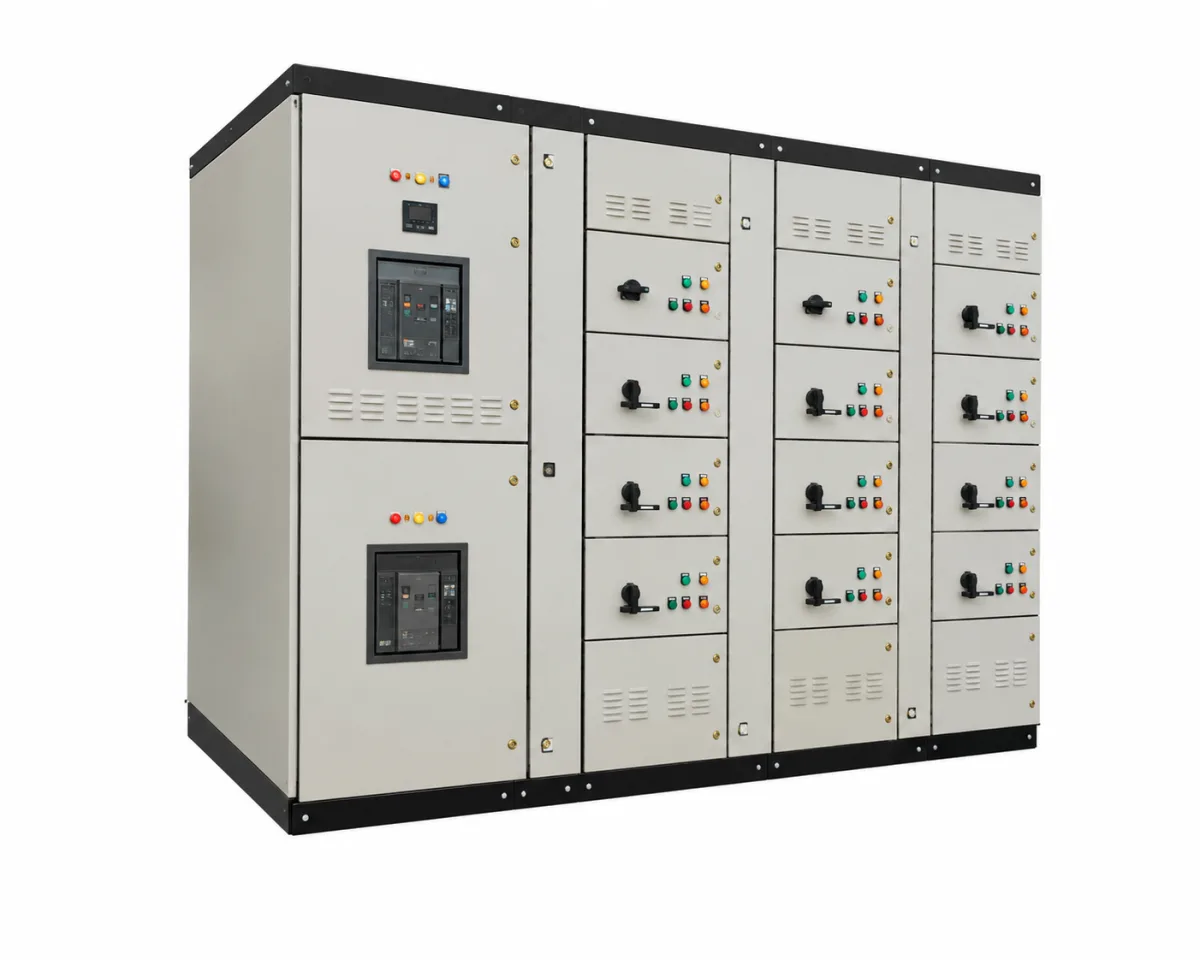
A Motor Control Centre (MCC) is a centralised electrical assembly that contains motor starters, protective devices, circuit breakers, busbars, control equipment, and monitoring systems for multiple industrial motors.
Modern MCCs improve electrical safety, simplify maintenance, reduce installation costs, and provide a scalable platform for industrial automation and future expansion.
A modern MCC integrates all the equipment required to distribute electrical power safely while providing independent protection and control for every connected motor.
Typical MCC components include:
- Air Circuit Breakers (ACBs)
- Molded Case Circuit Breakers (MCCBs)
- Miniature Circuit Breakers (MCBs)
- Copper busbar systems
- Contactors
- Thermal overload relays
- Soft starters
- Variable Frequency Drives (VFDs)
- Digital multifunction energy meters
- PLC interface modules
- Human Machine Interfaces (HMIs)
- Surge protection devices
- Control transformers
- Terminal blocks
The modular construction of modern MCC panels allows maintenance engineers to isolate individual motor feeders without shutting down the entire factory, reducing maintenance time and improving plant availability.
Learn more about our engineering capabilities by visiting the About Paneltech Systems Ltd page, or browse our complete range of industrial electrical solutions.
Understanding Heavy Starting Loads in Sugar Mills
Heavy starting loads are one of the biggest electrical challenges in sugar processing. Large motors require high starting torque while drawing several times their normal operating current during startup, placing significant stress on transformers, switchgear, and the electrical distribution network.
Selecting the appropriate motor starting method reduces voltage dips, protects equipment, and improves the long-term reliability of the entire electrical system.
Many of the motors used in sugar factories start under full mechanical load. Equipment such as shredders, crushers, milling tandems, and heavy-duty conveyors require substantial torque to overcome inertia before reaching operating speed.
Typical motor ratings in a sugar factory include:
| Equipment | Typical Motor Rating |
|---|---|
| Cane Shredder | 250–500 kW |
| Mill Drive | 400–800 kW |
| Heavy Conveyor | 55–200 kW |
| Boiler FD Fan | 90–250 kW |
| Boiler ID Fan | 160–315 kW |
| Cooling Water Pump | 55–160 kW |
| Juice Pump | 45–132 kW |
| Air Compressor | 90–250 kW |
During Direct-On-Line (DOL) starting, these motors may draw six to eight times their full-load current. Such high inrush currents can create several operational problems, including:
- Transformer voltage drops
- Flickering lighting systems
- Mechanical stress on gearboxes and couplings
- Increased motor heating
- Protective relay tripping
- Reduced power quality across the facility
By selecting the correct combination of starters and protective devices, engineers can minimise these challenges while extending equipment life and improving production reliability.
For applications requiring precise speed control and improved energy efficiency, explore our Variable Frequency Drive (VFD) solutions.
Choosing the Right Motor Starting Method
Selecting the correct motor starter depends on motor size, load characteristics, available transformer capacity, and process requirements. Using the wrong starting method can increase maintenance costs, reduce equipment life, and compromise production reliability.
Most modern sugar factories utilise a combination of Direct-On-Line starters, Star-Delta starters, Soft Starters, and Variable Frequency Drives within the same Motor Control Centre to achieve optimum performance.
Direct-On-Line (DOL) Starters
Direct-On-Line starters are typically used for smaller motors where high starting current can be tolerated.
Typical applications include:
- Utility pumps
- Small conveyors
- Ventilation fans
- Auxiliary process equipment
Advantages include:
- Simple installation
- Low capital cost
- Reliable operation
- High starting torque
However, DOL starters generate the highest starting current and are generally unsuitable for large sugar mill motors.
Star-Delta Starters
Star-Delta starters reduce starting current by initially connecting motor windings in a star configuration before switching to delta once the motor reaches operating speed.
Typical applications include:
- Medium-sized conveyors
- Cooling pumps
- Process fans
- Auxiliary milling equipment
Key benefits include:
- Reduced inrush current
- Lower voltage disturbance
- Reduced mechanical stress
- Improved system stability
Soft Starters
Soft starters gradually increase motor voltage during startup, providing controlled acceleration while limiting current peaks.
They are commonly used for:
- Cane shredders
- Crushers
- Heavy conveyors
- Large centrifugal pumps
Advantages include:
- Smooth acceleration
- Reduced gearbox wear
- Lower maintenance costs
- Improved motor lifespan
- Reduced electrical stress
Variable Frequency Drives (VFDs)
Variable Frequency Drives provide complete control over motor speed while delivering significant energy savings.
Typical applications include:
- Conveyor systems
- Boiler fans
- Pumping stations
- Bagasse handling equipment
- Ventilation systems
Major benefits include:
- Variable speed control
- Reduced starting current
- Lower energy consumption
- Improved process efficiency
- Enhanced production control
Paneltech Systems supplies integrated Variable Frequency Drive (VFD) solutions that seamlessly integrate with customised Motor Control Centres for sugar processing facilities.
Why High Fault Ratings Are Critical
Sugar mills require MCC panels with high short-circuit withstand ratings because large transformers and high-powered motors can generate extremely high fault currents during electrical failures. Correctly rated switchgear protects personnel, minimises equipment damage, and supports safe, continuous operation.
Determining the correct fault rating requires careful engineering calculations based on transformer capacity, utility contribution, cable impedance, and future plant expansion plans.
Large industrial transformers provide the electrical capacity required to operate heavy milling equipment, but they also increase the available short-circuit current. If an MCC panel is not designed to withstand these fault levels, the consequences can include catastrophic equipment failure, extended downtime, and increased safety risks.
Typical MCC fault ratings include:
- 36 kA
- 50 kA
- 65 kA
- 80 kA
When designing an MCC panel, engineers evaluate:
- Transformer size and impedance
- Utility network contribution
- Generator contribution
- Cable lengths and conductor sizes
- Motor contribution during faults
- Future expansion requirements
Using properly rated switchgear ensures the MCC can safely interrupt fault currents while maintaining compliance with recognised engineering standards.