Switchboard Refurbishment Kenya: Refurbish or Replace?
Switchboard refurbishment Kenya projects can extend the useful life of suitable ageing electrical panels, but refurbishment is not always the most economical option. Compare component condition, obsolescence, capacity, safety,

An ageing switchboard should be refurbished when its enclosure, busbars and core structure remain suitable and the required components can be safely upgraded. Replacement is usually more appropriate when the board has severe deterioration, obsolete equipment, inadequate capacity, poor fault performance or a retrofit cost approaching that of a new board.
Replacing a switchboard is a significant project. It can involve shutdowns, temporary power arrangements, new cables, civil modifications and coordination with other electrical systems.
Related Products

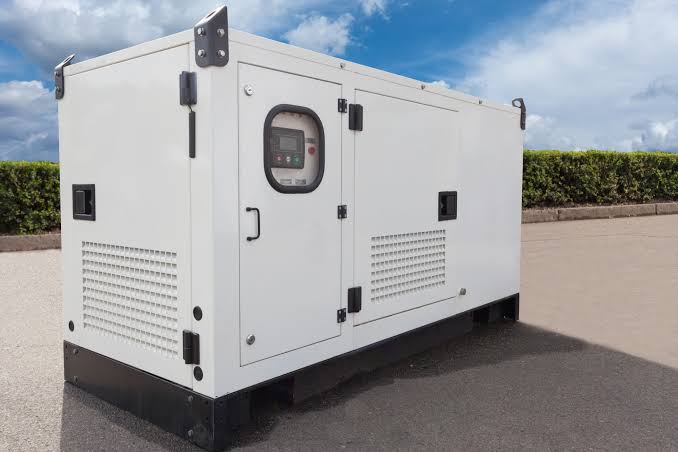
ATS / MTS Kenya
ATS/MTS solutions from Paneltech Systems provide reliable Automatic and Manual Transfer Switches for seamless power transfer in industrial and commercial electrical systems.
View Product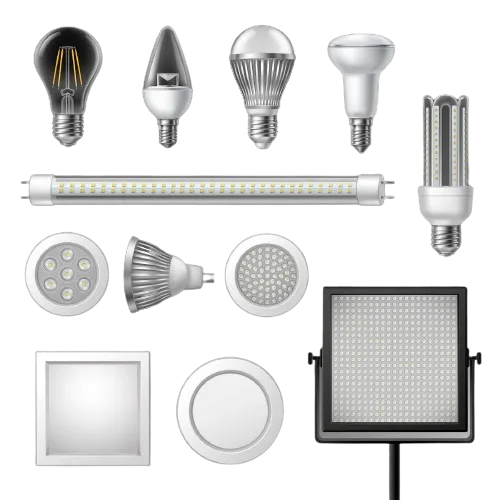
LED Lights
Paneltech Systems offers high-quality LED lighting solutions for indoor and outdoor applications ÔÇö bright, energy-efficient lighting for commercial and industrial spaces.
View Product
Light Accessories
A comprehensive range of lighting accessories for commercial and industrial electrical installations.
View Product
Switches and Sockets
Quality switches and sockets for residential, commercial and industrial electrical installations.
View ProductRefurbishment can sometimes provide a lower-cost route to improve protection and reliability while retaining parts of the existing installation.
The decision should therefore be based on condition, technical suitability, risk and total lifecycle cost, not simply the age of the board.
What Is Switchboard Refurbishment?
Switchboard refurbishment involves restoring, repairing or upgrading an existing electrical board while retaining some of its original structure or components. The scope can range from cleaning and replacing defective devices to major protection and breaker upgrades.
Depending on the board's condition, refurbishment may include:
- Replacing circuit breakers
- Upgrading protection
- Replacing contactors
- Replacing meters
- Replacing control components
- Improving cable termination
- Repairing enclosure components
- Cleaning busbars
- Reterminating cables
- Improving labelling
- Adding monitoring
- Upgrading control systems
Not every old board is suitable for refurbishment.
The existing construction must first be assessed.
When Should You Refurbish an Old Switchboard?
Refurbishment makes sense when the fundamental switchboard structure remains sound and the required upgrades can be completed safely without compromising the board's design. It can be particularly attractive when only selected components have become obsolete or unreliable.
Refurbishment may be appropriate when:
- The enclosure is structurally sound
- Busbars are in good condition
- Insulation remains suitable
- Fault levels remain within the board's capability
- Replacement components are available
- The board has adequate physical space
- Protection can be upgraded
- Cable terminations can be safely retained or modified
- The required work can be completed economically
A technical assessment should confirm these points.
When Should You Replace a Switchboard?
Replacement becomes more attractive when the board has significant deterioration, inadequate short-circuit capability, obsolete components, insufficient capacity or a structure that cannot accommodate the required upgrades. Safety and reliability should take priority over retaining an unsuitable old board.
Replacement may be justified by:
- Severe corrosion
- Damaged insulation
- Overheated busbars
- Repeated faults
- Obsolete breakers
- Lack of spare parts
- Insufficient capacity
- Poor protection coordination
- Inadequate fault withstand capability
- Major enclosure damage
- Unsafe cable terminations
- Lack of physical space
If several of these conditions exist simultaneously, a new switchboard may provide better long-term value.
Switchboard Condition Assessment
A condition assessment provides the technical evidence needed to decide between refurbishment and replacement. It should examine the physical condition, electrical performance, protection, loading and availability of replacement components.
An assessment can review:
Mechanical Condition
- Doors
- Hinges
- Locks
- Mounting arrangements
- Internal barriers
- Enclosure condition
Electrical Condition
- Busbars
- Connections
- Insulation
- Breakers
- Protection devices
- Cable terminations
Operational Condition
- Breaker operation
- Trips
- Alarms
- Metering
- Interlocks
Documentation
- Single-line diagram
- Circuit schedule
- Protection settings
- Previous test reports
Why Switchboard Age Alone Is Not Enough
A switchboard's age does not automatically determine whether it should be replaced. Condition, loading, design, maintenance history, fault performance and component availability are often more useful indicators of remaining serviceability.
An older board that has:
- Been well maintained
- Experienced low loading
- Remained dry and clean
- Had components replaced appropriately
may be in better condition than a newer board exposed to:
- Excessive heat
- Dust
- Moisture
- Overloading
- Poor maintenance
Age is therefore one factor—not the complete decision.
Obsolete Circuit Breakers
Obsolete circuit breakers are one of the strongest reasons to investigate refurbishment or replacement because unavailable spares can make future repairs difficult. An upgrade may be possible if compatible replacement equipment can be safely integrated into the existing board.
Problems with obsolete breakers include:
- Limited spare availability
- Expensive replacement parts
- Reduced manufacturer support
- Difficult maintenance
- Outdated protection technology
A retrofit can sometimes replace old breakers without replacing the complete switchboard.
However, compatibility must be verified.
Breaker Retrofit
Breaker retrofit involves replacing an existing breaker or protection device with a newer compatible unit while retaining part of the original switchboard. The retrofit must account for mechanical fit, electrical ratings, protection settings and the original board's design.
The engineer should verify:
- Current rating
- Voltage rating
- Breaking capacity
- Short-time withstand
- Physical dimensions
- Connection arrangement
- Protection functions
- Isolation requirements
A breaker that physically fits is not automatically electrically suitable.
Can You Replace Only the Breakers?
Sometimes, but replacing breakers alone does not automatically upgrade the entire switchboard. Busbars, insulation, connections, enclosure construction and short-circuit performance must also be assessed before approving a breaker retrofit.
For example:
Old breaker removed
↓
New breaker installed
↓
Existing busbar inspected
↓
Connections verified
↓
Protection settings configured
↓
Testing performed
The complete assembly must remain suitable for its intended duty.
Busbar Condition
Busbars are critical structural and electrical components of a switchboard, so their condition must be assessed before refurbishment. Heating, corrosion, insulation deterioration or damaged joints can make refurbishment unsuitable.
Inspect for:
- Discolouration
- Heat damage
- Corrosion
- Loose joints
- Insulation deterioration
- Mechanical damage
Thermographic inspection during appropriate operating conditions can also help identify abnormal heating.
Thermal Problems in Old Switchboards
Abnormal heat can indicate loose connections, excessive loading, unbalanced phases or deteriorating components. Repeated thermal problems should be investigated rather than simply resetting breakers or replacing individual devices.
A common progression is:
Loose connection
↓
Higher resistance
↓
Localised heating
↓
Insulation deterioration
↓
Failure
Thermography and physical inspection can help identify these conditions.
Switchboard Loading and Capacity
A board that was adequately sized when originally installed may no longer have enough capacity for a modern facility. Load growth should therefore be assessed before deciding to refurbish the existing board.
Consider:
- Existing connected load
- Maximum demand
- Spare outgoing ways
- Transformer capacity
- Cable capacity
- Busbar rating
- Future expansion
- Generator loads
- Solar or inverter connections
- EV charging loads where applicable
If the existing board cannot accommodate future requirements, replacement may be more economical than extensive modification.
Short-Circuit Rating
The switchboard must have adequate short-circuit withstand and breaking capability for the available fault current at its installation point. An old board should not be retained simply because its normal operating current remains adequate.
The assessment should consider:
- Prospective short-circuit current
- Main breaker rating
- Outgoing breaker ratings
- Busbar withstand
- Coordination
- Protection settings
This is a critical engineering consideration during refurbishment.
Protection Coordination
Refurbishment provides an opportunity to review protection coordination so that faults are isolated by the appropriate protective device rather than unnecessarily shutting down a larger section of the installation.
Review:
- Breaker trip settings
- Overcurrent protection
- Short-circuit protection
- Earth-fault protection
- Selectivity
- Discrimination
- Upstream/downstream coordination
Adding modern breakers without reviewing the protection strategy can leave coordination problems unresolved.
Switchboard Refurbishment Kenya: Environmental Conditions
Environmental conditions in Kenya can influence the condition of ageing switchboards, particularly where equipment is exposed to dust, humidity, heat or coastal salt air. The assessment should therefore consider the actual installation environment.
Potential concerns include:
Coastal Areas
- Salt-air corrosion
- Humidity
- Condensation
Industrial Areas
- Dust
- Heat
- Chemical contamination
Agricultural Facilities
- Moisture
- Dust
- Ammonia
- Cleaning chemicals
The environment can affect the remaining useful life of the equipment.
Refurbishment Cost vs Replacement Cost
The cheapest initial option is not necessarily the cheapest lifecycle option. Refurbishment should be compared with replacement using the total cost of the work, expected remaining life, maintenance requirements, downtime and future expansion needs.
A simple comparison is:
| Factor | Refurbish | Replace |
|---|---|---|
| Initial cost | Often lower | Often higher |
| Downtime | Potentially lower | Potentially higher |
| Existing enclosure | Retained | New |
| Obsolete components | May be upgraded | Eliminated |
| Future capacity | Limited by existing structure | Can be designed |
| Documentation | May need updating | New documentation |
| Remaining life | Depends on existing condition | New equipment |
| Project complexity | Medium to high | Medium to high |
The correct answer depends on the specific board.
The 50% Rule: Is It Reliable?
There is no universal rule that a refurbishment becomes uneconomical at exactly 50% of the cost of a new switchboard. The comparison should include technical risk, downtime, future requirements and the value of retaining the existing infrastructure.
For example, a refurbishment costing 60% of a replacement may still make sense if:
- Shutdown time is limited
- The existing enclosure is excellent
- The retrofit provides many years of useful life
- Cable replacement would be expensive
- The new board would require major civil work
Conversely, a cheaper refurbishment may not make sense if the equipment remains obsolete.
Total Cost of Ownership
Total cost of ownership includes more than the initial project price. Maintenance, energy losses, spare parts, downtime, future modifications and eventual replacement should be considered when comparing refurbishment with a new switchboard.
Consider:
Purchase/Refurbishment Cost
Installation Cost
Shutdown Cost
Maintenance Cost
Spare Parts
Downtime Risk
Future Upgrade Cost
=
Lifecycle Cost
This provides a more realistic comparison.
Downtime and Business Impact
The financial impact of switchboard downtime can be greater than the equipment cost itself, especially in manufacturing, hospitality, healthcare and data-dependent businesses. The refurbishment or replacement plan should therefore include a realistic outage strategy.
Potential costs include:
- Lost production
- Staff downtime
- Spoiled products
- Business interruption
- Temporary power
- Contractor costs
- Emergency repairs
A project that saves money on equipment but requires a much longer shutdown may not be the best commercial choice.
Refurbishment During a Planned Shutdown
Planned shutdowns can make refurbishment more practical because the maintenance team can safely isolate the switchboard and complete multiple upgrades in one controlled intervention.
A refurbishment plan may include:
- Isolation
- Inspection
- Cleaning
- Component removal
- Component installation
- Cable termination
- Protection configuration
- Testing
- Documentation
- Re-energisation
The actual sequence depends on the equipment and site conditions.
What Can Be Upgraded?
A refurbishment can potentially upgrade protection, metering, control and monitoring while retaining suitable parts of the original board. The feasible scope depends on the original construction and the compatibility of replacement equipment.
Possible upgrades include:
- MCCBs
- ACBs
- MCBs
- Protection relays
- Digital meters
- CTs
- Control relays
- Contactors
- APFC equipment
- Surge protection
- Monitoring systems
The upgrade should be engineered rather than assembled from individually selected components without compatibility checks.
Digital Metering Upgrade
Replacing old analogue meters with modern digital meters can improve visibility of voltage, current, power factor and energy parameters. Metering upgrades can be particularly useful where the facility needs better operational monitoring.
Modern metering can provide:
- Voltage
- Current
- Frequency
- Power
- Power factor
- Energy
- Maximum demand
- Communication
Where required, meters can also communicate with building or energy-management systems.
Adding Remote Monitoring
Remote monitoring can extend the usefulness of a refurbished switchboard by providing information about electrical parameters and equipment status. Communication should be selected according to the facility's automation and monitoring requirements.
Potential communication options include:
- Modbus
- Ethernet
- Gateway-based systems
- Building-management integration
This can provide facility teams with better visibility without replacing the entire board.
Documentation After Refurbishment
Documentation should be updated after refurbishment so that future maintenance teams know what equipment is installed and how the board is configured. An upgraded board without updated documentation creates avoidable maintenance risks.
The final documentation may include:
- Updated single-line diagram
- Panel schedule
- Breaker schedule
- Protection settings
- Cable information
- Meter details
- Test results
- Equipment datasheets
- As-built drawings
This documentation becomes part of the asset's maintenance record.
Testing After Refurbishment
A refurbished switchboard should undergo appropriate inspection and testing before returning to normal service. Testing verifies that the modified equipment is correctly wired, protected and operational.
Depending on the scope, testing may include:
- Visual inspection
- Continuity checks
- Insulation resistance testing where appropriate
- Protection verification
- Breaker operation
- Contact-resistance testing where applicable
- Functional testing
- Meter verification
- Interlock testing
The tests required should reflect the work performed and applicable standards.
When Refurbishment Becomes False Economy
Refurbishment becomes poor value when too many fundamental components require replacement or when the retained structure remains unsuitable for the facility's future needs. At that point, a new switchboard can provide a cleaner and more reliable solution.
Warning signs include:
- Multiple obsolete components
- Severe corrosion
- Damaged busbars
- Inadequate fault rating
- Insufficient space
- Major insulation deterioration
- Repeated overheating
- Poor original construction
- Extensive modifications required
If almost everything needs to be replaced, retaining the old enclosure may offer little benefit.
Refurbish or Replace Decision Matrix
A decision matrix helps compare technical condition with commercial considerations. The more critical the deficiencies in the existing board, the stronger the case for complete replacement.
| Condition | Refurbish | Replace |
|---|---|---|
| Good enclosure | Strong option | Possible |
| Minor component failures | Strong option | Usually unnecessary |
| Obsolete breakers | Possible retrofit | Consider |
| Damaged busbars | Weak option | Strong option |
| Severe corrosion | Weak option | Strong option |
| Insufficient capacity | Limited | Strong option |
| Inadequate fault rating | Weak option | Strong option |
| Major insulation damage | Weak option | Strong option |
| Repeated failures | Investigate | Consider strongly |
| Major future expansion | Limited | Strong option |
Five Questions Before Making the Decision
Before approving refurbishment or replacement, answer five questions: Is the existing structure sound? Can suitable components still be obtained? Is the board electrically adequate? Can it meet future requirements? And what is the total lifecycle cost?
1. Is the structure sound?
If not, replacement becomes more attractive.
2. Are replacement components available?
Obsolete equipment can create long-term maintenance problems.
3. Is the board electrically adequate?
Check ratings, loading and fault capability.
4. Will it meet future requirements?
Consider expansion and new loads.
5. What is the lifecycle cost?
Compare the complete cost—not just the quotation price.
A Practical Decision Example
Consider a board with a sound enclosure, good busbars and obsolete breakers that remain physically and electrically replaceable. Such a board may be a strong refurbishment candidate, provided testing confirms that the retained assembly remains suitable.
Scenario A: Refurbish
Existing:
- Good enclosure
- Good busbars
- Obsolete breakers
- Functional cables
- Adequate capacity
Possible solution:
Breaker retrofit + metering upgrade + testing
Scenario B: Replace
Existing:
- Corroded enclosure
- Damaged busbars
- Obsolete breakers
- Overloaded circuits
- No spare capacity
Possible solution:
New switchboard designed for present and future loads
The difference is the condition and technical suitability of what can be retained.
Paneltech Systems Switchboard Solutions
Paneltech Systems Ltd can support the assessment, design and development of electrical panel solutions where existing equipment requires upgrading or replacement. The appropriate approach should be based on the condition of the existing switchboard and the project's electrical requirements.
Potential solutions include:
- LV switchboards
- Distribution panels
- MCC panels
- APFC panels
- ATS/MTS systems
- VFD panels
- Metering
- Protection systems
- Custom electrical panels
Explore Paneltech Systems for electrical engineering and panel solutions.
You can also review the Paneltech Systems Knowledge Site for technical resources.
Final Checklist: Refurbish or Replace?
Refurbish when the existing switchboard is structurally sound, electrically adequate and capable of accepting safe upgrades at a sensible lifecycle cost. Replace when deterioration, obsolete construction, inadequate ratings or future requirements make the existing board fundamentally unsuitable.
Before making the decision, check:
- Enclosure condition
- Busbar condition
- Insulation condition
- Breaker availability
- Protection capability
- Short-circuit rating
- Current loading
- Future load growth
- Spare ways
- Cable condition
- Environmental exposure
- Maintenance history
- Downtime requirements
- Retrofit cost
- New-board cost
- Lifecycle cost
- Documentation
- Testing requirements
The best decision is not automatically “repair the old board” or “buy a new board.”
It is the option that provides the required safety, capacity, reliability and lifecycle value for the facility.