VFD vs Soft Starter vs DOL: Which Motor Starter for Your Load?
A practical engineer's guide to choosing between Variable Frequency Drives, soft starters, and Direct-on-Line starting. Covers inrush current, energy savings, mechanical stress, and process control trade-offs.
A Variable Frequency Drive (VFD) controls both motor speed and start-up torque electronically; a soft starter only reduces start-up current without controlling running speed; Direct-on-Line (DOL) connects the motor straight to the supply with no current limiting. The right choice depends on three factors: how often the motor starts, whether you need variable running speed, and how violent the inrush current would be on a hard start.
Quick comparison
| Aspect | DOL | Soft Starter | VFD |
|---|---|---|---|
| Inrush current | 6–8× FLC | 2–4× FLC | ≈ 1× FLC |
| Start-up torque control | None | Limited ramp | Full |
| Running speed control | None | None | 0–100% (and beyond) |
| Energy savings on variable loads | None | None | Up to 50% |
| Mechanical stress on driven equipment | High | Medium | Low |
| Heat dissipation in motor | Brief, very high | Brief, high | Lower at low speeds |
| Harmonic distortion injected to grid | None | Transient only | Continuous (needs filter) |
| Cost per kW | Lowest | Medium | Highest |
| Panel footprint | Smallest | Medium | Largest |
Direct-on-Line (DOL): the default
DOL is what happens when you wire a contactor between the supply and the motor and energise it. The motor sees full line voltage immediately, draws 6–8 times its full-load current (FLC), develops 1.5–2× rated torque, and accelerates to rated speed in 1–10 seconds depending on inertia.
Related Products
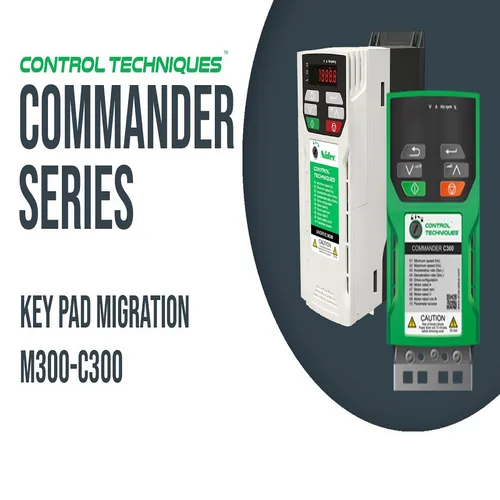
Commander C
Commander C VFD Drives from Paneltech Systems provide advanced motor control for industrial and commercial applications. Enhance efficiency and reliability.
View Product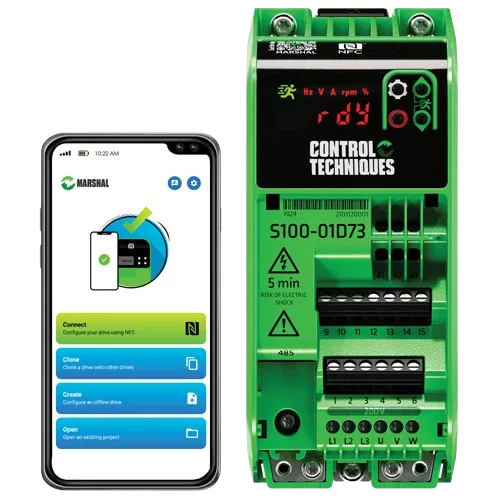
Commander S
Commander S VFD Drives offer energy-efficient motor control for industrial applications. Improve performance and optimise energy usage with reliable Commander S drives.
View Product
Motor Control
Reliable motor control panels for industrial and commercial use, providing customised solutions for safe and efficient motor operation.
View Product
Starter Panels
Motor starter panels for safe starting and stopping of industrial motors with overload and short circuit protection.
View ProductUse DOL when:
- Motor is under 7.5 kW (regional convention; sometimes up to 22 kW where supply is stiff)
- Starts are infrequent (a few per hour at most)
- The driven load tolerates abrupt torque application (pumps with closed-discharge valves, simple fans, compressors with unloaders)
- You don't care about energy management on the running motor — speed is fixed
- The supply can handle the inrush without voltage dip affecting other loads
Avoid DOL when: the driven load is a long conveyor (belt stretch and snap risk), a centrifugal pump on long pipeline (water hammer), or any machine where a sudden full-torque kick damages product or mechanism.
Soft starters: cheap inrush mitigation
A soft starter uses thyristors to phase-control voltage during start-up. Voltage ramps up over a few seconds, current is limited to 2–4× FLC, and starting torque is reduced proportionally to the square of the voltage ramp.
Critically: once the motor reaches running speed, the thyristors are bypassed and the soft starter becomes inert. It does nothing during normal running — it's a starter, not a drive. You cannot vary speed with a soft starter.
Use a soft starter when:
- You need to limit inrush current to protect a weak supply
- The driven load is sensitive to torque shock (conveyors, mixers, escalators)
- Starts are still infrequent — soft starters dissipate significant heat in the thyristors during the ramp
- Speed control isn't needed and the running efficiency of DOL is acceptable
- Cost matters more than full speed control
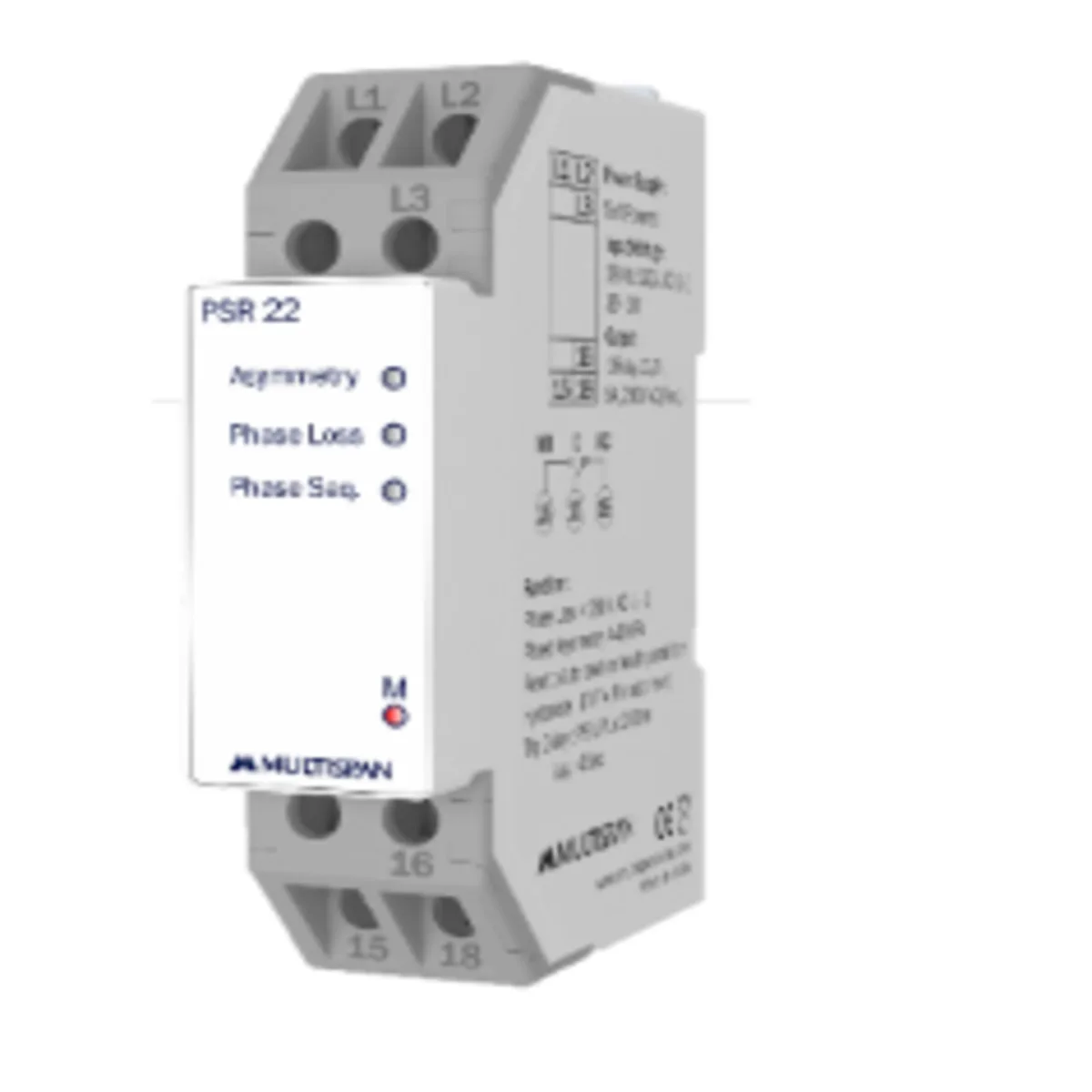
Most soft starters also include built-in motor protection (overload, phase loss, locked rotor), which simplifies the panel.
VFDs: full electronic speed control
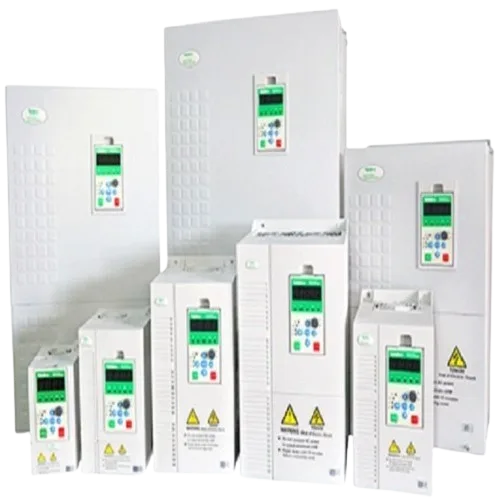
A VFD converts AC to DC and back to AC at whatever frequency and voltage you ask for. By varying frequency, the VFD varies motor speed. By varying voltage in proportion to frequency (V/Hz control) it keeps flux constant. By using vector control or direct torque control, modern drives also keep motor torque controllable at any speed including stopped.
The starting current of a VFD-driven motor is approximately equal to its running current — there is no inrush, because the drive ramps frequency from zero. Energy savings on pumps and fans can reach 50% because power consumption scales as the cube of speed for centrifugal loads.
Use a VFD when:
- The load benefits from variable speed (pumps, fans, compressors with variable demand)
- Energy management is a project goal — payback periods on HVAC and water pumping retrofits are commonly under 2 years
- The driven equipment needs precise speed coordination (conveyor sync, web tension control, mixing speed control)
- Frequent starts are required — DOL would overheat the motor, soft starters would overheat the thyristors
- You need controlled deceleration (regenerative braking, ramp-to-stop)
Caveats: VFDs inject harmonics into the supply and require input line reactors or filters; long motor cables need output reactors; EMC compliance needs proper screening and earthing; motor bearings on large drives often need shaft grounding to prevent EDM pitting.
A simple decision tree
- Do you need variable running speed or precise torque control? → Yes: VFD. No: continue.
- Will the load benefit from energy savings via speed variation? (centrifugal pump or fan with variable demand) → Yes: VFD pays for itself. No: continue.
- Is inrush current a problem for the supply, or is torque shock damaging equipment? → Yes: soft starter. No: DOL.
- Are starts frequent (more than ~6 per hour)? → VFD (only it handles frequent starts thermally).
Typical Kenyan installations
- Borehole pumps (5.5–22 kW): VFD almost always — variable demand, frequent starts, water hammer risk on DOL
- HVAC chiller pumps and AHU fans: VFD — energy savings drive payback
- Conveyor belts in factories: Soft starter for short belts, VFD where speed sync matters
- Cooling tower fans (1.5–7.5 kW): DOL acceptable; VFD where load varies seasonally
- Workshop compressors: Star-delta or soft starter for fixed-speed; VFD for variable demand and noise reduction
- Submersible sewage pumps: Soft starter (limit inrush) or VFD (energy)
Bottom line
DOL is the default for small motors with infrequent starts. Soft starters earn their place when you need to reduce inrush or mechanical shock but don't need running-speed control. VFDs are the right answer wherever variable speed, energy management, or frequent starting matters — which, for centrifugal loads in Kenya's industrial and commercial settings, is most of the time.
See our VFD solutions for application engineering, panel design, and commissioning. For motor control panel design including DOL starters, soft starters, and integrated VFD cabinets, see Low Voltage Panels.