Voltage Drop Long Cable Run: Boreholes, Farms and Remote Plant in Kenya
Voltage drop long cable run can affect boreholes and remote plant. Learn cable sizing, voltage-drop calculations and when to step up voltage in Kenya.

Long electrical cable runs create a common engineering challenge: the voltage available at the equipment can be significantly lower than the voltage measured at the main distribution board. This becomes particularly important when supplying borehole pumps, irrigation systems, farm buildings, water treatment equipment, workshops, cold rooms, and remote industrial plant.
Correct voltage drop long cable run calculations are therefore essential when designing electrical systems for farms and remote installations in Kenya. A cable that is adequate for current-carrying capacity may still be unsuitable because of excessive voltage drop over distance.
Related Products

LV Panel
High-quality low voltage panels designed for reliable power distribution and protection in industrial and commercial installations.
View Product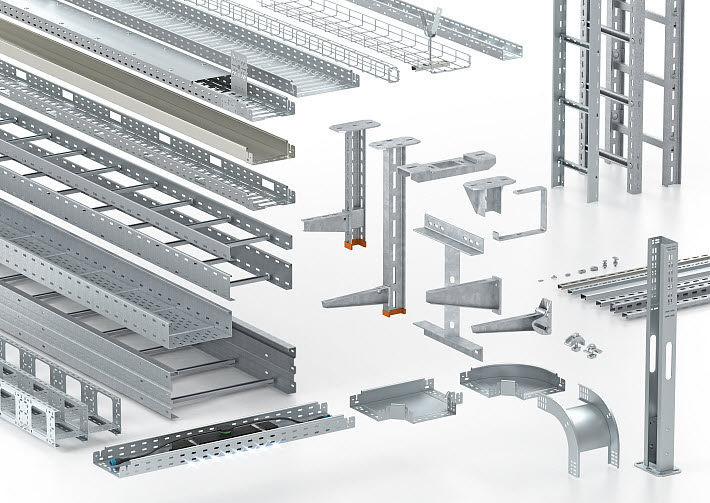
Cable Systems
Paneltech Systems offers comprehensive cable management systems for efficient, secure and organised cable setups across industrial and commercial environments.
View Product
ATS / MTS Kenya
ATS/MTS solutions from Paneltech Systems provide reliable Automatic and Manual Transfer Switches for seamless power transfer in industrial and commercial electrical systems.
View Product
Panels For Data Centers
Specialised low voltage panels designed for data centre power distribution, ensuring high reliability and redundancy.
View ProductThe problem becomes more significant as the cable length, load current, or motor starting current increases. Engineers may need to increase conductor size, change the distribution voltage, install a transformer closer to the load, or reconsider the distribution architecture.
For Kenyan agricultural and industrial projects, these decisions can have a substantial impact on installation cost, energy efficiency, equipment reliability, and future expansion.
Paneltech Systems Ltd. provides electrical engineering, LV panel, distribution, automation, and power infrastructure solutions for industrial, commercial, agricultural, and remote applications across Kenya. Explore our electrical products and engineering solutions or learn more about the company through our About Paneltech Systems page.
What Causes Voltage Drop on a Long Cable Run?
Voltage drop occurs because electrical conductors have resistance and impedance, causing some of the supplied voltage to be lost as current travels through the cable. The longer the cable and the higher the load current, the greater the voltage drop.
Every electrical cable has electrical resistance. When current flows through a conductor, part of the electrical energy is dissipated as heat.
For a simplified resistive circuit:
Voltage Drop = Current × Resistance
In practical AC systems, especially three-phase industrial installations, engineers must also consider:
- Conductor resistance
- Cable reactance
- Power factor
- Cable length
- Load current
- Conductor material
- Conductor cross-sectional area
- Installation method
- Operating temperature
For this reason, simply selecting a cable based on its ampacity is not enough for a long-distance installation.
A cable might safely carry a particular current without overheating but still produce an unacceptable voltage drop at the receiving end.
This distinction is particularly important for motors.
For example, a borehole pump located hundreds of metres from the main electrical distribution point may have a motor that operates correctly at its rated voltage under normal running conditions. However, excessive voltage drop during starting can prevent the motor from accelerating properly, causing high starting current, overheating, nuisance tripping, or failure to start.
Why Voltage Drop Matters for Borehole Pumps
Borehole pumps are especially sensitive to voltage drop because they often operate over long cable distances and require substantial current during starting. Correct borehole cable sizing must consider both running voltage drop and motor starting conditions.
Boreholes are among the clearest examples of long-distance electrical distribution in Kenya.
A typical installation may have:
- A utility connection or generator at the property entrance
- A main distribution board
- A borehole located several hundred metres away
- A submersible pump deep underground
- A control panel at the borehole
- A rising main supplying water to storage tanks
The electrical cable may therefore have to cover a considerable distance before reaching the motor.
The engineering challenge is not simply determining whether the cable can carry the motor's rated current. The design must establish whether sufficient voltage reaches the motor under both normal operating and starting conditions.
A borehole pump with a high starting current can experience a much larger temporary voltage drop than its normal running voltage drop.
This can result in:
- Difficulty starting
- Contactor chatter
- Motor protection trips
- Excessive heating
- Reduced pump performance
- Reduced motor life
- Premature cable deterioration
The borehole cable sizing process should therefore consider the motor's rated power, rated voltage, full-load current, starting method, cable length, conductor material, installation conditions, and acceptable voltage-drop limit.
For projects requiring a dedicated control and protection system, Paneltech Systems can integrate motor protection, starters, monitoring, and control equipment into custom Motor Control Panels.
Voltage Drop Calculation for Long Cable Runs
Voltage-drop calculations determine whether the selected cable can deliver adequate voltage to the remote load. For three-phase systems, the calculation must account for conductor resistance, reactance, current, cable length, and power factor.
A simplified three-phase voltage-drop relationship can be expressed as:
ΔV = √3 × I × L × (R cosφ + X sinφ)
Where:
- ΔV = voltage drop in volts
- I = load current in amperes
- L = cable route length
- R = conductor resistance
- X = conductor reactance
- cosφ = load power factor
- sinφ = corresponding reactive component
For a simplified resistive calculation, the relationship can be reduced to:
ΔV ≈ √3 × I × R × L
The exact calculation method should correspond with the applicable electrical design standard and cable manufacturer's published characteristics.
Example
Consider a three-phase 400 V motor supplied through a long cable.
Assume:
- Motor rating: 15 kW
- Supply: 400 V
- Frequency: 50 Hz
- Power factor: 0.85
- Efficiency: 90%
- Cable route: 300 m
- Copper conductor
- Three-phase supply
The approximate motor current can be estimated using:
I = P / (√3 × V × cosφ × η)
Therefore:
I ≈ 15,000 / (1.732 × 400 × 0.85 × 0.90)
This gives an approximate running current of 28.3 A.
The actual design current should be based on the motor manufacturer's nameplate and applicable design requirements rather than relying solely on a calculated estimate.
Once the current is known, the engineer can compare the voltage-drop performance of candidate cable sizes.
A larger conductor generally has lower resistance and therefore produces less voltage drop.
This is why long-distance installations can require a substantially larger cable than current-carrying capacity alone would suggest.
When Cable Size Needs to Increase
Cable size should be increased when calculated voltage drop exceeds the project's allowable limit or when motor starting performance requires additional voltage at the load. Increasing conductor cross-sectional area reduces resistance and improves voltage delivery.
Increasing cable size is usually the first engineering response to excessive voltage drop.
For example, a cable selected purely on ampacity might be:
- 16 mm²
- 25 mm²
- 35 mm²
However, a long-distance application may require a larger conductor because of voltage-drop considerations.
The final selection should consider:
- Design current
- Installation method
- Ambient temperature
- Grouping and derating factors
- Short-circuit withstand
- Voltage drop
- Motor starting requirements
- Future load growth
- Cable economics
Oversizing a cable increases capital expenditure, but undersizing it can create much larger lifecycle costs.
These costs can include:
- Motor failures
- Higher energy consumption
- Frequent nuisance trips
- Production downtime
- Repeated cable replacement
- Poor pump performance
For remote farms and boreholes, the cable itself may represent a major portion of the electrical installation cost. It is therefore important to optimize the conductor size rather than simply choosing the largest available cable.
When Should You Step Up the Distribution Voltage?
Stepping up the distribution voltage can be more economical than installing very large low-voltage conductors when power must be transmitted over a substantial distance. Higher voltage reduces current for the same power, which can significantly reduce voltage drop and cable losses.
This is an important option for large farms, remote industrial facilities, irrigation schemes, and other installations where the distance between the source and load is substantial.
For a given power:
P = √3 × V × I × cosφ
As voltage increases, the current required to transmit the same power decreases.
Lower current produces lower I²R losses and can reduce the voltage drop along the distribution line.
A typical arrangement may therefore be:
Utility / Main Supply → Step-Up Transformer → Medium-Voltage Distribution → Step-Down Transformer → Remote LV Load
The economic benefit depends on:
- Distance
- Load size
- Operating hours
- Cable cost
- Transformer cost
- Right-of-way requirements
- Maintenance requirements
- Applicable electrical regulations
Stepping up voltage is not automatically the best solution for every borehole or farm. It requires appropriate protection, switching equipment, transformers, clearances, earthing, competent installation, and regulatory compliance.
For larger projects, Paneltech Systems can assist with the design of LV electrical distribution systems and associated control infrastructure.
Long-Distance Farm Power Distribution in Kenya
Farm power distribution in Kenya should be designed around load location, cable distance, motor starting requirements, environmental exposure, and future expansion. A centralized low-voltage system may be appropriate for short distances, while larger farms may benefit from distributed substations or higher-voltage distribution.
Agricultural properties often have loads spread over large areas.
A single farm may require electrical supply for:
- Borehole pumps
- Irrigation pumps
- Dairy equipment
- Cold rooms
- Grain dryers
- Workshops
- Security systems
- Staff facilities
- Greenhouses
- Poultry houses
- Water treatment systems
Attempting to supply every load from one central LV distribution board can create excessive cable lengths.
A better approach may involve strategically positioned distribution boards.
For example:
Main Transformer → Main LV Panel → Farm Distribution Board → Borehole Control Panel
or, for larger properties:
Main Supply → Higher-Voltage Distribution → Remote Transformer → Local LV Panel → Motor Loads
This distributed architecture can reduce cable lengths and improve voltage regulation at remote loads.
Environmental Considerations for Remote Electrical Panels
Remote electrical panels must be selected for the environmental conditions in which they operate. Dust, humidity, rain, agricultural chemicals, and high temperatures can all affect electrical equipment reliability.
A borehole or farm installation is rarely as controlled as an indoor industrial electrical room.
Panel enclosures may be exposed to:
- Dust
- Rain
- Humidity
- Direct sunlight
- Insects
- Agricultural chemicals
- Corrosive environments
The appropriate IP rating should therefore be selected according to the actual installation environment.
For example:
| Environment | Typical Consideration |
|---|---|
| Indoor electrical room | IP54 may be adequate |
| Covered outdoor installation | IP54/IP65 depending on exposure |
| Exposed outdoor panel | IP65 or higher may be appropriate |
| Dusty agricultural environment | IP65 can provide additional protection |
| Coastal environment | Corrosion-resistant materials and coatings may be required |
The final enclosure specification should be determined from the actual site conditions rather than selecting an IP rating solely from a generic project specification.
System Specifications Table
A long-distance electrical distribution system should be specified using electrical, mechanical, environmental, and protection parameters together. This ensures that the cable, distribution equipment, control panel, and remote load operate as one coordinated system.
| Parameter | Typical Engineering Consideration |
| Supply Voltage | 400/415 V three-phase LV or higher distribution voltage where justified |
| Frequency | 50 Hz |
| Cable Material | Copper or aluminium |
| Cable Sizing | Based on current capacity and voltage-drop calculation |
| Load Type | Motor, pump, HVAC, agricultural or industrial equipment |
| Starting Method | DOL, star-delta, soft starter or VFD |
| Voltage Drop | Calculated against applicable design requirements |
| Enclosure Rating | Typically IP54/IP65 depending on environment |
| Protection | MCCB/MCB, overload, short-circuit and earth-fault protection |
| Monitoring | Voltage, current, phase status and energy monitoring where required |
| Standards | Applicable IEC/BS EN requirements |
| Installation | Underground, tray, duct, conduit or overhead system as appropriate |
Contact Paneltech Systems Ltd.
Powering Kenya's Future with Reliable Electrical Solutions
For borehole installations, agricultural power distribution, remote pumping stations, and industrial plant located far from the main electrical supply, correct cable sizing and distribution design can prevent costly voltage-drop problems.
Paneltech Systems Ltd. provides engineering solutions covering LV distribution, motor control, automation, power quality, and electrical infrastructure for projects across Kenya and East Africa.
Our Specialized Services
- Low Voltage (LV) Panels & APFC Panels
- VFD Drive Solutions & ATS / MTS Systems
- Solar Power & EV Charging Infrastructure
- Electrical Supplies & Engineering Consultations
Email: [email protected]
Phone: 0799 531765
Location: Nairobi, Kenya
Website: Paneltech Systems Ltd.
For a project involving a long cable run, provide the motor or equipment rating, supply voltage, cable route length, starting method, and installation conditions so the appropriate distribution arrangement can be engineered.