Soft Starter vs Star-Delta vs DOL: When Each Wins
Three motor-starting methods compared: Direct-on-Line, Star-Delta, and soft starter. Inrush current, torque available at start, panel cost, and where each method is the right answer.
Three classical motor-starting methods are still in active use across Kenyan installations: Direct-on-Line (DOL), Star-Delta, and soft starter. Each reduces inrush current and starting torque to a different degree, at a different cost. Choosing between them is one of the most common engineering decisions on a motor-driven project — and the wrong choice either wastes money (over-specifying soft starters on small motors) or causes downstream problems (DOL-starting a large motor on a weak supply, then wondering why the lights flicker).
Side-by-side
| Aspect | DOL | Star-Delta | Soft starter |
|---|---|---|---|
| Inrush current | 6–8 × FLC | ~33% of DOL (2–3 × FLC) | 2–4 × FLC (settable) |
| Starting torque | 1.5–2 × rated | 33% of DOL (~0.5 × rated) | Adjustable (10–80%) |
| Acceleration time | 1–10 s | 3–15 s (with transition) | 5–60 s (settable ramp) |
| Mechanical shock | High | Two-step (start torque jump on Y→Δ transition) | Smooth |
| Panel components | Contactor + overload + breaker | 3 contactors + timer + overload + breaker | Soft starter unit + bypass + overload + breaker |
| Panel cost | 1.0× | 1.4× | 1.8–2.5× |
| Typical motor size | ≤ 7.5 kW | 5.5–45 kW | 5.5 kW – 800 kW |
| Heat dissipated | None (after start) | None (after transition) | None (after bypass closes) |
Direct-on-Line
The contactor closes, the motor sees full line voltage, the rotor accelerates from standstill to rated speed in 1–10 seconds. Inrush is high — typically 6–8 times motor FLC, decaying as the motor spins up. Starting torque is high — 1.5–2 times rated.
Related Products

Starter Panels
Motor starter panels for safe starting and stopping of industrial motors with overload and short circuit protection.
View Product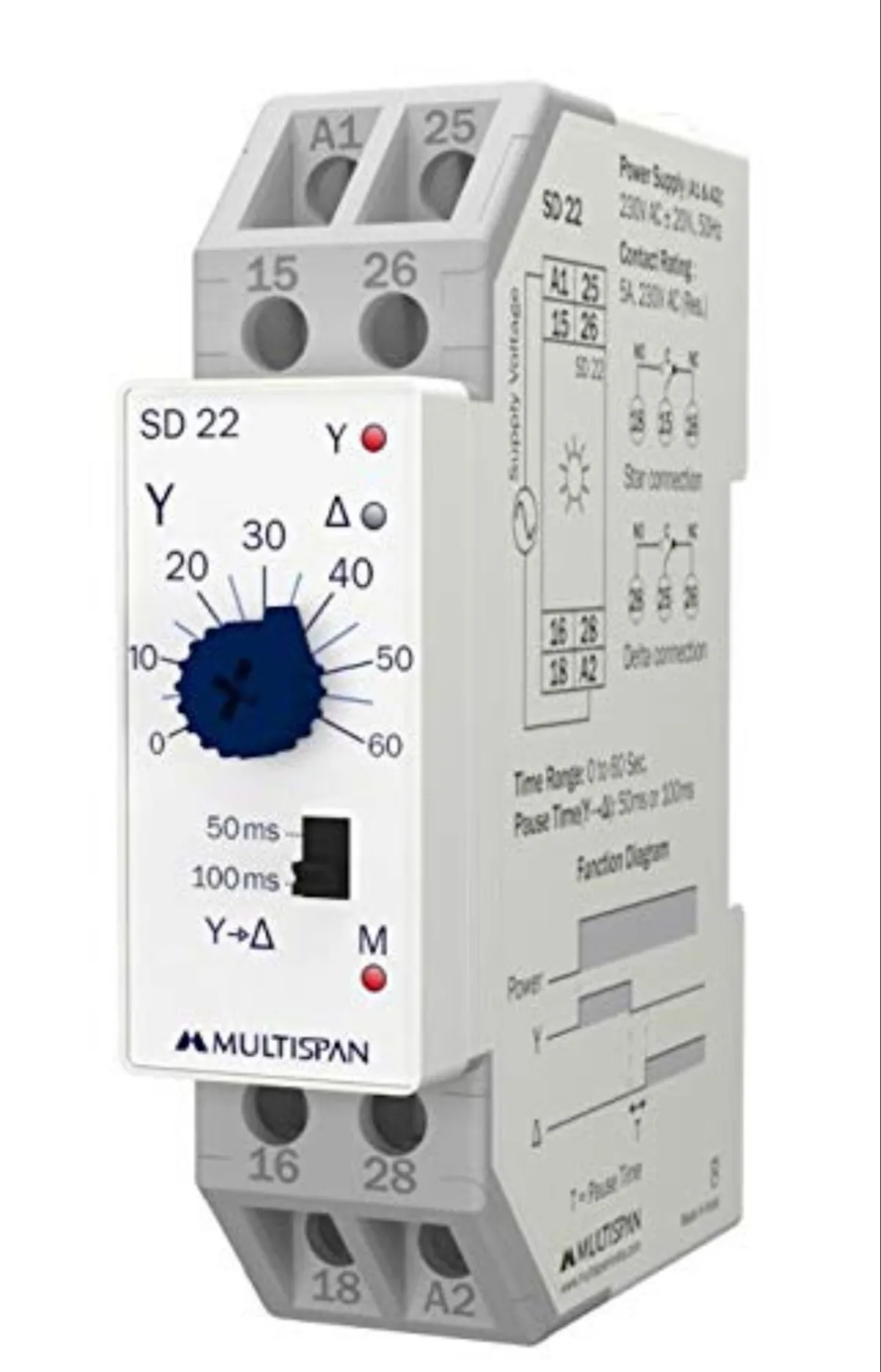
SD 22
Multispan SD 22 star-delta timer relay for automatic star-delta motor starting to reduce inrush current.
View Product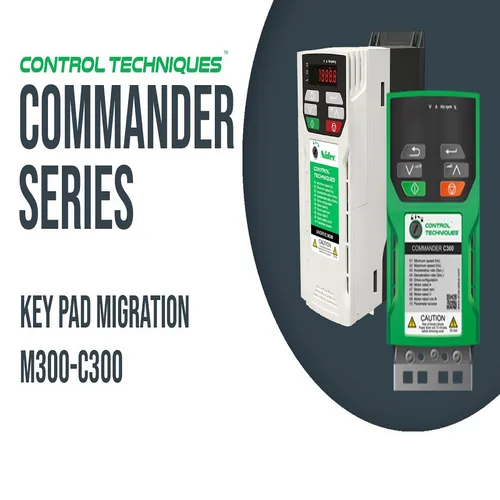
Commander C
Commander C VFD Drives from Paneltech Systems provide advanced motor control for industrial and commercial applications. Enhance efficiency and reliability.
View Product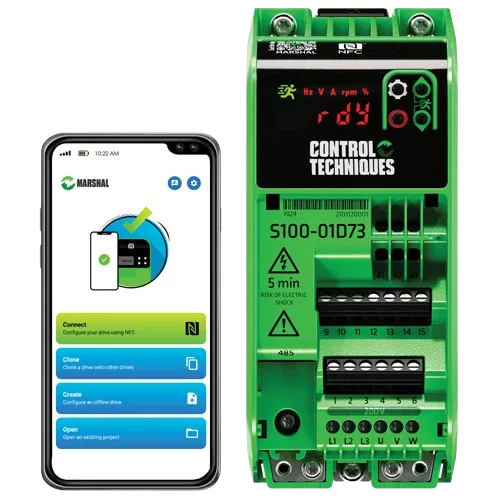
Commander S
Commander S VFD Drives offer energy-efficient motor control for industrial applications. Improve performance and optimise energy usage with reliable Commander S drives.
View ProductWins when:
- Motor is small (≤ 7.5 kW typically; up to 22 kW where supply is stiff)
- The supply can handle the inrush without voltage dip affecting other loads
- The driven load accepts the abrupt torque (closed-discharge centrifugal pumps, simple fans, compressors with unloaders)
- Starts are infrequent — fewer than 6 per hour
- Cost matters more than starting smoothness
Star-Delta
The motor starts in Star configuration (where each winding sees line voltage / √3, reducing phase voltage by 42% and current by 67%). After a timer expires, the contactors switch to Delta, applying full voltage. There's a small torque jump at the Y→Δ transition.
Wins when:
- Motor is medium-sized (5.5–45 kW)
- The motor is dual-voltage suitable for Star-Delta starting (typically 415/240V or 690/415V)
- The driven load doesn't need much starting torque (centrifugal pumps with closed discharge, fans, compressors with unloaders)
- Cost is constrained — Star-Delta panels are about 1.4× DOL cost, much cheaper than soft starters
- The mechanical system tolerates the Y→Δ transition shock (a brief torque pulse as the motor briefly disconnects then reconnects in Delta)
Where Star-Delta fails: conveyors and high-inertia loads — the motor doesn't accelerate fast enough in Star, then receives the Y→Δ transition jolt while still well below speed, causing motor damage and load shock. For these, soft starter or VFD is the right answer.
Soft Starter
Thyristors phase-control the voltage during start-up, ramping from 30–50% up to 100% over a settable time (typically 5–30 seconds). Once the motor reaches running speed, an internal bypass contactor closes, taking the thyristors out of circuit. Soft starter dissipates power only during the ramp.
Wins when:
- Motor is medium-to-large (5.5 kW upwards)
- The driven load is sensitive to torque shock — conveyors, mixers, escalators, long pipelines (water hammer risk)
- Inrush must be controlled because the supply is weak or the motor is one of many on the same supply
- Starts are infrequent — soft starters dissipate significant heat during ramp; frequent starting overheats the thyristors
- Cost is justified by the avoided damage or process improvement
Important: soft starters do nothing during normal running — they're a starting method, not a speed controller. For variable running speed or energy savings on variable loads, you want a VFD (see our VFD vs soft starter vs DOL guide).
Decision tree
- Is the motor ≤ 7.5 kW with a strong supply? → DOL
- Is the motor 5.5–45 kW driving a centrifugal pump or fan with closed discharge? → Star-Delta is cost-effective
- Is the motor driving a conveyor, mixer, or shock-sensitive load? → Soft starter (Star-Delta will damage the load on Y→Δ transition)
- Is the motor > 45 kW, or is the supply weak relative to the motor? → Soft starter
- Does the application benefit from variable running speed or energy savings? → VFD (not a soft starter)
Bottom line
DOL is the default for small motors. Star-Delta is the cost-effective middle ground for medium-sized centrifugal loads. Soft starters earn their place when inrush limiting matters, when the load is shock-sensitive, or when the motor is large enough that Star-Delta panels become impractical. VFDs are a separate decision driven by running-time requirements, not starting alone.
See our motor control panel solutions across all three starting methods, sized and commissioned for Kenyan installations.